
Share this
2026 Liquid Packaging Trends: What Equipment Buyers Need to Know
by APEX Filling Systems on Apr 03, 2026
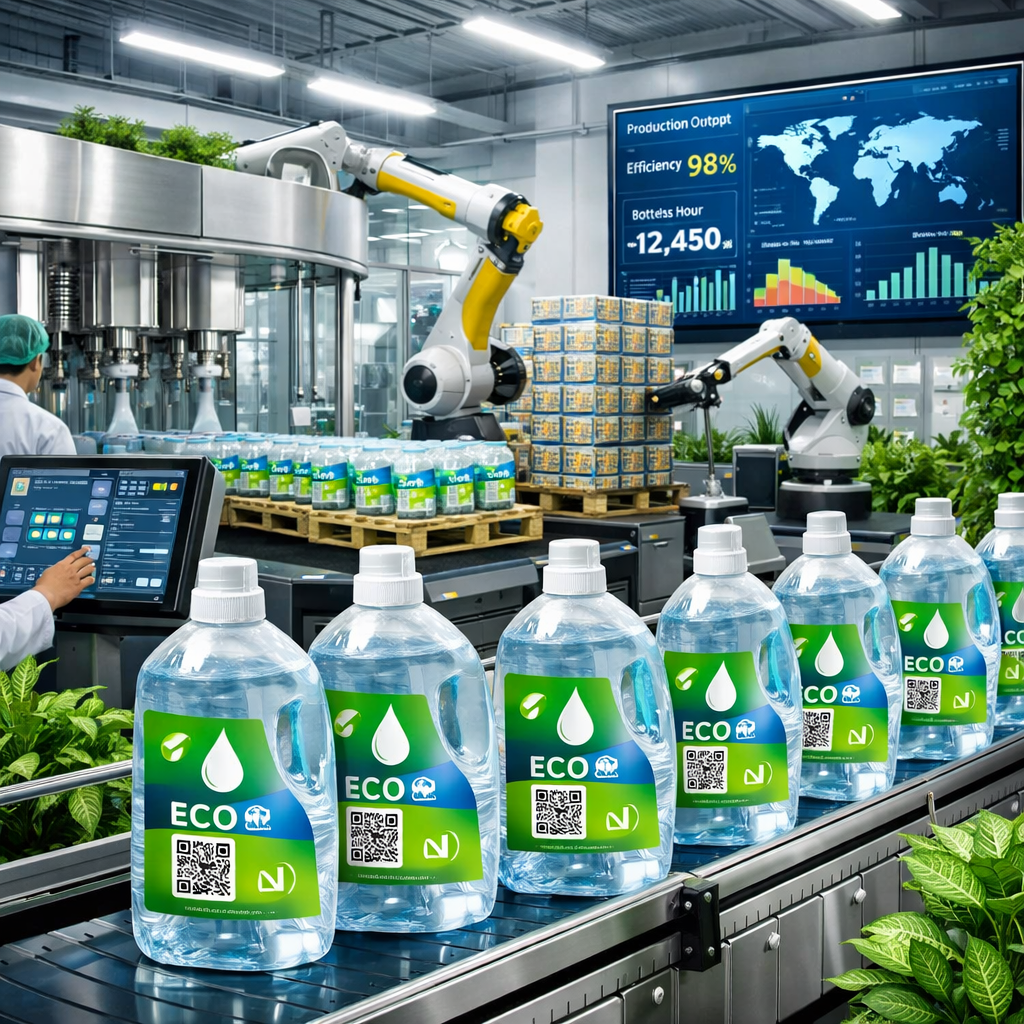
The liquid packaging industry is entering a new phase of transformation in 2026—one defined by automation, sustainability, and intelligent systems working together. For equipment buyers, this shift is not just about keeping up with innovation—it’s about making strategic investments that will remain competitive for years to come.
From filling machines and capping systems to labeling and full-line integration, today’s purchasing decisions must account for evolving production demands, regulatory pressures, and consumer expectations.
Here’s what you need to know before investing in liquid packaging equipment in 2026 and beyond.
1. Automation Is No Longer Optional
Automation continues to dominate as one of the most important trends shaping liquid packaging.
- Packaging automation is projected to reach $84+ billion in 2026, driven by demand for efficiency and labor reduction
- Fully integrated systems combining filling, capping, labeling, and inspection are becoming standard
Manufacturers are investing in:
- Robotics for material handling and palletizing
- Servo-driven filling systems for precision
- Automated changeovers for multi-SKU production
For equipment buyers, the takeaway is clear:
Standalone machines are being replaced by fully integrated, automated packaging lines.
2. Sustainability Is a Requirement, Not a Differentiator
Sustainability has shifted from a marketing advantage to a baseline expectation in 2026.
Key developments include:
- Lightweight and recyclable packaging materials
- Biodegradable and compostable formats
- Reusable and refillable packaging systems
At the equipment level, this means filling systems must:
- Handle flexible and lightweight containers
- Reduce overfill and product waste
- Support eco-friendly materials without compromising speed or accuracy
Regulations are also accelerating this shift, pushing manufacturers toward recyclability and circular packaging models.
3. Smart Packaging and Data Integration Are Expanding Rapidly
Packaging is no longer just physical—it’s digital.
In 2026, “smart packaging” includes:
- QR codes and NFC-enabled labels
- IoT-connected packaging for tracking and traceability
- Real-time condition monitoring (temperature, humidity, etc.)
The smart packaging market alone is expected to reach $16+ billion in 2026
For equipment buyers, this translates into a need for:
- Data-enabled filling machines
- Integration with ERP and MES systems
- Vision systems for quality control and traceability
Equipment must now function as part of a connected ecosystem, not just a production tool.
4. Flexibility for Multi-SKU Production Is Critical
Product variety is increasing across nearly every industry.
Manufacturers are now producing:
- More SKUs
- Smaller batch sizes
- Faster product launches
This shift is driving demand for:
- Quick-change filling systems
- Recipe-based HMI controls
- Adjustable conveyors and modular components
Production lines must adapt quickly without sacrificing efficiency.
Facilities that cannot handle rapid changeovers risk:
- Increased downtime
- Lost production capacity
- Reduced competitiveness
5. Precision and Waste Reduction Are Driving ROI
As raw material costs rise and sustainability goals tighten, precision filling has become a financial priority.
Modern equipment trends include:
- Servo-driven filling technology
- No-drip and anti-foam nozzle systems
- Real-time fill monitoring and correction
Accurate filling helps:
- Reduce product giveaway
- Improve sustainability metrics
- Maintain regulatory compliance
In 2026, ROI is no longer just about speed—it’s about accuracy and efficiency combined.
6. Labor Challenges Are Reshaping Equipment Decisions
Labor shortages continue to impact packaging operations, with a significant majority of facilities struggling to find skilled workers.
As a result, equipment buyers are prioritizing:
- Automation that reduces manual labor
- User-friendly interfaces and visual dashboards
- Systems that require fewer operators
The goal is not just to replace labor—but to optimize how labor is used.
7. Intelligent Filling Lines Are Becoming the Standard
The industry is moving toward intelligent production systems that combine:
- AI-driven inspection systems
- Self-adjusting fill parameters
- Predictive maintenance alerts
- Real-time performance analytics
These systems:
- Reduce downtime
- Improve decision-making
- Enable continuous optimization
Modern filling lines are no longer reactive—they are proactive and data-driven.
8. Market Growth Signals Continued Investment
The liquid filling equipment market continues to grow steadily:
- Expected to reach $0.59 billion in 2026
- Driven by demand in food & beverage, pharmaceuticals, and personal care
Additionally, the broader liquid packaging market is projected to grow significantly over the next decade, fueled by:
- Consumer demand for convenience
- Sustainable packaging trends
- Technological advancements
This growth reinforces the importance of making future-ready equipment investments today.
What Equipment Buyers Should Prioritize in 2026
When evaluating filling, capping, and labeling equipment, buyers should focus on:
✔ Integration
Can the equipment connect with the rest of your line and data systems?
✔ Flexibility
Can it handle multiple products, viscosities, and container types?
✔ Scalability
Will it support your growth over the next 3–5 years?
✔ Sustainability
Does it reduce waste and support eco-friendly packaging?
✔ Ease of Use
Is it intuitive for operators and adaptable to workforce changes?
Final Thoughts
The liquid packaging industry in 2026 is defined by convergence—where automation, sustainability, and digital intelligence intersect to reshape production.
For equipment buyers, the biggest risk is not investing in new technology—it’s investing in equipment that can’t adapt to what’s coming next.
The most successful manufacturers will be those who:
- Think beyond individual machines
- Invest in integrated, intelligent systems
- Align equipment decisions with long-term strategy
Because in today’s environment, your packaging line isn’t just part of your operation—it’s a competitive advantage.
Planning Your Next Equipment Investment?
If you're evaluating upgrades to your filling, capping, or labeling systems, now is the time to align your investment with where the industry is headed—not where it’s been.
Contact Apex Filling Systems to explore future-ready solutions designed for 2026 and beyond.
Share this
- Help First (97)
- Apex Filling Systems (78)
- Filling Equipment (76)
- Informational (70)
- Automatic Filling Machine (59)
- Industry Insights (59)
- Packaging Equipment (47)
- About Apex (20)
- American Made Goods (20)
- Fillers (18)
- Automatic Capping (11)
- Apex Filling (10)
- Apex (7)
- Uncategorized (5)
- Apex Team (3)
- Apex Family (2)
- Absolute Truth (1)
- Apex Way (1)
- Petroleum (1)
- oil (1)
- August 2026 (1)
- July 2026 (5)
- June 2026 (4)
- May 2026 (5)
- April 2026 (4)
- March 2026 (4)
- February 2026 (1)
- January 2026 (2)
- December 2025 (4)
- November 2025 (4)
- October 2025 (5)
- September 2025 (3)
- June 2025 (3)
- May 2025 (6)
- April 2025 (10)
- March 2025 (10)
- February 2025 (12)
- January 2025 (14)
- December 2024 (1)
- November 2024 (4)
- October 2024 (4)
- September 2024 (2)
- August 2024 (1)
- July 2024 (4)
- October 2022 (1)
- September 2022 (1)
- June 2022 (1)
- October 2021 (2)
- June 2021 (1)
- May 2021 (1)
- April 2021 (2)
- March 2021 (2)
- February 2021 (1)
- January 2021 (2)
- November 2020 (1)
- October 2020 (1)
- September 2020 (2)
- August 2020 (1)
- July 2020 (1)
- June 2020 (1)
- May 2020 (1)
- April 2020 (2)
- March 2020 (2)
- February 2020 (2)
- January 2020 (3)
- December 2019 (2)
- November 2019 (6)
- October 2019 (4)
- September 2019 (3)
- August 2019 (6)
- July 2019 (2)
- April 2019 (1)
- February 2019 (1)
- January 2019 (7)
- December 2018 (6)
- November 2018 (5)
- October 2018 (2)
- September 2018 (2)
- August 2018 (1)
- July 2018 (3)
- May 2018 (2)
- April 2018 (1)
- March 2018 (2)
- February 2018 (2)
- January 2018 (2)