
Share this
5 Mistakes to Avoid When Installing a New Filling System
by APEX Filling Systems on Dec 26, 2025
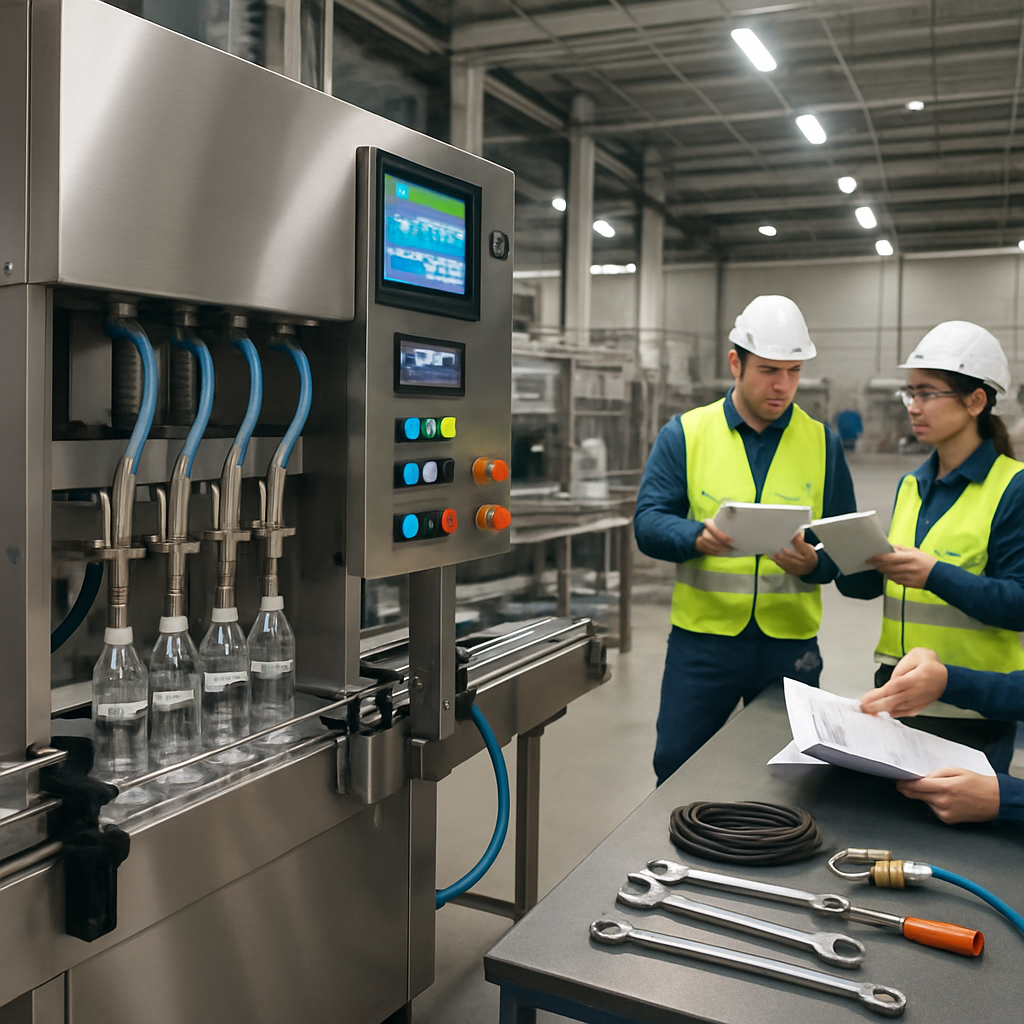
Installing a new liquid filling system is a major investment—one that can bring significant improvements in speed, precision, and product consistency. But without the right planning and execution, the installation process can be riddled with preventable missteps that lead to production delays, wasted product, or unnecessary costs.
At Apex Filling Systems, we’ve seen firsthand how a successful installation starts well before the equipment hits the production floor. To help you avoid common pitfalls, here are five mistakes to steer clear of when installing a new filling system:
1. Failing to Assess the Installation Environment
Before your system arrives, it’s critical to evaluate your production space. Insufficient ceiling height, poor airflow, incompatible utilities, or restricted access routes can all complicate or delay installation.
What to do instead:
-
Conduct a detailed site survey with your equipment provider.
-
Verify space constraints, power and air supply, and flooring load capacity.
-
Confirm that the equipment can be safely moved into place without disruption.
2. Overlooking Line Integration Requirements
Your filling machine isn’t an island—it must operate seamlessly with upstream and downstream systems like bottle unscramblers, conveyors, cappers, and labelers. Failure to plan for proper integration can disrupt product flow and reduce throughput.
What to do instead:
-
Review the full production line and ensure speed compatibility between machines.
-
Consider product and container handling at every stage.
-
Involve an integration expert to align timing, height, spacing, and controls.
3. Skipping Operator and Maintenance Training
A high-performance filling system won’t deliver ROI if your team doesn’t know how to run it. Skimping on training leads to inefficiencies, increased wear, and costly mistakes.
What to do instead:
-
Schedule training for all operators, maintenance staff, and supervisors.
-
Cover startup and shutdown procedures, cleaning protocols, and troubleshooting.
-
Request video walkthroughs or easy-access manuals for reference.
4. Ignoring Proper Utility Prep
A frequent cause of delays during installation is missing or incorrect utility hookups. This includes compressed air, electrical service, water supply, or product feed lines that are either incompatible or not ready at time of delivery.
What to do instead:
-
Review utility requirements with your supplier in advance.
-
Ensure connections meet specs for pressure, amperage, voltage, and flow.
-
Test systems ahead of installation to verify readiness.
5. Not Building a Preventative Maintenance Plan
Once the system is up and running, it’s easy to forget about ongoing maintenance—until something breaks. Waiting until failure can lead to extended downtime, costly part replacements, and unplanned service calls.
What to do instead:
-
Work with your OEM to create a preventative maintenance schedule.
-
Track part life cycles, lubrication points, and inspection intervals.
-
Consider implementing smart monitoring for predictive diagnostics.
Set Your System Up for Success
Avoiding these five mistakes can significantly reduce headaches during installation and help you achieve maximum performance from day one. At Apex Filling Systems, we don’t just deliver machines—we partner with you through every step of the process: planning, setup, integration, training, and long-term support.
Thinking about upgrading your filling equipment? Reach out today for expert guidance that ensures your next installation is efficient, future-proof, and production-ready.
Share this
- Help First (97)
- Apex Filling Systems (78)
- Filling Equipment (76)
- Informational (70)
- Automatic Filling Machine (59)
- Industry Insights (59)
- Packaging Equipment (47)
- About Apex (20)
- American Made Goods (20)
- Fillers (18)
- Automatic Capping (11)
- Apex Filling (10)
- Apex (7)
- Uncategorized (5)
- Apex Team (3)
- Apex Family (2)
- Absolute Truth (1)
- Apex Way (1)
- Petroleum (1)
- oil (1)
- August 2026 (1)
- July 2026 (5)
- June 2026 (4)
- May 2026 (5)
- April 2026 (4)
- March 2026 (4)
- February 2026 (1)
- January 2026 (2)
- December 2025 (4)
- November 2025 (4)
- October 2025 (5)
- September 2025 (3)
- June 2025 (3)
- May 2025 (6)
- April 2025 (10)
- March 2025 (10)
- February 2025 (12)
- January 2025 (14)
- December 2024 (1)
- November 2024 (4)
- October 2024 (4)
- September 2024 (2)
- August 2024 (1)
- July 2024 (4)
- October 2022 (1)
- September 2022 (1)
- June 2022 (1)
- October 2021 (2)
- June 2021 (1)
- May 2021 (1)
- April 2021 (2)
- March 2021 (2)
- February 2021 (1)
- January 2021 (2)
- November 2020 (1)
- October 2020 (1)
- September 2020 (2)
- August 2020 (1)
- July 2020 (1)
- June 2020 (1)
- May 2020 (1)
- April 2020 (2)
- March 2020 (2)
- February 2020 (2)
- January 2020 (3)
- December 2019 (2)
- November 2019 (6)
- October 2019 (4)
- September 2019 (3)
- August 2019 (6)
- July 2019 (2)
- April 2019 (1)
- February 2019 (1)
- January 2019 (7)
- December 2018 (6)
- November 2018 (5)
- October 2018 (2)
- September 2018 (2)
- August 2018 (1)
- July 2018 (3)
- May 2018 (2)
- April 2018 (1)
- March 2018 (2)
- February 2018 (2)
- January 2018 (2)