
Share this
Choosing Between Gravity, Overflow, Pump, and Piston Fillers: A Side-by-Side Comparison
by APEX Filling Systems on Jun 19, 2025
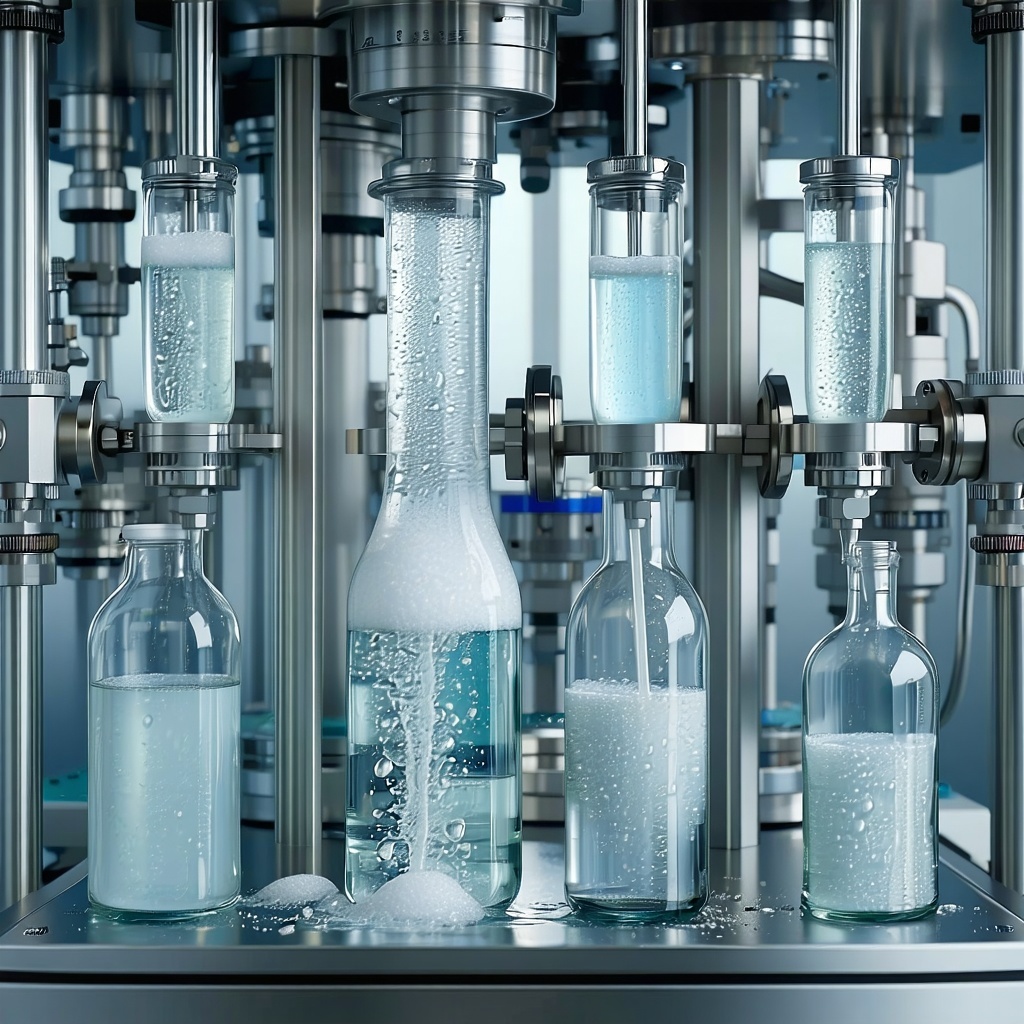
When it comes to liquid packaging, one size does not fit all. Choosing the right filling machine is critical to achieving consistent fill levels, maintaining product integrity, and scaling your production efficiently. But with so many options—gravity, overflow, pump, and piston fillers—how do you know which one is right for your operation?
At Apex Filling Systems, we guide manufacturers through this decision every day. Whether you're filling beverages, chemicals, personal care products, or industrial fluids, this side-by-side comparison will help you choose the system that best fits your product and goals.
🧪 Filler Types Explained
Let’s start by breaking down the four most common types of liquid fillers:
✅ Gravity Fillers
How it works:
Gravity fillers use the natural force of gravity to dispense liquid into containers. Product flows from an elevated tank into the container via open nozzles.
Best for:
✔️ Thin, free-flowing liquids like water, wine, vinegar, and solvents
✔️ Non-foaming products
✔️ Budget-conscious operations
Pros:
-
Simple and affordable
-
Low maintenance
-
Great for non-viscous liquids
-
Ideal for clean, low-volume runs
Cons:
-
Not suited for thick or foamy products
-
Slower than pressurized systems
-
Less control over fill speed/flow rate
✅ Overflow Fillers
How it works:
Overflow fillers fill each container to a consistent visual level. Any excess product overflows through the nozzle and recirculates back to the tank.
Best for:
✔️ Thin to medium-viscosity liquids
✔️ Products in clear containers (like soap, spirits, oils)
✔️ Applications requiring aesthetic consistency
Pros:
-
Visually uniform fill levels
-
Minimizes product waste
-
Closed-loop design for overflow recovery
-
Excellent for foamy products (with proper nozzles)
Cons:
-
Not ideal for very thick or chunky products
-
Fill volume may vary slightly depending on bottle variation
-
Slightly more complex than gravity fillers
✅ Pump Fillers
How it works:
Pump fillers use various types of pumps (gear, peristaltic, lobe, etc.) to push liquid into containers with controlled flow and pressure.
Best for:
✔️ Medium to high-viscosity liquids like oils, syrups, gels
✔️ Sanitary or metered filling applications
✔️ Liquids with suspended solids or particulates
Pros:
-
High accuracy
-
Adjustable flow rates
-
Can handle multiple container types and product viscosities
-
Works with a wide range of liquid textures
Cons:
-
Requires more components and calibration
-
Cleaning may be more involved
-
Initial setup cost may be higher
✅ Piston Fillers
How it works:
Piston fillers use a mechanical piston to draw and dispense an exact volume of product into each container.
Best for:
✔️ Thick, viscous, or semi-solid products like sauces, creams, pastes
✔️ Chunky or textured liquids
✔️ Applications requiring precise volume control
Pros:
-
Extremely accurate volumetric fills
-
Handles high-viscosity products effortlessly
-
Works well with chunky or abrasive fluids
-
Ideal for sanitary environments
Cons:
-
Slower than rotary or pump systems for high-speed production
-
Not ideal for thin, foamy products
-
Requires more mechanical maintenance
📊 Side-by-Side Comparison Chart
| Feature / Filler Type | Gravity | Overflow | Pump | Piston |
|---|---|---|---|---|
| Best For | Thin, non-foaming liquids | Thin to medium liquids, foamy products | Medium to thick, sanitary products | Thick, textured, or chunky products |
| Fill Accuracy | Moderate | Visual consistency | High | Very High |
| Product Viscosity | Low | Low–Medium | Medium–High | High–Very High |
| Complexity | Low | Moderate | Moderate–High | Moderate |
| Speed | Low–Medium | Medium | Medium–High | Low–Medium |
| Cost | $ | $$ | $$–$$$ | $$–$$$ |
| Cleaning Ease | Easy | Moderate | Moderate | Moderate |
🧠 How to Choose the Right Filler
Ask yourself the following questions:
-
What’s the viscosity of your product?
Thicker products need piston or pump fillers; thin liquids can be handled with gravity or overflow systems. -
Is visual fill level important?
Use an overflow filler for uniform-looking fills in transparent containers. -
Are you filling foamy or corrosive products?
Overflow fillers handle foam well; chemical products may require specialized pump or piston systems with corrosion-resistant materials. -
Do you need precise volume control?
Choose a piston or pump filler for tight tolerances and volumetric accuracy. -
Are you scaling production?
Start with a gravity or overflow filler and upgrade to pump or piston as needed—Apex offers modular systems that grow with you.
💬 FAQs
Can I switch filler types later?
Yes! Apex systems are designed for modular upgrades. We’ll help you transition seamlessly as your needs evolve.
Can one machine handle multiple product types?
With the right setup and changeover accessories, many Apex fillers can handle a wide range of products, containers, and viscosities.
Do I need automation to use these systems?
No. We offer both semi-automatic and fully automated versions of all filler types, depending on your production scale.
🤝 Let Apex Help You Make the Right Choice
At Apex Filling Systems, we don’t just sell machines—we build filling solutions. Whether you're starting a new product line or scaling your operation, our team will help you choose the right filler with:
✅ Expert recommendations
✅ In-house product testing
✅ Scalable, modular designs
✅ Operator training and technical support
👉 Contact Apex today to get matched with the perfect filling machine for your product.
👉 Explore our full line of gravity, overflow, pump, and piston filling systems.
Share this
- Help First (97)
- Apex Filling Systems (78)
- Filling Equipment (76)
- Informational (70)
- Automatic Filling Machine (59)
- Industry Insights (59)
- Packaging Equipment (47)
- About Apex (20)
- American Made Goods (20)
- Fillers (18)
- Automatic Capping (11)
- Apex Filling (10)
- Apex (7)
- Uncategorized (5)
- Apex Team (3)
- Apex Family (2)
- Absolute Truth (1)
- Apex Way (1)
- Petroleum (1)
- oil (1)
- August 2026 (1)
- July 2026 (5)
- June 2026 (4)
- May 2026 (5)
- April 2026 (4)
- March 2026 (4)
- February 2026 (1)
- January 2026 (2)
- December 2025 (4)
- November 2025 (4)
- October 2025 (5)
- September 2025 (3)
- June 2025 (3)
- May 2025 (6)
- April 2025 (10)
- March 2025 (10)
- February 2025 (12)
- January 2025 (14)
- December 2024 (1)
- November 2024 (4)
- October 2024 (4)
- September 2024 (2)
- August 2024 (1)
- July 2024 (4)
- October 2022 (1)
- September 2022 (1)
- June 2022 (1)
- October 2021 (2)
- June 2021 (1)
- May 2021 (1)
- April 2021 (2)
- March 2021 (2)
- February 2021 (1)
- January 2021 (2)
- November 2020 (1)
- October 2020 (1)
- September 2020 (2)
- August 2020 (1)
- July 2020 (1)
- June 2020 (1)
- May 2020 (1)
- April 2020 (2)
- March 2020 (2)
- February 2020 (2)
- January 2020 (3)
- December 2019 (2)
- November 2019 (6)
- October 2019 (4)
- September 2019 (3)
- August 2019 (6)
- July 2019 (2)
- April 2019 (1)
- February 2019 (1)
- January 2019 (7)
- December 2018 (6)
- November 2018 (5)
- October 2018 (2)
- September 2018 (2)
- August 2018 (1)
- July 2018 (3)
- May 2018 (2)
- April 2018 (1)
- March 2018 (2)
- February 2018 (2)
- January 2018 (2)