
Share this
Designing a Low-Waste Liquid Packaging Line: Where to Start
by APEX Filling Systems on May 01, 2026
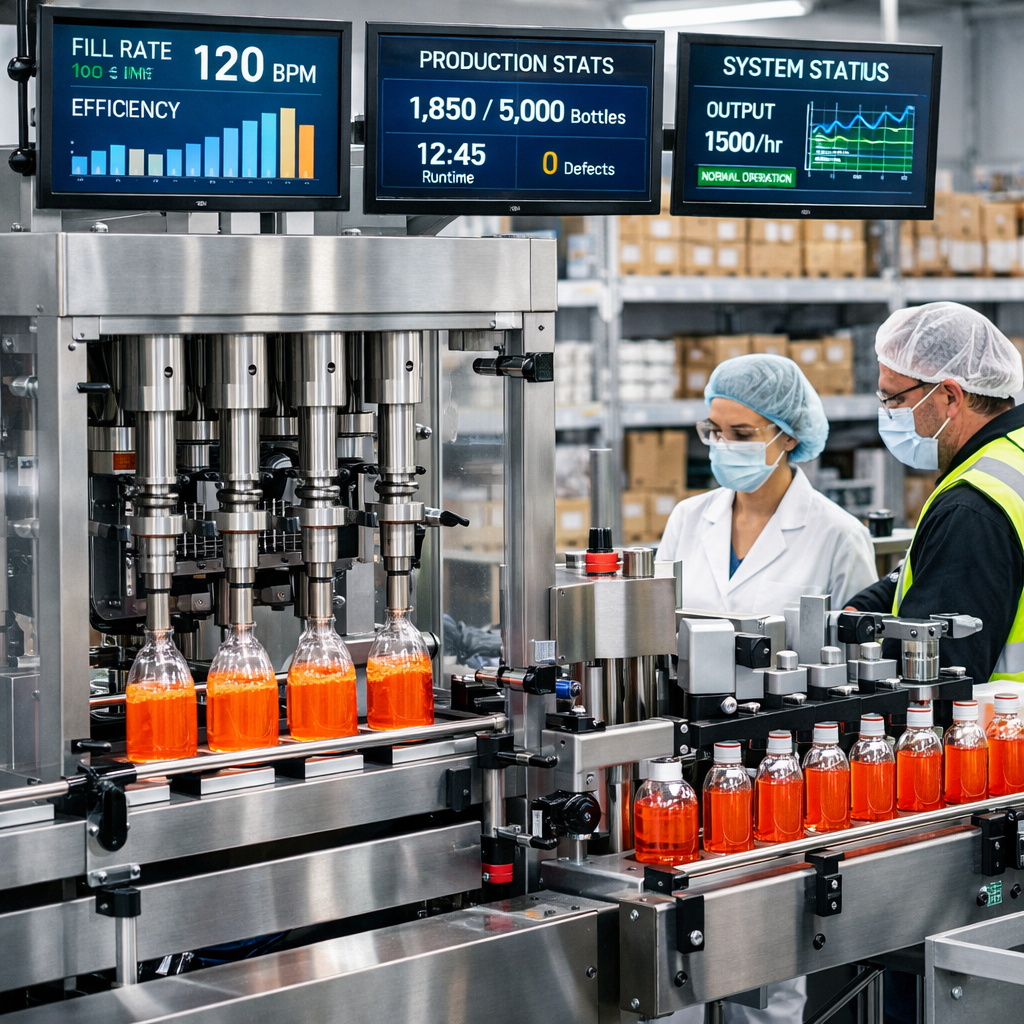
At Apex Filling Systems, We Help Manufacturers Reduce Waste While Improving Efficiency
At Apex Filling Systems, we help manufacturers across the food, beverage, chemical, personal care, DEF, and distilled spirits industries design liquid packaging lines that maximize efficiency while minimizing waste. Reducing waste is no longer just an environmental objective—it's a proven strategy for lowering operating costs, improving production performance, and increasing profitability.
A well-designed packaging line doesn't simply use less material. It reduces product giveaway, minimizes downtime, improves equipment utilization, and creates a more sustainable operation from filling through final packaging.
How Do You Design a Low-Waste Liquid Packaging Line?
Designing a low-waste liquid packaging line starts with evaluating the entire production process—not just individual pieces of equipment. Manufacturers should focus on accurate filling, efficient container handling, automation, quick changeovers, preventive maintenance, and equipment integration. Reducing waste at every stage improves operational efficiency while supporting sustainability initiatives and long-term cost savings.
The most effective low-waste packaging lines are designed around both today's production needs and tomorrow's growth.
Understand Where Waste Occurs
Before reducing waste, manufacturers must understand where it originates.
Common sources include:
- Product overfill
- Product spills
- Container damage
- Changeover losses
- Equipment downtime
- Packaging defects
- Labeling errors
- Scrap from rejected products
Identifying these inefficiencies allows manufacturers to prioritize improvements that have the greatest impact.
Improve Fill Accuracy
Product giveaway is one of the largest hidden costs in liquid packaging.
Even slight overfills can result in thousands of dollars in lost product over the course of a year.
Modern filling equipment helps reduce giveaway through:
- Servo-driven filling technology
- Precision flow control
- Recipe-based programming
- Real-time fill monitoring
Improving fill accuracy reduces waste while increasing profitability.
At Apex Filling Systems, fill accuracy is a key consideration when recommending equipment because it directly affects both production costs and customer satisfaction.
Optimize Container Handling
Damaged or unstable containers contribute to unnecessary waste.
A properly designed packaging line should provide:
- Smooth container indexing
- Stable conveying
- Proper bottle spacing
- Controlled product transfer
Integrated conveying systems help reduce:
- Tip-overs
- Misalignment
- Product spills
- Container damage
Protecting containers throughout the packaging process reduces waste while improving throughput.
Reduce Changeover Waste
Manufacturers producing multiple SKUs often lose valuable production time during changeovers.
Equipment designed for flexibility should include:
- Tool-less adjustments
- Recipe-based controls
- Quick container guide changes
- Automatic fill parameter adjustments
Faster changeovers reduce wasted product while increasing Overall Equipment Effectiveness (OEE).
Automate Repetitive Processes
Automation improves consistency while reducing material waste.
Examples include:
- Automatic bottle indexing
- Automated capping
- Vision inspection
- Robotic case packing
- Automated palletizing
Automation reduces human error while improving repeatability across the packaging line.
Design for Sustainable Packaging
Many manufacturers are transitioning toward:
- Lightweight containers
- Recyclable materials
- Refillable packaging
- Compostable packaging
- Post-consumer recycled materials
These packaging formats often require equipment capable of handling greater variation while maintaining fill accuracy.
Flexible filling systems help manufacturers adopt sustainable packaging without sacrificing production efficiency.
Build an Integrated Packaging Line
Waste often occurs between machines rather than within them.
An integrated system should include:
- Filling equipment
- Capping systems
- Labeling machines
- Conveyors
- Accumulation tables
- Inspection equipment
Proper line integration improves product flow while reducing bottlenecks and unnecessary handling.
Apex Filling Systems designs complete packaging lines that operate as a coordinated system, helping manufacturers improve efficiency from start to finish.
Use Data to Drive Continuous Improvement
Modern packaging equipment provides valuable production insights.
Track metrics such as:
- Fill accuracy
- OEE
- Downtime
- Reject rates
- Product giveaway
- Changeover time
Real-time dashboards allow manufacturers to identify inefficiencies quickly and make data-driven improvements over time.
Don't Overlook Preventive Maintenance
Equipment operating outside of specification often generates unnecessary waste.
Preventive maintenance helps:
- Maintain fill accuracy
- Reduce leaks
- Prevent unexpected downtime
- Extend equipment life
- Improve production consistency
Routine maintenance protects both production efficiency and sustainability goals.
Common Mistakes to Avoid
Focusing only on packaging materials
Waste reduction involves the entire production process—not just recyclable containers.
Ignoring product giveaway
Even small overfills create significant long-term costs.
Evaluating only individual machines
The complete packaging line should function as an integrated system.
Delaying preventive maintenance
Equipment performance gradually declines without proper maintenance.
Designing only for today's production needs
Build flexibility into the system to support future products and packaging formats.
What Information Should You Gather Before Speaking with Apex?
To help the Apex team recommend a low-waste packaging solution, gather:
- Product type
- Product viscosity
- Fill volume
- Container size and material
- Closure type
- Desired production speed
- Number of SKUs
- Current waste challenges
- Current OEE performance
- Desired automation level
- Sustainability objectives
- Future production plans
Providing this information allows Apex to recommend equipment designed to improve both operational efficiency and environmental performance.
Frequently Asked Questions
What causes the most waste on a liquid packaging line?
Common sources include product overfill, spills, rejected containers, equipment downtime, inefficient changeovers, and container damage during conveying.
How does filling accuracy reduce waste?
Accurate filling minimizes product giveaway while ensuring consistent fill volumes, reducing unnecessary material usage and operating costs.
Can automation reduce packaging waste?
Yes. Automation improves consistency, reduces operator error, minimizes product spills, and supports more efficient production.
Is sustainable packaging enough to create a low-waste operation?
No. Sustainable packaging is only one part of the equation. Equipment design, production efficiency, and process optimization all contribute to reducing overall waste.
Can Apex Filling Systems help reduce packaging waste?
Yes. Apex designs integrated filling, capping, labeling, and conveying systems that help manufacturers improve efficiency, reduce product loss, and support long-term sustainability initiatives.
Ready to Design a More Efficient Packaging Line?
Not sure which equipment is right for your application?
Use the Apex Equipment Fit Selector to answer a few questions about your product, containers, and production goals. An Apex team member can review your information and help identify the best solution for your operation.
About Apex Filling Systems
Apex Filling Systems designs and manufactures liquid filling, capping, labeling, and conveying equipment for manufacturers across the food, beverage, chemical, personal care, DEF, and distilled spirits industries. Every packaging application is unique, and our team works closely with customers to recommend equipment that fits their products, production goals, and future growth plans.
Continue Exploring
Equipment Solutions
Helpful Tools
Related Articles
- How Filling Equipment Impacts Your Carbon Footprint
- Choosing the Right Filling Equipment for Refill and Reuse Packaging Programs
- Filling in Recyclable and Compostable Packaging: What to Consider
- Green Goals: Aligning Your Equipment Investment with ESG Initiatives
- Maximizing OEE in Liquid Filling Operations: A Practical Guide
- How to Identify Bottlenecks in Your Liquid Packaging Line
Share this
- Help First (97)
- Apex Filling Systems (78)
- Filling Equipment (76)
- Informational (70)
- Automatic Filling Machine (59)
- Industry Insights (59)
- Packaging Equipment (47)
- About Apex (20)
- American Made Goods (20)
- Fillers (18)
- Automatic Capping (11)
- Apex Filling (10)
- Apex (7)
- Uncategorized (5)
- Apex Team (3)
- Apex Family (2)
- Absolute Truth (1)
- Apex Way (1)
- Petroleum (1)
- oil (1)
- August 2026 (1)
- July 2026 (5)
- June 2026 (4)
- May 2026 (5)
- April 2026 (4)
- March 2026 (4)
- February 2026 (1)
- January 2026 (2)
- December 2025 (4)
- November 2025 (4)
- October 2025 (5)
- September 2025 (3)
- June 2025 (3)
- May 2025 (6)
- April 2025 (10)
- March 2025 (10)
- February 2025 (12)
- January 2025 (14)
- December 2024 (1)
- November 2024 (4)
- October 2024 (4)
- September 2024 (2)
- August 2024 (1)
- July 2024 (4)
- October 2022 (1)
- September 2022 (1)
- June 2022 (1)
- October 2021 (2)
- June 2021 (1)
- May 2021 (1)
- April 2021 (2)
- March 2021 (2)
- February 2021 (1)
- January 2021 (2)
- November 2020 (1)
- October 2020 (1)
- September 2020 (2)
- August 2020 (1)
- July 2020 (1)
- June 2020 (1)
- May 2020 (1)
- April 2020 (2)
- March 2020 (2)
- February 2020 (2)
- January 2020 (3)
- December 2019 (2)
- November 2019 (6)
- October 2019 (4)
- September 2019 (3)
- August 2019 (6)
- July 2019 (2)
- April 2019 (1)
- February 2019 (1)
- January 2019 (7)
- December 2018 (6)
- November 2018 (5)
- October 2018 (2)
- September 2018 (2)
- August 2018 (1)
- July 2018 (3)
- May 2018 (2)
- April 2018 (1)
- March 2018 (2)
- February 2018 (2)
- January 2018 (2)