
Share this
Filling in Recyclable and Compostable Packaging: What to Consider
by APEX Filling Systems on Mar 20, 2026
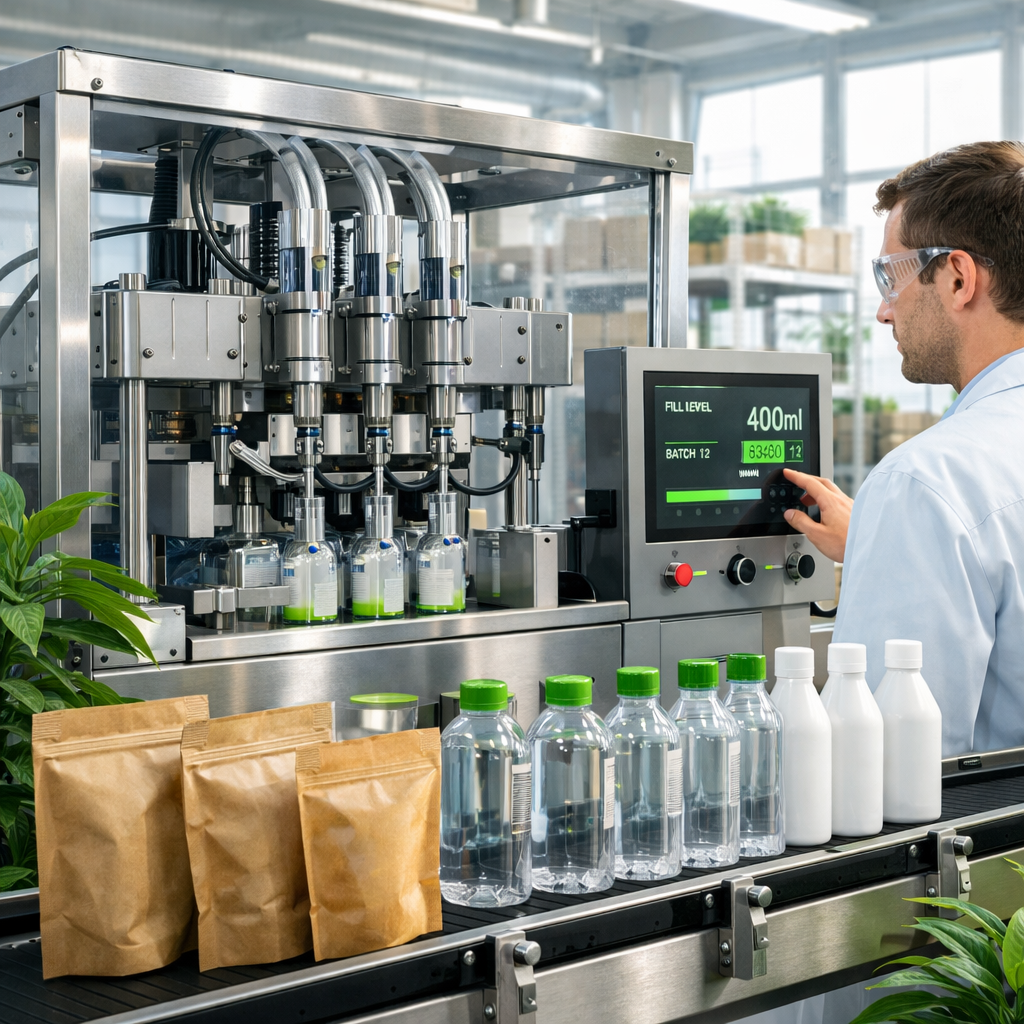
Sustainability is rapidly becoming a priority across the packaging industry. As brands respond to growing consumer demand for environmentally responsible products, many are transitioning to recyclable and compostable packaging formats. For liquid product manufacturers, this shift presents both exciting opportunities and unique challenges—especially when it comes to filling operations.
Whether you produce beverages, personal care products, cleaning chemicals, or nutraceutical liquids, selecting filling equipment that can handle sustainable packaging materials is critical for maintaining efficiency, accuracy, and product quality.
Understanding how recyclable and compostable packaging interacts with filling systems can help manufacturers successfully implement greener packaging strategies without compromising production performance.
The Rise of Sustainable Packaging
Environmental awareness is driving major changes in packaging design. Brands are increasingly adopting:
- Recyclable plastics such as PET and HDPE
- Lightweight packaging materials
- Biodegradable bottles and containers
- Compostable pouches and packaging films
- Refillable packaging systems
These materials help companies reduce landfill waste and meet corporate sustainability goals. However, sustainable packaging materials often behave differently than traditional packaging—requiring adjustments in filling processes and equipment.
Key Considerations for Filling Sustainable Packaging
1. Material Strength and Stability
Many recyclable or compostable packaging materials are intentionally designed to use less plastic or thinner walls. While this reduces environmental impact, it can create challenges during filling.
Lightweight containers may:
- Flex or collapse under pressure
- Be more sensitive to conveyor movement
- Require gentler bottle handling systems
Filling machines must be configured to accommodate these materials with stable container support and controlled filling speeds. Precision conveyors, adjustable guides, and container stabilization features are essential for maintaining production efficiency.
2. Product Compatibility with Packaging Materials
Not all sustainable packaging materials are compatible with every liquid product.
For example:
- Certain bioplastics may react with acidic or alcohol-based products
- Compostable materials may have shorter shelf life tolerances
- Some materials have higher oxygen permeability
Filling equipment must support proper product handling to ensure that the packaging maintains product integrity.
Manufacturers should evaluate:
- Product viscosity
- Temperature requirements
- Shelf life expectations
- Chemical compatibility
Matching the correct filling technology with the packaging material ensures reliable performance and protects product quality.
3. Precision Filling to Reduce Waste
One of the goals of sustainable packaging is to minimize product waste. Overfilling not only wastes product but also undermines sustainability efforts.
Modern filling systems help reduce waste through:
- Servo-driven volumetric control
- Precision piston or pump fillers
- Programmable fill speeds
- No-drip fill nozzles
Accurate filling technology ensures consistent fill levels while minimizing excess product giveaway—supporting both environmental goals and cost control.
4. Handling Flexible or Non-Rigid Containers
Compostable pouches and flexible packaging are becoming more common, particularly in food, beverage, and personal care markets.
Unlike rigid bottles, flexible packaging requires specialized handling systems that may include:
- Controlled product flow rates
- Customized nozzle designs
- Support fixtures for pouch filling
- Gentle container positioning
Proper filling equipment configuration ensures these materials can be filled efficiently without tearing, distortion, or leakage.
5. Labeling and Capping Compatibility
Sustainable packaging often involves changes not only in containers but also in closure systems and labeling materials.
For example:
- Recyclable packaging may require recyclable labels or adhesives
- Compostable packaging may require specialized caps
- Lightweight containers may require adjustable capping torque
Integrating filling machines with compatible capping and labeling equipment ensures that the entire packaging line supports sustainability initiatives.
Sustainability Benefits of Modern Filling Equipment
Advanced liquid filling technology can help manufacturers achieve sustainability goals by:
- Reducing product waste through precise fills
- Supporting lightweight container handling
- Improving energy efficiency
- Minimizing downtime and rejected containers
- Integrating with recyclable and refillable packaging systems
By investing in adaptable filling systems, manufacturers can future-proof their operations as sustainable packaging continues to evolve.
Preparing Your Packaging Line for Sustainable Materials
Transitioning to recyclable or compostable packaging often requires evaluating the entire packaging line, including:
- Container feeding systems
- Filling machines
- Capping equipment
- Labeling machines
- Conveyors and product handling
Working with experienced packaging equipment providers helps ensure that your production line can adapt to new materials while maintaining throughput and product quality.
The Future of Sustainable Liquid Packaging
Sustainable packaging is expected to continue expanding across industries. As regulations tighten and consumers demand environmentally responsible products, manufacturers will increasingly rely on equipment capable of handling innovative packaging materials.
Flexible, precision-driven filling systems will play a key role in helping companies meet sustainability targets without sacrificing productivity.
Final Thoughts
Recyclable and compostable packaging offers tremendous environmental benefits, but it also introduces new technical considerations for liquid filling operations. Manufacturers must carefully evaluate packaging materials, product compatibility, and filling technology to ensure successful implementation.
By combining sustainable packaging strategies with advanced filling, capping, and labeling equipment, companies can reduce environmental impact while maintaining efficient, high-quality production.
Sustainability and productivity can go hand in hand—with the right packaging solutions in place.
Share this
- Help First (97)
- Apex Filling Systems (78)
- Filling Equipment (76)
- Informational (70)
- Automatic Filling Machine (59)
- Industry Insights (59)
- Packaging Equipment (47)
- About Apex (20)
- American Made Goods (20)
- Fillers (18)
- Automatic Capping (11)
- Apex Filling (10)
- Apex (7)
- Uncategorized (5)
- Apex Team (3)
- Apex Family (2)
- Absolute Truth (1)
- Apex Way (1)
- Petroleum (1)
- oil (1)
- August 2026 (1)
- July 2026 (5)
- June 2026 (4)
- May 2026 (5)
- April 2026 (4)
- March 2026 (4)
- February 2026 (1)
- January 2026 (2)
- December 2025 (4)
- November 2025 (4)
- October 2025 (5)
- September 2025 (3)
- June 2025 (3)
- May 2025 (6)
- April 2025 (10)
- March 2025 (10)
- February 2025 (12)
- January 2025 (14)
- December 2024 (1)
- November 2024 (4)
- October 2024 (4)
- September 2024 (2)
- August 2024 (1)
- July 2024 (4)
- October 2022 (1)
- September 2022 (1)
- June 2022 (1)
- October 2021 (2)
- June 2021 (1)
- May 2021 (1)
- April 2021 (2)
- March 2021 (2)
- February 2021 (1)
- January 2021 (2)
- November 2020 (1)
- October 2020 (1)
- September 2020 (2)
- August 2020 (1)
- July 2020 (1)
- June 2020 (1)
- May 2020 (1)
- April 2020 (2)
- March 2020 (2)
- February 2020 (2)
- January 2020 (3)
- December 2019 (2)
- November 2019 (6)
- October 2019 (4)
- September 2019 (3)
- August 2019 (6)
- July 2019 (2)
- April 2019 (1)
- February 2019 (1)
- January 2019 (7)
- December 2018 (6)
- November 2018 (5)
- October 2018 (2)
- September 2018 (2)
- August 2018 (1)
- July 2018 (3)
- May 2018 (2)
- April 2018 (1)
- March 2018 (2)
- February 2018 (2)
- January 2018 (2)