
Share this
How AI Is Changing Liquid Filling Accuracy and Quality Control
by APEX Filling Systems on Apr 10, 2026
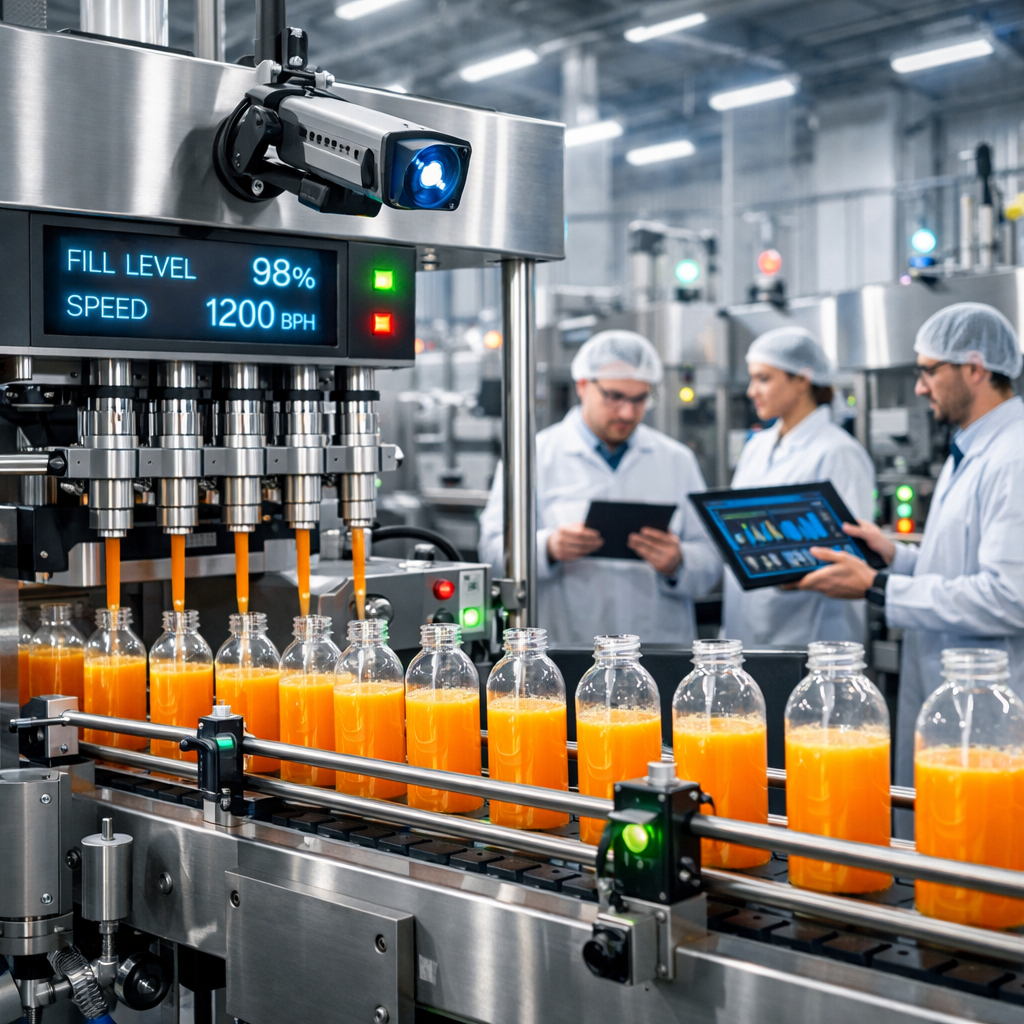
In modern liquid packaging, accuracy and quality are no longer just operational goals—they are business-critical metrics that directly impact profitability, compliance, and brand reputation. Even small inconsistencies in fill levels can lead to product waste, regulatory issues, or customer dissatisfaction.
Today, artificial intelligence (AI) is transforming how manufacturers approach these challenges. By combining real-time data, machine learning, and advanced vision systems, AI is enabling a shift from reactive quality control to proactive, predictive precision.
Here’s how AI is reshaping liquid filling accuracy and quality control—and why it matters for manufacturers moving into 2026 and beyond.
Why Accuracy and Quality Control Matter More Than Ever
In industries such as food and beverage, pharmaceuticals, chemicals, and nutraceuticals, filling accuracy is directly tied to:
- Product consistency
- Regulatory compliance
- Cost control
- Customer trust
Even minor deviations can create major issues. Overfilling increases material costs and waste, while underfilling can result in compliance violations and customer complaints.
Traditional systems—relying on sensors, manual inspections, and fixed parameters—often struggle to keep up with modern production demands, especially when variables like viscosity, temperature, and product variation come into play.
From Automation to Intelligence: The Evolution of Filling Systems
Liquid filling technology has evolved in three major phases:
1. Manual Systems
Operators visually monitored fill levels and adjusted machines manually—slow, inconsistent, and prone to error.
2. Automated Systems
Sensors, PLCs, and mechanical controls improved repeatability and speed but remained largely reactive.
3. AI-Driven Systems
Today’s systems go further—analyzing data, learning from patterns, and making real-time adjustments to optimize performance continuously.
This evolution marks a shift from simply detecting errors to preventing them before they occur.
Key Ways AI Is Improving Filling Accuracy
1. Real-Time Adaptive Filling
AI systems continuously analyze production variables such as:
- Product viscosity
- Temperature fluctuations
- Flow rate changes
- Equipment wear
Based on this data, AI can automatically adjust fill parameters in real time, ensuring consistent volume across every container—even as conditions change.
This level of adaptability is especially valuable for products that vary between batches, such as sauces, oils, or cosmetic formulations.
2. Continuous Learning and Optimization
Unlike traditional systems, AI doesn’t rely solely on pre-programmed settings.
Using machine learning, systems can:
- Learn from past production runs
- Identify patterns that lead to defects
- Automatically apply optimized settings
For example, if a slight adjustment reduces rejected bottles, the system will “remember” and apply similar changes in future runs—leading to continuous improvement over time.
3. Precision Through Advanced Sensors and Data Integration
AI-enhanced systems integrate with high-precision sensors and IoT devices to:
- Monitor fill levels in real time
- Detect even minor deviations
- Trigger immediate corrections
This eliminates guesswork and ensures that every container meets exact specifications, reducing both overfill and underfill.
AI-Powered Quality Control: A New Standard
1. Vision AI for Fill-Level Inspection
One of the most impactful applications of AI is computer vision-based inspection.
Using high-speed cameras and image processing algorithms, Vision AI systems can:
- Inspect fill levels instantly
- Detect defective containers
- Identify labeling or sealing issues
These systems provide objective, real-time measurements, eliminating human error and significantly improving consistency.
They can process thousands of units per minute—far beyond human capability.
2. Proactive Defect Prevention
Traditional quality control identifies problems after they occur. AI changes this by:
- Analyzing production data in real time
- Predicting when defects are likely to occur
- Adjusting processes before issues arise
This shift from reactive to proactive quality control helps manufacturers move toward zero-defect production environments.
3. Faster and More Reliable Inspections
AI inspection systems can detect:
- Incorrect fill levels
- Seal defects
- Misaligned labels
- Container damage
And they do so faster and more consistently than human inspectors, reducing labor costs while improving quality outcomes.
The Impact on Efficiency and Throughput
AI doesn’t just improve accuracy—it enhances overall line performance.
Key benefits include:
- Reduced product waste through precise filling
- Lower rejection rates due to improved quality control
- Less downtime with predictive maintenance
- Higher throughput through optimized processes
AI can even identify and resolve bottlenecks across the filling line, ensuring smooth, continuous operation.
Predictive Maintenance: Protecting Accuracy Over Time
Equipment wear—such as nozzle degradation or seal failure—can gradually impact fill accuracy.
AI addresses this by:
- Monitoring machine performance continuously
- Identifying early signs of wear or failure
- Scheduling maintenance before issues affect production
This ensures that accuracy is maintained not just at startup—but throughout the entire lifecycle of the equipment.
Sustainability Benefits of AI in Filling
Sustainability is a growing priority, and AI plays a key role by:
- Reducing overfill and product waste
- Minimizing rejected units
- Optimizing energy usage
- Supporting efficient resource utilization
By improving precision and reducing waste, AI directly contributes to better environmental and ESG performance.
Challenges to Consider
While AI offers significant advantages, manufacturers should also consider:
- Integration with existing equipment
- Training requirements for operators
- Data management and cybersecurity
- Upfront investment costs
However, the long-term ROI—through improved efficiency, reduced waste, and higher quality—often outweighs these initial challenges.
The Future of AI in Liquid Filling
Looking ahead, AI will continue to evolve in liquid packaging with advancements such as:
- Self-optimizing filling lines
- Fully autonomous quality control systems
- Deeper integration with robotics and smart factories
- AI-as-a-service for remote monitoring and optimization
As AI becomes more accessible, it will move from a competitive advantage to a standard requirement.
Final Thoughts
AI is fundamentally changing how manufacturers approach liquid filling accuracy and quality control. By enabling real-time adjustments, predictive insights, and continuous learning, AI-driven systems deliver a level of precision and efficiency that traditional methods simply cannot match.
For manufacturers focused on reducing waste, improving consistency, and scaling production, AI is not just an upgrade—it’s a strategic investment in the future of packaging.
Ready to Improve Accuracy and Quality on Your Line?
If you're exploring ways to enhance your filling operations with smarter, data-driven technology, Apex Filling Systems can help you evaluate the right solution for your production goals.
Share this
- Help First (97)
- Apex Filling Systems (78)
- Filling Equipment (76)
- Informational (70)
- Automatic Filling Machine (59)
- Industry Insights (59)
- Packaging Equipment (47)
- About Apex (20)
- American Made Goods (20)
- Fillers (18)
- Automatic Capping (11)
- Apex Filling (10)
- Apex (7)
- Uncategorized (5)
- Apex Team (3)
- Apex Family (2)
- Absolute Truth (1)
- Apex Way (1)
- Petroleum (1)
- oil (1)
- August 2026 (1)
- July 2026 (5)
- June 2026 (4)
- May 2026 (5)
- April 2026 (4)
- March 2026 (4)
- February 2026 (1)
- January 2026 (2)
- December 2025 (4)
- November 2025 (4)
- October 2025 (5)
- September 2025 (3)
- June 2025 (3)
- May 2025 (6)
- April 2025 (10)
- March 2025 (10)
- February 2025 (12)
- January 2025 (14)
- December 2024 (1)
- November 2024 (4)
- October 2024 (4)
- September 2024 (2)
- August 2024 (1)
- July 2024 (4)
- October 2022 (1)
- September 2022 (1)
- June 2022 (1)
- October 2021 (2)
- June 2021 (1)
- May 2021 (1)
- April 2021 (2)
- March 2021 (2)
- February 2021 (1)
- January 2021 (2)
- November 2020 (1)
- October 2020 (1)
- September 2020 (2)
- August 2020 (1)
- July 2020 (1)
- June 2020 (1)
- May 2020 (1)
- April 2020 (2)
- March 2020 (2)
- February 2020 (2)
- January 2020 (3)
- December 2019 (2)
- November 2019 (6)
- October 2019 (4)
- September 2019 (3)
- August 2019 (6)
- July 2019 (2)
- April 2019 (1)
- February 2019 (1)
- January 2019 (7)
- December 2018 (6)
- November 2018 (5)
- October 2018 (2)
- September 2018 (2)
- August 2018 (1)
- July 2018 (3)
- May 2018 (2)
- April 2018 (1)
- March 2018 (2)
- February 2018 (2)
- January 2018 (2)