
Share this
How Data-Driven Maintenance Extends the Life of Your Machinery
by APEX Filling Systems on Nov 28, 2025
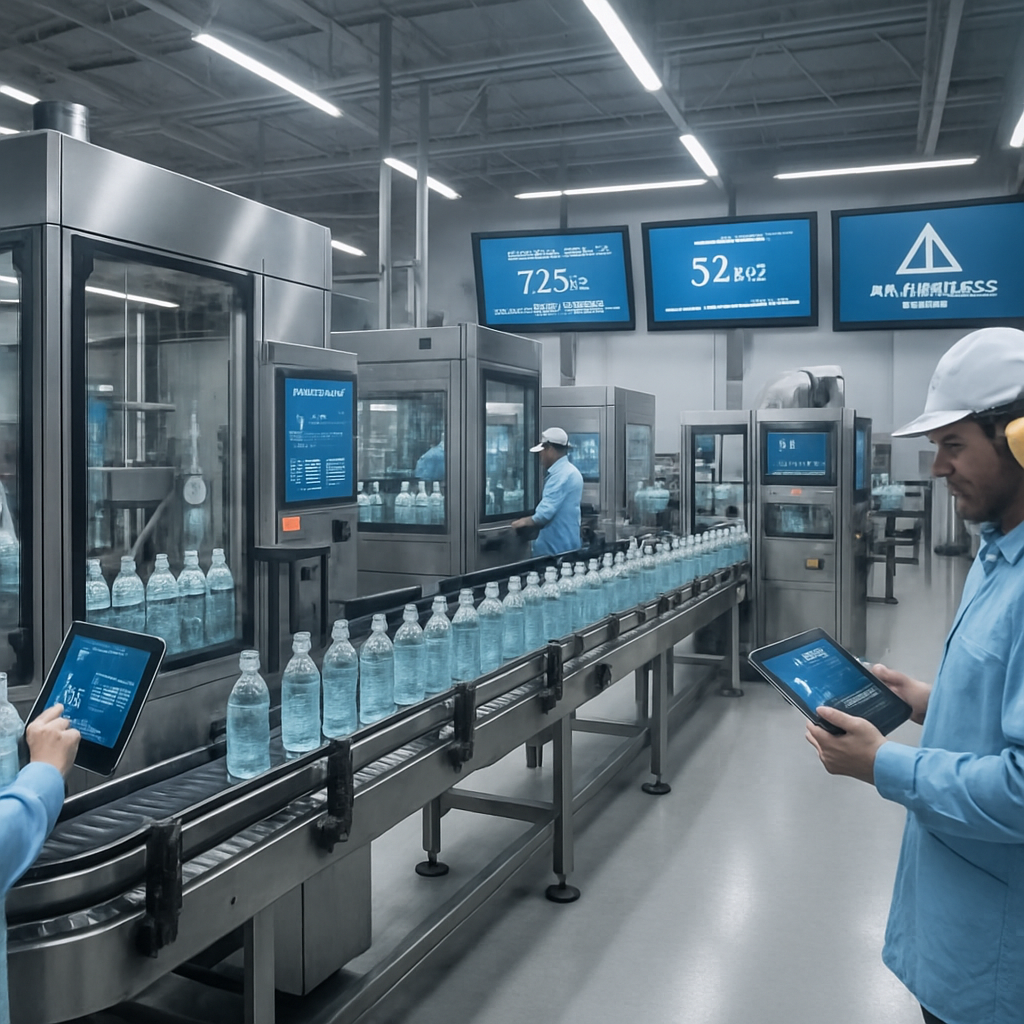
In today’s manufacturing environment, the move toward smarter, more connected operations isn’t just a trend—it’s a competitive necessity. Nowhere is this more apparent than in how facilities manage the health and longevity of their machinery. Traditional preventive maintenance—based on fixed schedules and general recommendations—is being replaced by data-driven strategies that optimize maintenance timing, reduce costs, and extend equipment life.
What Is Data-Driven Maintenance?
Data-driven maintenance is a proactive approach that uses real-time machine data, historical performance metrics, and predictive analytics to determine when and what type of maintenance is required. Rather than relying on generic time-based intervals, manufacturers can make maintenance decisions based on actual wear, usage patterns, and performance signals.
This method is often powered by sensors integrated into filling machines, conveyors, and other packaging equipment. These sensors monitor temperature, vibration, cycle counts, pressure levels, and lubrication status—providing early warnings of potential issues before they result in unplanned downtime.
Key Benefits for Liquid Filling Operations
1. Increased Equipment Longevity
By addressing issues before they escalate, data-driven maintenance reduces the risk of major failures that can permanently damage machinery. Monitoring small deviations in pressure, fill cycle times, or valve performance allows maintenance teams to intervene with precision, minimizing long-term wear.
2. Reduced Downtime
Every minute of unexpected downtime translates to lost production, missed deadlines, and increased labor costs. With predictive maintenance, maintenance teams can plan interventions during off-peak hours or scheduled breaks—ensuring maximum uptime.
3. Optimized Spare Part Usage
Data insights help teams predict which parts are likely to fail and when, reducing the need to overstock spares. This strategic approach lowers inventory costs and ensures the right components are available exactly when needed.
4. Lower Maintenance Costs
Unplanned repairs are often more expensive than scheduled maintenance. Data-driven strategies reduce the frequency of emergency service calls, minimize labor surges, and prevent costly overnight part shipments.
5. Enhanced Safety
Failing equipment isn’t just a production risk—it’s a safety hazard. Predictive alerts prevent operators from working with machines that may be nearing a critical fault point, protecting both workers and products.
Implementing Data-Driven Maintenance: What You Need
To transition from traditional to data-driven maintenance, consider the following steps:
-
Invest in Smart Machinery: Modern filling systems equipped with IIoT (Industrial Internet of Things) capabilities are essential. Look for equipment with built-in sensors and remote monitoring compatibility.
-
Adopt CMMS or EAM Software: A Computerized Maintenance Management System (CMMS) or Enterprise Asset Management (EAM) platform consolidates equipment data and helps track trends, schedule maintenance, and generate reports.
-
Train Your Team: Maintenance staff must be skilled in both data interpretation and mechanical diagnostics. Cross-training operators and technicians to identify early warning signs will ensure maximum benefit from your monitoring system.
-
Set Clear KPIs: Track metrics like Mean Time Between Failures (MTBF), Mean Time to Repair (MTTR), and overall equipment effectiveness (OEE) to evaluate the success of your data-driven maintenance strategy.
Apex Filling Systems: Enabling Smarter Maintenance
At Apex Filling Systems, our advanced filling equipment is engineered with smart technology that empowers manufacturers to make data-informed maintenance decisions. From precision-fill piston systems to rugged overflow fillers with digital diagnostics, our machines are designed for durability and predictive oversight.
By integrating our systems with your existing monitoring tools, we help reduce your unplanned downtime and extend the useful life of your most valuable assets.
Ready to future-proof your maintenance strategy?
Talk with our team about upgrading your line with smart-enabled filling equipment that drives performance and reliability.
Share this
- Help First (97)
- Apex Filling Systems (78)
- Filling Equipment (76)
- Informational (70)
- Automatic Filling Machine (59)
- Industry Insights (59)
- Packaging Equipment (47)
- About Apex (20)
- American Made Goods (20)
- Fillers (18)
- Automatic Capping (11)
- Apex Filling (10)
- Apex (7)
- Uncategorized (5)
- Apex Team (3)
- Apex Family (2)
- Absolute Truth (1)
- Apex Way (1)
- Petroleum (1)
- oil (1)
- August 2026 (1)
- July 2026 (5)
- June 2026 (4)
- May 2026 (5)
- April 2026 (4)
- March 2026 (4)
- February 2026 (1)
- January 2026 (2)
- December 2025 (4)
- November 2025 (4)
- October 2025 (5)
- September 2025 (3)
- June 2025 (3)
- May 2025 (6)
- April 2025 (10)
- March 2025 (10)
- February 2025 (12)
- January 2025 (14)
- December 2024 (1)
- November 2024 (4)
- October 2024 (4)
- September 2024 (2)
- August 2024 (1)
- July 2024 (4)
- October 2022 (1)
- September 2022 (1)
- June 2022 (1)
- October 2021 (2)
- June 2021 (1)
- May 2021 (1)
- April 2021 (2)
- March 2021 (2)
- February 2021 (1)
- January 2021 (2)
- November 2020 (1)
- October 2020 (1)
- September 2020 (2)
- August 2020 (1)
- July 2020 (1)
- June 2020 (1)
- May 2020 (1)
- April 2020 (2)
- March 2020 (2)
- February 2020 (2)
- January 2020 (3)
- December 2019 (2)
- November 2019 (6)
- October 2019 (4)
- September 2019 (3)
- August 2019 (6)
- July 2019 (2)
- April 2019 (1)
- February 2019 (1)
- January 2019 (7)
- December 2018 (6)
- November 2018 (5)
- October 2018 (2)
- September 2018 (2)
- August 2018 (1)
- July 2018 (3)
- May 2018 (2)
- April 2018 (1)
- March 2018 (2)
- February 2018 (2)
- January 2018 (2)