
Share this
How Filling Equipment Impacts Your Carbon Footprint
by APEX Filling Systems on Jun 12, 2026
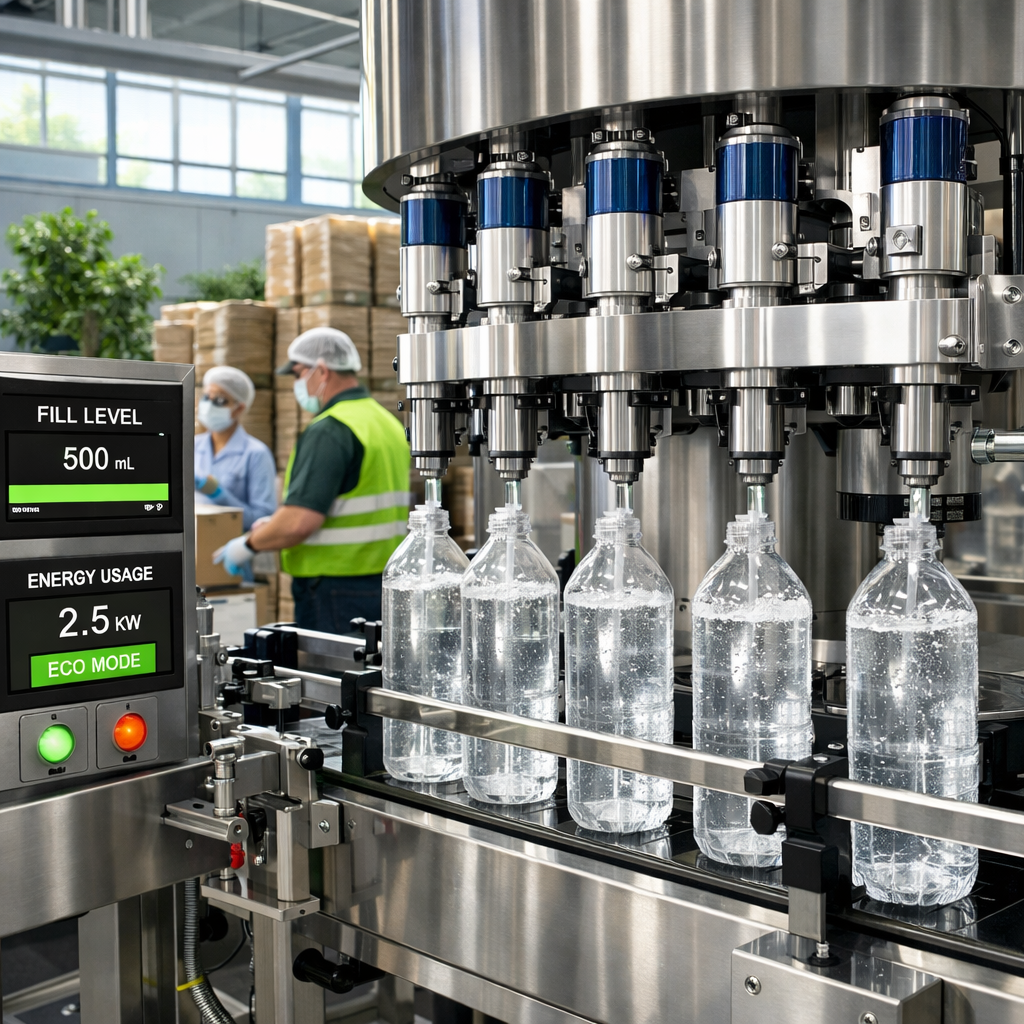
Sustainability has become a major focus across the manufacturing sector. Customers, investors, regulators, and supply chain partners are increasingly evaluating companies based on their environmental impact. While many manufacturers focus on packaging materials, transportation, or energy sources when discussing sustainability, one critical factor is often overlooked: filling equipment.
The equipment used to fill, cap, and package liquid products plays a significant role in determining a facility's overall carbon footprint. From energy consumption and product waste to equipment efficiency and lifespan, the design and operation of a filling line can directly influence environmental performance.
Understanding this relationship can help manufacturers make smarter equipment investments while supporting both sustainability and profitability goals.
What Is a Carbon Footprint?
A carbon footprint refers to the total greenhouse gas emissions associated with a business, product, or process.
For manufacturing facilities, these emissions often come from:
- Energy consumption
- Product waste
- Material usage
- Transportation
- Equipment operation
- Maintenance activities
Every stage of the packaging process contributes to environmental impact, making equipment selection an important sustainability decision.
Why Filling Equipment Matters
Filling equipment operates continuously in many production facilities. Over time, even small inefficiencies can result in substantial increases in:
- Energy consumption
- Product waste
- Packaging waste
- Maintenance requirements
Modern filling technology is designed to reduce these inefficiencies, helping manufacturers lower emissions while improving operational performance.
1. Energy Efficiency Reduces Emissions
One of the largest contributors to a packaging line's carbon footprint is energy consumption.
Older filling systems often rely on:
- Inefficient motors
- Outdated controls
- Excessive compressed air usage
- Continuous operation even during idle periods
Modern equipment incorporates technologies that significantly reduce energy demand.
Energy-Efficient Features Include:
Servo-Driven Systems
Servo motors consume energy only when needed and provide highly precise motion control.
Benefits include:
- Lower energy consumption
- Reduced heat generation
- Improved operational efficiency
Smart Power Management
Advanced filling systems can automatically:
- Enter low-power modes during downtime
- Optimize motor performance
- Reduce unnecessary equipment operation
Over the lifespan of the equipment, these improvements can lead to substantial energy savings.
2. Fill Accuracy Reduces Product Waste
Product waste is often overlooked when calculating environmental impact.
Every ounce of overfilled product represents:
- Wasted raw materials
- Additional energy used during production
- Increased transportation weight
- Higher packaging demands
Precision Filling Helps Reduce Waste
Modern filling systems utilize:
- Servo-driven technology
- Advanced flow control
- Real-time monitoring
These features minimize:
- Overfill
- Underfill
- Product giveaway
Reducing product waste not only lowers costs but also decreases the environmental impact associated with manufacturing each unit.
3. Less Rework Means Lower Emissions
Rejected products require additional resources to correct or replace.
Common causes of rework include:
- Incorrect fill volumes
- Improper capping
- Labeling errors
- Damaged containers
Each rejected package represents wasted:
- Materials
- Labor
- Energy
- Transportation resources
Integrated filling, capping, and labeling systems help improve consistency and reduce reject rates.
4. Equipment Longevity Supports Sustainability
Manufacturing new equipment requires:
- Raw materials
- Transportation
- Fabrication energy
- Installation resources
Durable, well-built filling equipment often remains in service for decades when properly maintained.
Investing in high-quality systems helps:
- Reduce replacement frequency
- Lower lifecycle emissions
- Improve long-term sustainability
When evaluating equipment, total lifespan should be considered alongside initial purchase price.
5. Reduced Downtime Improves Efficiency
Unexpected downtime can have a surprisingly large environmental impact.
When production stops unexpectedly:
- Equipment may continue consuming energy
- Product can be wasted
- Additional startup cycles are required
Modern filling systems help reduce downtime through:
- Predictive maintenance tools
- Real-time diagnostics
- Automated alerts
- Performance monitoring
Keeping equipment operating efficiently reduces both costs and emissions.
6. Sustainable Packaging Compatibility
Many manufacturers are transitioning to:
- Recyclable containers
- Lightweight bottles
- Compostable packaging
- Refillable systems
However, these packaging formats often require specialized handling.
Modern filling equipment is increasingly designed to accommodate:
- Lightweight packaging materials
- Flexible containers
- Refillable packaging programs
This compatibility supports broader sustainability initiatives without sacrificing production efficiency.
7. Automation Improves Resource Utilization
Automation can significantly improve sustainability by reducing unnecessary resource consumption.
Benefits include:
- Fewer product spills
- Improved fill consistency
- Reduced packaging damage
- Lower reject rates
Automated systems also allow manufacturers to optimize production schedules and reduce waste associated with manual processes.
8. Data Visibility Drives Continuous Improvement
One of the most powerful sustainability tools available today is data.
Smart filling systems can track:
- Energy consumption
- Product waste
- Fill accuracy
- Downtime events
- Overall Equipment Effectiveness (OEE)
This information helps manufacturers identify opportunities to reduce environmental impact and improve operational efficiency.
You can't improve what you don't measure.
9. Supporting ESG Goals
Environmental, Social, and Governance (ESG) initiatives are becoming increasingly important across industries.
Filling equipment can contribute to ESG objectives by helping manufacturers:
Environmental Goals
- Reduce energy use
- Minimize waste
- Improve resource efficiency
Social Goals
- Enhance workplace safety
- Reduce repetitive labor tasks
- Improve operator ergonomics
Governance Goals
- Improve traceability
- Enhance reporting capabilities
- Support regulatory compliance
Equipment investments increasingly play a role in broader corporate sustainability strategies.
Calculating the Long-Term Impact
When evaluating filling equipment, manufacturers should consider more than throughput.
Questions to ask include:
- How much energy does the system consume?
- How accurately does it fill?
- How much product waste can it eliminate?
- What is the expected lifespan?
- Does it support sustainable packaging initiatives?
The answers often reveal significant opportunities for both cost savings and carbon reduction.
The Future of Sustainable Filling Technology
Looking ahead, filling equipment will continue evolving to support sustainability through:
- AI-driven optimization
- Predictive maintenance
- Greater energy efficiency
- Smart factory integration
- Improved compatibility with sustainable packaging
Manufacturers that invest in these technologies today will be better positioned to meet future environmental expectations and regulatory requirements.
Final Thoughts
Reducing your carbon footprint doesn't always require a complete facility overhaul. In many cases, meaningful improvements begin with smarter equipment choices.
Modern filling systems help manufacturers reduce environmental impact by:
- Lowering energy consumption
- Reducing product waste
- Improving operational efficiency
- Supporting sustainable packaging initiatives
As sustainability becomes an increasingly important business objective, filling equipment will continue to play a critical role in helping manufacturers achieve both environmental and financial goals.
Ready to Build a More Sustainable Packaging Operation?
If you're evaluating filling, capping, or labeling equipment with sustainability and efficiency in mind, Apex Filling Systems can help you identify solutions that support your production goals while reducing waste and environmental impact.
Share this
- Help First (97)
- Apex Filling Systems (78)
- Filling Equipment (76)
- Informational (70)
- Automatic Filling Machine (59)
- Industry Insights (59)
- Packaging Equipment (47)
- About Apex (20)
- American Made Goods (20)
- Fillers (18)
- Automatic Capping (11)
- Apex Filling (10)
- Apex (7)
- Uncategorized (5)
- Apex Team (3)
- Apex Family (2)
- Absolute Truth (1)
- Apex Way (1)
- Petroleum (1)
- oil (1)
- August 2026 (1)
- July 2026 (5)
- June 2026 (4)
- May 2026 (5)
- April 2026 (4)
- March 2026 (4)
- February 2026 (1)
- January 2026 (2)
- December 2025 (4)
- November 2025 (4)
- October 2025 (5)
- September 2025 (3)
- June 2025 (3)
- May 2025 (6)
- April 2025 (10)
- March 2025 (10)
- February 2025 (12)
- January 2025 (14)
- December 2024 (1)
- November 2024 (4)
- October 2024 (4)
- September 2024 (2)
- August 2024 (1)
- July 2024 (4)
- October 2022 (1)
- September 2022 (1)
- June 2022 (1)
- October 2021 (2)
- June 2021 (1)
- May 2021 (1)
- April 2021 (2)
- March 2021 (2)
- February 2021 (1)
- January 2021 (2)
- November 2020 (1)
- October 2020 (1)
- September 2020 (2)
- August 2020 (1)
- July 2020 (1)
- June 2020 (1)
- May 2020 (1)
- April 2020 (2)
- March 2020 (2)
- February 2020 (2)
- January 2020 (3)
- December 2019 (2)
- November 2019 (6)
- October 2019 (4)
- September 2019 (3)
- August 2019 (6)
- July 2019 (2)
- April 2019 (1)
- February 2019 (1)
- January 2019 (7)
- December 2018 (6)
- November 2018 (5)
- October 2018 (2)
- September 2018 (2)
- August 2018 (1)
- July 2018 (3)
- May 2018 (2)
- April 2018 (1)
- March 2018 (2)
- February 2018 (2)
- January 2018 (2)