
Share this
How to Identify Bottlenecks in Your Liquid Packaging Line
by APEX Filling Systems on Apr 17, 2026
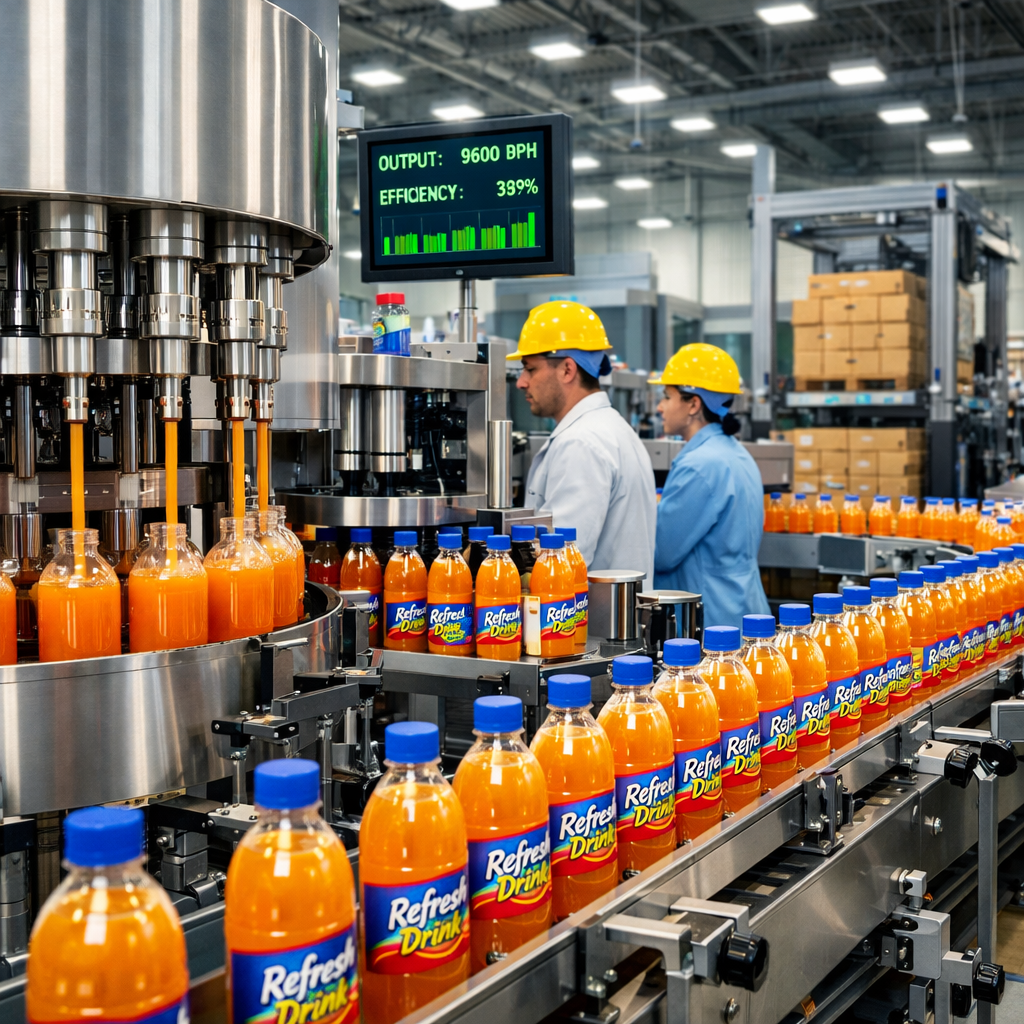
In liquid packaging, speed alone doesn’t determine performance— flow does. You can have a high-speed filler, advanced capping equipment, and automated labeling systems, but if one part of the line slows down, the entire operation suffers.
These slow points—known as bottlenecks—are one of the most common (and costly) issues in packaging operations. The good news? They’re also one of the most fixable—if you know how to identify them.
This guide will walk you through how to spot bottlenecks in your liquid packaging line and what to do about them.
What Is a Bottleneck?
A bottleneck is any point in your production line where capacity is limited, causing delays, backups, or reduced throughput.
In liquid packaging, bottlenecks often occur at:
- Filling stations
- Capping equipment
- Labeling systems
- Conveyor transitions
- Case packing or palletizing areas
Even a small slowdown in one area can ripple across the entire line—reducing efficiency, increasing downtime, and impacting output.
Why Bottlenecks Matter
Ignoring bottlenecks can lead to:
- Reduced production output
- Increased labor costs
- Higher product waste
- Equipment wear and tear
- Missed delivery deadlines
On the flip side, identifying and eliminating bottlenecks can significantly improve:
- Throughput
- Line efficiency (OEE)
- Product consistency
- Profit margins
Step 1: Measure Your Line Performance
Before you can fix a bottleneck, you need visibility.
Start by tracking key performance metrics:
- Units per minute (UPM) at each stage
- Downtime frequency and duration
- Reject rates
- Cycle times for each machine
If your filler is rated for 100 bottles per minute but your labeling system only handles 70, you’ve already identified a likely bottleneck.
Modern systems with visual dashboards or data tracking make this process much easier by providing real-time insights.
Step 2: Watch the Line in Action
Sometimes the simplest method is the most effective—observe your line.
Look for:
- Bottles backing up on conveyors
- Gaps in production flow
- Operators frequently intervening
- Machines stopping and restarting
- Accumulation points filling up or running empty
These visual cues often point directly to bottleneck locations.
Step 3: Compare Equipment Speeds
Each piece of equipment on your line has a maximum operating speed. The slowest machine typically dictates the line’s overall output.
Key questions to ask:
- Is your filler running faster than downstream equipment?
- Are capping or labeling systems struggling to keep up?
- Are conveyors properly synchronized?
Balanced lines—where each component operates at compatible speeds—are essential for optimal performance.
Step 4: Analyze Changeover Times
Frequent product or container changes can introduce hidden bottlenecks.
If your line requires long changeovers:
- Production time is lost
- Operators may rush adjustments, increasing errors
- Equipment may not be optimized for each SKU
Evaluate:
- How long changeovers take
- Which machines require the most adjustments
- Whether recipe-based or tool-less systems could reduce downtime
Step 5: Identify Manual Intervention Points
Manual processes often slow down otherwise automated lines.
Common examples include:
- Hand-loading containers
- Manual cap placement
- Operator adjustments during filling
- Manual inspection or rejection
While some manual steps are necessary, excessive intervention can limit throughput and introduce variability.
Step 6: Look at Product and Packaging Variables
Not all bottlenecks are mechanical—some are product-driven.
Consider:
- Viscosity changes affecting fill speed
- Foaming products slowing down filling
- Irregular container shapes affecting handling
- Cap types requiring different torque or alignment
If your equipment isn’t optimized for your product, performance will suffer.
Step 7: Evaluate Maintenance and Equipment Condition
Worn or poorly maintained equipment can create inconsistent performance.
Watch for:
- Inconsistent fill levels
- Leaking or dripping nozzles
- Conveyor misalignment
- Sensor malfunctions
Preventative maintenance and regular inspections help ensure each component operates at peak efficiency.
Step 8: Use Data to Pinpoint Root Causes
Advanced packaging lines now generate significant amounts of data.
Use this to your advantage by analyzing:
- Machine downtime logs
- Error codes and fault history
- Performance trends over time
- OEE (Overall Equipment Effectiveness) reports
Data allows you to move beyond symptoms and identify the true root cause of bottlenecks.
Common Bottlenecks in Liquid Packaging Lines
Filling Stage
- Incorrect fill speeds
- Product variability
- Nozzle issues
Capping Stage
- Misaligned caps
- Torque inconsistencies
- Cap feed interruptions
Labeling Stage
- Misalignment
- Adhesive issues
- Speed limitations
End-of-Line
- Slow case packing
- Manual palletizing
- Insufficient automation
How to Fix Bottlenecks
Once identified, solutions may include:
- Upgrading equipment (e.g., faster labeling systems)
- Balancing line speeds across all machines
- Adding accumulation tables to buffer flow
- Implementing automation or robotics
- Improving operator training
- Optimizing changeover procedures
- Switching to more precise filling technology
In many cases, improving one component can unlock performance across the entire line.
The Role of Integration
One of the most overlooked causes of bottlenecks is poor integration.
Your filling, capping, and labeling systems must work together— not independently.
Integrated systems provide:
- Synchronized speeds
- Centralized control
- Real-time communication between machines
- Improved overall efficiency
This is where working with a single equipment partner or experienced integrator can make a significant difference.
Final Thoughts
Bottlenecks are not always obvious— but they are always impactful.
By taking a systematic approach— combining observation, data analysis, and equipment evaluation— you can identify and eliminate inefficiencies that are limiting your production.
In today’s competitive manufacturing environment, optimizing your packaging line isn’t just about working harder— it’s about working smarter.
Ready to Improve Your Line Performance?
If you’re experiencing slowdowns, inconsistent output, or unexplained downtime, it may be time to evaluate your packaging line.
Apex Filling Systems can help you identify bottlenecks and design a solution that improves flow, efficiency, and long-term performance.
Share this
- Help First (97)
- Apex Filling Systems (78)
- Filling Equipment (76)
- Informational (70)
- Automatic Filling Machine (59)
- Industry Insights (59)
- Packaging Equipment (47)
- About Apex (20)
- American Made Goods (20)
- Fillers (18)
- Automatic Capping (11)
- Apex Filling (10)
- Apex (7)
- Uncategorized (5)
- Apex Team (3)
- Apex Family (2)
- Absolute Truth (1)
- Apex Way (1)
- Petroleum (1)
- oil (1)
- August 2026 (1)
- July 2026 (5)
- June 2026 (4)
- May 2026 (5)
- April 2026 (4)
- March 2026 (4)
- February 2026 (1)
- January 2026 (2)
- December 2025 (4)
- November 2025 (4)
- October 2025 (5)
- September 2025 (3)
- June 2025 (3)
- May 2025 (6)
- April 2025 (10)
- March 2025 (10)
- February 2025 (12)
- January 2025 (14)
- December 2024 (1)
- November 2024 (4)
- October 2024 (4)
- September 2024 (2)
- August 2024 (1)
- July 2024 (4)
- October 2022 (1)
- September 2022 (1)
- June 2022 (1)
- October 2021 (2)
- June 2021 (1)
- May 2021 (1)
- April 2021 (2)
- March 2021 (2)
- February 2021 (1)
- January 2021 (2)
- November 2020 (1)
- October 2020 (1)
- September 2020 (2)
- August 2020 (1)
- July 2020 (1)
- June 2020 (1)
- May 2020 (1)
- April 2020 (2)
- March 2020 (2)
- February 2020 (2)
- January 2020 (3)
- December 2019 (2)
- November 2019 (6)
- October 2019 (4)
- September 2019 (3)
- August 2019 (6)
- July 2019 (2)
- April 2019 (1)
- February 2019 (1)
- January 2019 (7)
- December 2018 (6)
- November 2018 (5)
- October 2018 (2)
- September 2018 (2)
- August 2018 (1)
- July 2018 (3)
- May 2018 (2)
- April 2018 (1)
- March 2018 (2)
- February 2018 (2)
- January 2018 (2)