
Share this
How to Train New Operators Quickly & Effectively on Filling Equipment
by APEX Filling Systems on Nov 07, 2025
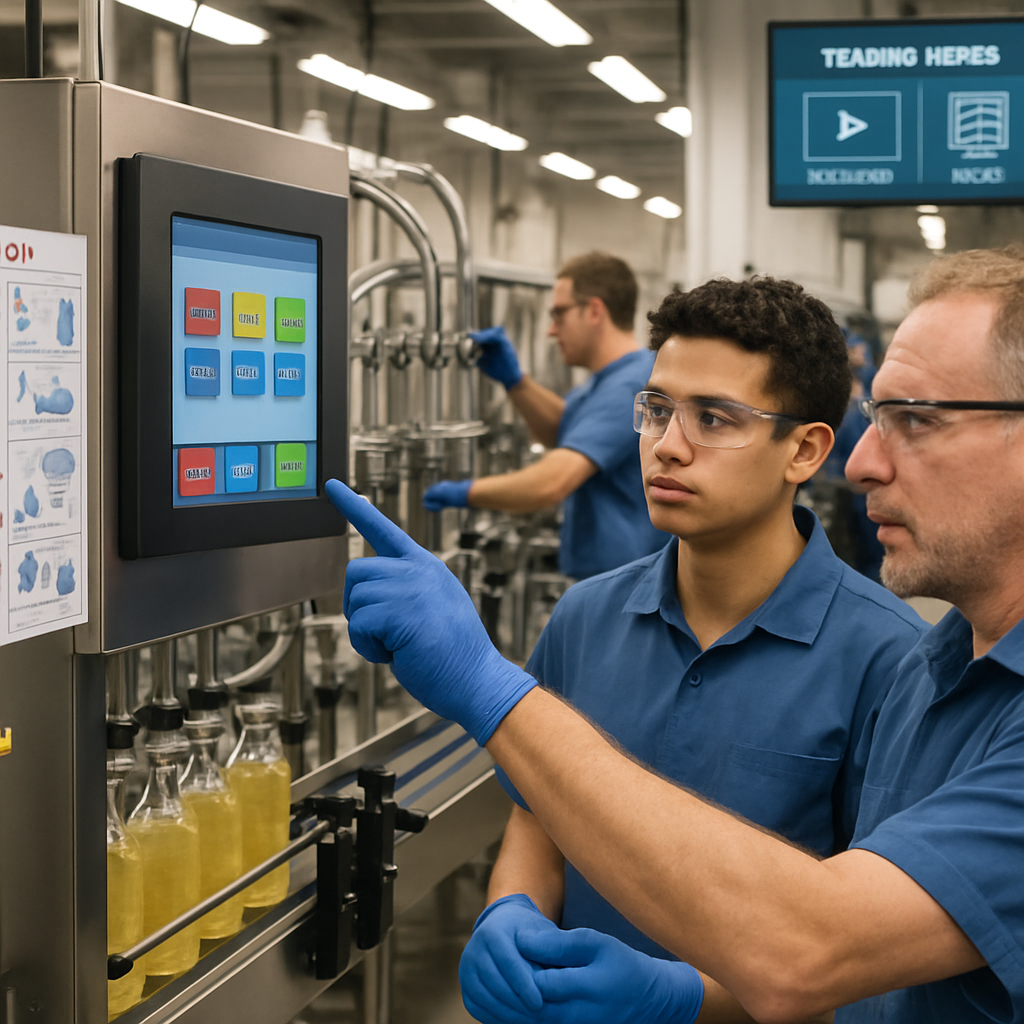
In today’s fast-paced manufacturing environment, the ability to get new operators up to speed on your liquid filling equipment is more important than ever. With workforce turnover, shifting production demands, and increasingly complex machinery, having a structured and efficient training program isn’t just a bonus—it’s a necessity.
Whether you run a small batch facility or a large-scale production line, here’s how to ensure new operators are trained both quickly and effectively—without sacrificing quality or safety.
1. Start with Standard Operating Procedures (SOPs)
Clear, well-documented SOPs are the foundation of effective training. Every filling line should have a set of easy-to-follow SOPs that outline:
-
Start-up and shut-down procedures
-
Routine maintenance requirements
-
Cleaning and sanitation steps
-
Safety protocols
-
Troubleshooting guidance
These documents should be accessible on the floor—either printed and laminated or integrated into digital HMIs for instant reference.
Pro Tip: Use diagrams or step-by-step photos in SOPs to help visual learners absorb information faster.
2. Use Hands-On, Shadow-Based Learning
Pair new operators with experienced technicians for side-by-side training. Watching and replicating real production tasks allows new hires to:
-
Understand machine rhythm and timing
-
Learn the "feel" of the equipment in action
-
Absorb real-world insights that aren’t in manuals
Let new hires observe for a short period, then guide them as they begin performing tasks themselves under supervision. This active learning method accelerates confidence and retention.
3. Incorporate Visual Aids and Video
Supplement hands-on training with short, targeted training videos. These could include:
-
Equipment overviews
-
Quick how-to guides on specific functions (e.g., nozzle alignment, sensor calibration)
-
Common mistakes and how to avoid them
Video content can be especially helpful for reinforcing learning post-shift or when reviewing procedures solo.
4. Leverage HMI and Smart Tech Features
Modern filling systems—like those from Apex Filling Systems—often come with advanced touchscreen interfaces (HMIs) that simplify training:
-
On-screen prompts for each step of operation
-
Built-in error codes with guided resolutions
-
Integrated maintenance checklists
Operators become familiar with the interface while learning the equipment, making it easier to transition from training to independent operation.
5. Break Training into Phases
Instead of overwhelming new team members with everything at once, stagger training over several phases:
| Phase | Focus Area |
|---|---|
| Phase 1 | Safety protocols + basic operation |
| Phase 2 | Setup + routine cleaning procedures |
| Phase 3 | Troubleshooting + changeovers |
| Phase 4 | Advanced operation + optimization |
Each phase builds on the previous one, ensuring understanding before moving forward.
6. Create a Certification or Checklist
Formalize the process with a certification system or checklist that must be completed before an operator is approved to run independently. Include checkpoints for:
-
SOP review
-
Equipment walk-throughs
-
Hands-on trials
-
Safety quiz or assessment
This approach promotes accountability and helps supervisors identify training gaps before they lead to mistakes.
7. Follow Up and Offer Ongoing Support
Training isn’t a one-and-done event. Schedule regular check-ins during the first few weeks to answer questions, correct technique, and build operator confidence. Encourage a culture where questions are welcomed—not penalized.
Final Thoughts
Fast and effective operator training is one of the smartest investments a packaging operation can make. It improves efficiency, reduces errors, and minimizes downtime due to mishandling or confusion. By combining hands-on learning, smart technology, and structured progression, manufacturers can ensure every operator is equipped to run equipment safely and successfully—right from day one.
Need help designing your filling line with operator ease in mind?
At Apex Filling Systems, we build training-friendly machines with intuitive interfaces, clear labeling, and guided prompts—because your success starts with your people.
Share this
- Help First (97)
- Apex Filling Systems (78)
- Filling Equipment (76)
- Informational (70)
- Automatic Filling Machine (59)
- Industry Insights (59)
- Packaging Equipment (47)
- About Apex (20)
- American Made Goods (20)
- Fillers (18)
- Automatic Capping (11)
- Apex Filling (10)
- Apex (7)
- Uncategorized (5)
- Apex Team (3)
- Apex Family (2)
- Absolute Truth (1)
- Apex Way (1)
- Petroleum (1)
- oil (1)
- August 2026 (1)
- July 2026 (5)
- June 2026 (4)
- May 2026 (5)
- April 2026 (4)
- March 2026 (4)
- February 2026 (1)
- January 2026 (2)
- December 2025 (4)
- November 2025 (4)
- October 2025 (5)
- September 2025 (3)
- June 2025 (3)
- May 2025 (6)
- April 2025 (10)
- March 2025 (10)
- February 2025 (12)
- January 2025 (14)
- December 2024 (1)
- November 2024 (4)
- October 2024 (4)
- September 2024 (2)
- August 2024 (1)
- July 2024 (4)
- October 2022 (1)
- September 2022 (1)
- June 2022 (1)
- October 2021 (2)
- June 2021 (1)
- May 2021 (1)
- April 2021 (2)
- March 2021 (2)
- February 2021 (1)
- January 2021 (2)
- November 2020 (1)
- October 2020 (1)
- September 2020 (2)
- August 2020 (1)
- July 2020 (1)
- June 2020 (1)
- May 2020 (1)
- April 2020 (2)
- March 2020 (2)
- February 2020 (2)
- January 2020 (3)
- December 2019 (2)
- November 2019 (6)
- October 2019 (4)
- September 2019 (3)
- August 2019 (6)
- July 2019 (2)
- April 2019 (1)
- February 2019 (1)
- January 2019 (7)
- December 2018 (6)
- November 2018 (5)
- October 2018 (2)
- September 2018 (2)
- August 2018 (1)
- July 2018 (3)
- May 2018 (2)
- April 2018 (1)
- March 2018 (2)
- February 2018 (2)
- January 2018 (2)