
Share this
Reducing Waste with Overflow Control and Precision Filling
by APEX Filling Systems on May 22, 2025
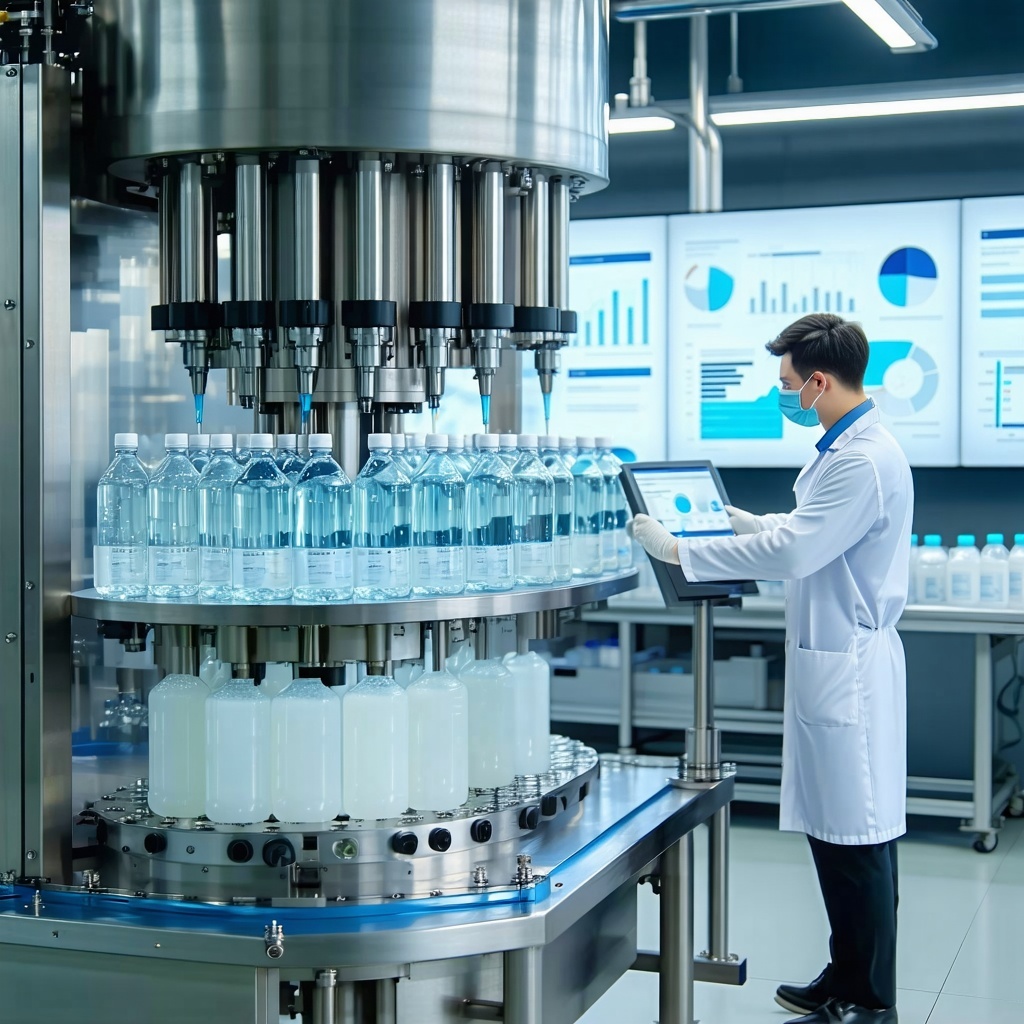
In the world of liquid packaging, waste isn’t just about what spills—it’s about lost profits, inconsistent product quality, and inefficiencies that slow down production. Whether you're a growing business or a high-output facility, reducing waste is key to maximizing profitability, improving sustainability, and maintaining brand trust.
At Apex Filling Systems, we specialize in helping manufacturers reduce waste at every stage of the filling process—particularly through overflow control and precision filling technology. In this post, we’ll explore how these solutions work and why they’re essential to running a cleaner, leaner, and more cost-effective operation.
💡 Why Reducing Waste Matters
Waste in liquid filling operations can occur in multiple ways:
-
Overfilled or underfilled containers
-
Spillage during high-speed production
-
Inefficient changeovers and calibration errors
-
Incorrect product-to-container pairing
Even small losses per container can add up to thousands of dollars annually. Beyond cost, excessive waste can also lead to:
-
Product recalls
-
Customer dissatisfaction
-
Regulatory penalties
-
Negative environmental impact
Fortunately, there are proven ways to reduce that waste—starting with how your machine fills each container.
🚿 What Is Overflow Control?
Overflow control is a filling method where each container is filled to the exact same visual level, regardless of small variances in container shape or volume. It’s ideal for thin, free-flowing liquids and applications where retail shelf consistency is key.
✅ Benefits of Overflow Fillers:
-
Prevents overfill and product spillage
-
Ensures uniform appearance for clear containers
-
Sends excess product back to the supply tank (closed loop)
-
Reduces waste during fast-paced production
🔹 Best for: Water, juice, cleaning products, spirits, and other low-viscosity, non-foaming liquids.
🧪 What Is Precision Filling?
Precision filling refers to filling systems that measure exact product volumes with tight tolerances—ensuring that every container receives the same amount of liquid with minimal deviation.
Common systems include:
-
Piston fillers for thick or viscous products
-
Peristaltic fillers for sanitary or small-batch applications
-
Pump fillers with flow meters for varied viscosities
✅ Benefits of Precision Fillers:
-
Reduces overfill and underfill
-
Helps meet regulatory and labeling requirements
-
Cuts down on wasted product and packaging
-
Increases confidence in QA processes
🔹 Best for: Lotions, sauces, oils, cosmetics, and products where fill volume must be exact.
🔧 How Apex Filling Systems Helps You Minimize Waste
At Apex, we engineer filling equipment with features specifically designed to cut waste and boost efficiency:
✔ Advanced Fill Controls
Whether you're using overflow or piston technology, our systems are designed for repeatable fill accuracy, customizable settings, and smooth product handling.
✔ Closed-Loop Overflow Systems
Our overflow fillers recapture excess product and return it to the supply tank—eliminating waste and saving money on every cycle.
✔ Quick-Change Components
Reduce waste during product changeovers with modular machine parts that simplify the process and reduce setup errors.
✔ Foam-Control Nozzles & Drip-Free Fill Heads
Minimize mess and clean-up time with nozzles built for clean, controlled dispensing—even for foamy or tricky products.
♻️ Waste Reduction and Sustainability
Beyond the cost savings, reducing waste also plays a major role in your company’s environmental impact. By eliminating product and packaging waste, manufacturers can:
-
Improve sustainability goals
-
Reduce their carbon and water footprint
-
Appeal to eco-conscious consumers
-
Comply with industry regulations
Modern consumers want to support brands that care about the planet—and your filling line can help make that promise visible.
📊 Real-World Impact: Small Improvements, Big Results
Here’s what a 1% overfill looks like across 1 million units of a 16 oz product:
-
1% of 16 oz = 0.16 oz
-
0.16 oz x 1,000,000 = 160,000 oz of wasted product
-
That’s 1,250 gallons of unnecessary product loss—plus the packaging, shipping, and labor to go with it
With precision filling, that 1% waste becomes profit.
💬 FAQs
1. Can overflow filling be used for thick or foamy products?
Overflow systems are best for thin, non-viscous liquids. For thick or foamy products, piston or pump fillers with foam control features are more effective.
2. What’s the best way to measure ROI from reducing waste?
Track product loss, overfill volume, rework time, and clean-up labor before and after upgrading your filling equipment. Most companies see ROI within the first 6–12 months.
3. Is it possible to reduce waste without going fully automated?
Yes! Even semi-automatic systems from Apex can be optimized for waste reduction with the right setup, nozzles, and controls.
🤝 Work with Apex to Build a Cleaner, More Profitable Line
Apex Filling Systems is committed to helping you fill smarter, not harder. Whether you need high-speed consistency or exact fill volumes, we’ll design a system that helps you reduce waste, improve accuracy, and streamline your production.
✅ Overflow and precision fillers
✅ Custom nozzles and fill heads
✅ Modular, scalable solutions for any industry
✅ Expert training and support
💬 Ready to eliminate waste and protect your bottom line?
👉 Contact Apex today to optimize your filling line.
👉 Explore our waste-reducing filling solutions.
Share this
- Help First (97)
- Apex Filling Systems (78)
- Filling Equipment (76)
- Informational (70)
- Automatic Filling Machine (59)
- Industry Insights (59)
- Packaging Equipment (47)
- About Apex (20)
- American Made Goods (20)
- Fillers (18)
- Automatic Capping (11)
- Apex Filling (10)
- Apex (7)
- Uncategorized (5)
- Apex Team (3)
- Apex Family (2)
- Absolute Truth (1)
- Apex Way (1)
- Petroleum (1)
- oil (1)
- August 2026 (1)
- July 2026 (5)
- June 2026 (4)
- May 2026 (5)
- April 2026 (4)
- March 2026 (4)
- February 2026 (1)
- January 2026 (2)
- December 2025 (4)
- November 2025 (4)
- October 2025 (5)
- September 2025 (3)
- June 2025 (3)
- May 2025 (6)
- April 2025 (10)
- March 2025 (10)
- February 2025 (12)
- January 2025 (14)
- December 2024 (1)
- November 2024 (4)
- October 2024 (4)
- September 2024 (2)
- August 2024 (1)
- July 2024 (4)
- October 2022 (1)
- September 2022 (1)
- June 2022 (1)
- October 2021 (2)
- June 2021 (1)
- May 2021 (1)
- April 2021 (2)
- March 2021 (2)
- February 2021 (1)
- January 2021 (2)
- November 2020 (1)
- October 2020 (1)
- September 2020 (2)
- August 2020 (1)
- July 2020 (1)
- June 2020 (1)
- May 2020 (1)
- April 2020 (2)
- March 2020 (2)
- February 2020 (2)
- January 2020 (3)
- December 2019 (2)
- November 2019 (6)
- October 2019 (4)
- September 2019 (3)
- August 2019 (6)
- July 2019 (2)
- April 2019 (1)
- February 2019 (1)
- January 2019 (7)
- December 2018 (6)
- November 2018 (5)
- October 2018 (2)
- September 2018 (2)
- August 2018 (1)
- July 2018 (3)
- May 2018 (2)
- April 2018 (1)
- March 2018 (2)
- February 2018 (2)
- January 2018 (2)