
Share this
Top Workplace Safety Risks in Packaging Lines—And How to Avoid Them
by APEX Filling Systems on Dec 12, 2025
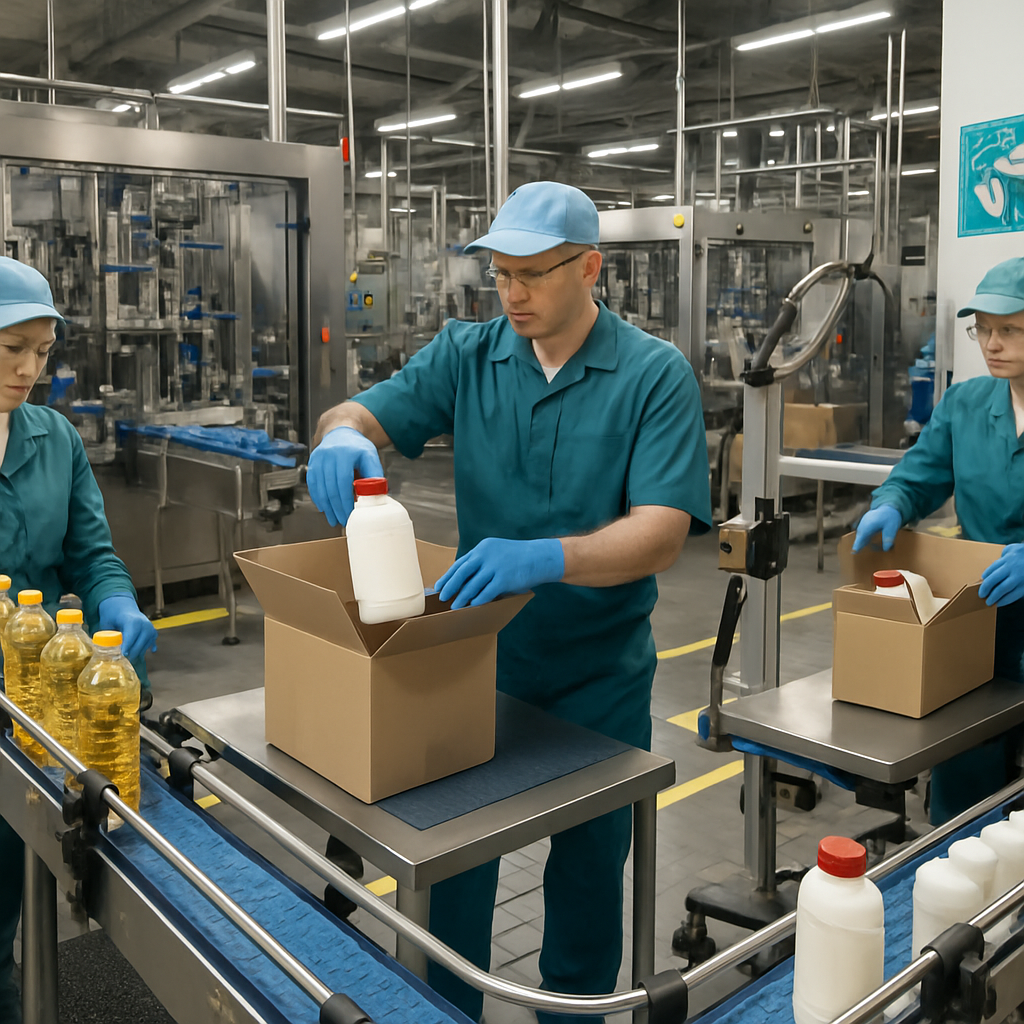
In the high-speed environment of modern packaging lines, safety is not just a compliance requirement—it’s a cornerstone of operational efficiency, employee morale, and long-term profitability. Whether you're filling liquids, capping bottles, or labeling containers, your equipment is only as reliable as the environment in which it's operated. For manufacturers seeking to increase throughput without sacrificing safety, identifying and mitigating the most common risks is a vital first step.
1. Slips, Trips, and Falls
The Risk: Liquid spills, condensation, and packaging debris are common in filling environments, especially when handling viscous or volatile products. Wet or cluttered floors can quickly become a hazard.
How to Avoid It:
-
Install anti-slip mats and proper drainage systems.
-
Use clearly marked walkways and frequent floor inspections.
-
Train staff to immediately report and clean up spills.
-
Implement spill-resistant filling equipment where possible.
2. Pinch Points and Moving Machinery
The Risk: Conveyor belts, rotary systems, and automated capping heads present multiple pinch and crush points. Operators working near these machines are at risk of serious injury if safeguards are inadequate.
How to Avoid It:
-
Use physical barriers and interlocking safety guards.
-
Train employees on lockout/tagout (LOTO) protocols for maintenance.
-
Add emergency stop buttons at accessible points along the line.
-
Regularly inspect safety switches and machine interlocks.
3. Electrical Hazards
The Risk: Automated filling equipment runs on complex electrical systems. Faulty wiring, improper grounding, or exposed circuits can lead to shocks, burns, or equipment failure.
How to Avoid It:
-
Conduct regular electrical system audits by certified professionals.
-
Keep control panels locked and accessible only to trained personnel.
-
Use GFCI outlets in wet zones and conduct annual safety testing.
4. Ergonomic Strain
The Risk: Repetitive motion, awkward postures, and manual handling of heavy containers contribute to musculoskeletal injuries. These risks often go unnoticed until productivity declines or medical claims arise.
How to Avoid It:
-
Design workstations to support neutral postures and easy reach.
-
Use adjustable height tables and assistive lifting devices.
-
Rotate tasks to reduce repetitive strain.
-
Educate workers on proper lifting and workstation ergonomics.
5. Exposure to Hazardous Chemicals
The Risk: Packaging corrosive, flammable, or volatile liquids (like industrial cleaners, solvents, or alcohol-based products) introduces risks of skin irritation, inhalation hazards, or even fires.
How to Avoid It:
-
Use filling equipment made of chemically compatible materials like HDPE or stainless steel.
-
Implement proper ventilation and fume extraction systems.
-
Provide PPE including gloves, goggles, and respirators when required.
-
Ensure SDS sheets and training are available for all chemicals used.
6. Inadequate Operator Training
The Risk: New hires or untrained staff operating complex filling machinery pose a safety threat to themselves and others. Lack of training leads to errors that can cause injury or equipment damage.
How to Avoid It:
-
Create a structured onboarding and training program for all machine operators.
-
Include hands-on, supervised practice before independent operation.
-
Refresh training quarterly and after any equipment changes.
-
Post clear visual instructions and SOPs at each machine.
7. Improper Machine Maintenance
The Risk: Worn or poorly maintained equipment can malfunction, leading to unexpected shutdowns, line jams, or accidents.
How to Avoid It:
-
Establish and document a preventative maintenance schedule.
-
Use data-driven maintenance software to track machine performance.
-
Inspect safety sensors, nozzles, and emergency systems regularly.
-
Schedule downtime for routine maintenance rather than waiting for a breakdown.
Building a Culture of Safety
Safety on the packaging line is not just about checklists—it’s about culture. When employees feel empowered to report issues, participate in safety discussions, and take ownership of their workspace, incidents decrease and productivity rises.
By addressing these key risks with proactive planning, equipment upgrades, and ongoing education, manufacturers can create safer, more efficient production environments that support long-term success.
Ready to Upgrade Your Safety Strategy?
Apex Filling Systems offers custom-engineered equipment built with operator safety and ergonomics in mind. From explosion-resistant chemical fillers to easy-clean, no-drip nozzles, we help manufacturers create safer packaging lines without compromising performance.
📞 Contact our team for a free consultation today.
Share this
- Help First (97)
- Apex Filling Systems (78)
- Filling Equipment (76)
- Informational (70)
- Automatic Filling Machine (59)
- Industry Insights (59)
- Packaging Equipment (47)
- About Apex (20)
- American Made Goods (20)
- Fillers (18)
- Automatic Capping (11)
- Apex Filling (10)
- Apex (7)
- Uncategorized (5)
- Apex Team (3)
- Apex Family (2)
- Absolute Truth (1)
- Apex Way (1)
- Petroleum (1)
- oil (1)
- August 2026 (1)
- July 2026 (5)
- June 2026 (4)
- May 2026 (5)
- April 2026 (4)
- March 2026 (4)
- February 2026 (1)
- January 2026 (2)
- December 2025 (4)
- November 2025 (4)
- October 2025 (5)
- September 2025 (3)
- June 2025 (3)
- May 2025 (6)
- April 2025 (10)
- March 2025 (10)
- February 2025 (12)
- January 2025 (14)
- December 2024 (1)
- November 2024 (4)
- October 2024 (4)
- September 2024 (2)
- August 2024 (1)
- July 2024 (4)
- October 2022 (1)
- September 2022 (1)
- June 2022 (1)
- October 2021 (2)
- June 2021 (1)
- May 2021 (1)
- April 2021 (2)
- March 2021 (2)
- February 2021 (1)
- January 2021 (2)
- November 2020 (1)
- October 2020 (1)
- September 2020 (2)
- August 2020 (1)
- July 2020 (1)
- June 2020 (1)
- May 2020 (1)
- April 2020 (2)
- March 2020 (2)
- February 2020 (2)
- January 2020 (3)
- December 2019 (2)
- November 2019 (6)
- October 2019 (4)
- September 2019 (3)
- August 2019 (6)
- July 2019 (2)
- April 2019 (1)
- February 2019 (1)
- January 2019 (7)
- December 2018 (6)
- November 2018 (5)
- October 2018 (2)
- September 2018 (2)
- August 2018 (1)
- July 2018 (3)
- May 2018 (2)
- April 2018 (1)
- March 2018 (2)
- February 2018 (2)
- January 2018 (2)