
Share this
Training Operators in Automated Facilities: What Works in 2026
by APEX Filling Systems on Jun 26, 2026
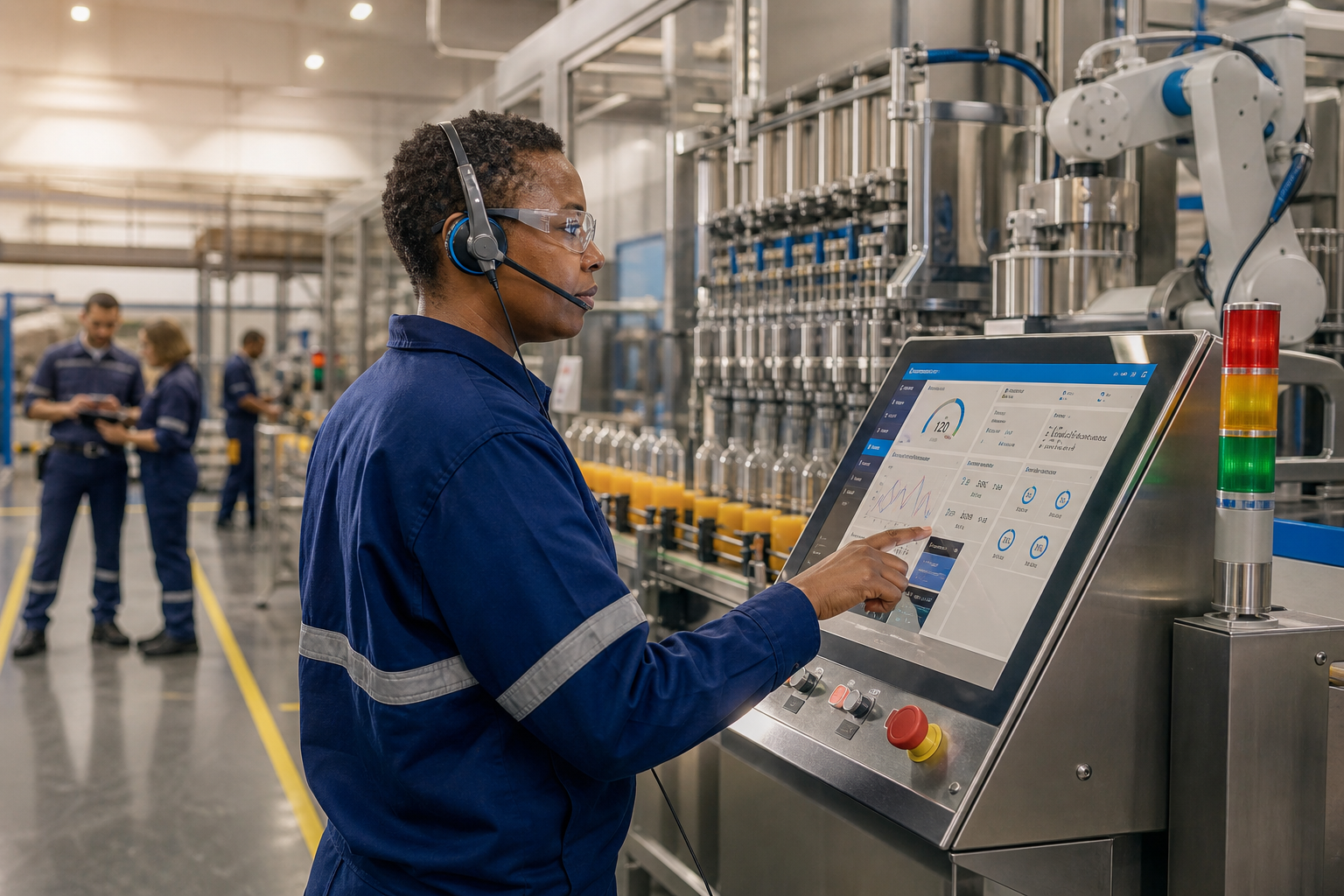
Automation has transformed modern manufacturing. Today's liquid packaging lines are faster, smarter, and more connected than ever before. Advanced filling systems, robotic material handling, vision inspection systems, and real-time production analytics have dramatically improved efficiency and throughput.
However, one thing hasn't changed: people remain essential to the success of every packaging operation.
In fact, as facilities become more automated, operator training becomes even more important. The role of the operator is evolving from manual machine operation to system monitoring, troubleshooting, process optimization, and data-driven decision-making.
So what does effective operator training look like in 2026? Let's explore the strategies manufacturers are using to develop skilled, confident operators in increasingly automated environments.
Why Operator Training Still Matters
One of the biggest misconceptions about automation is that it eliminates the need for operator expertise.
The reality is quite the opposite.
Modern operators are responsible for:
- Monitoring production performance
- Managing changeovers
- Responding to alarms and faults
- Ensuring product quality
- Interpreting production data
- Supporting preventative maintenance efforts
Even the most advanced equipment can experience downtime, waste, and quality issues if operators are not properly trained.
Effective training directly impacts:
- Productivity
- OEE (Overall Equipment Effectiveness)
- Product quality
- Workplace safety
- Equipment lifespan
The Evolution of the Packaging Line Operator
In traditional facilities, operators spent much of their time:
- Loading containers
- Making manual adjustments
- Monitoring fill levels visually
- Performing repetitive tasks
In automated facilities, operators increasingly serve as:
System Supervisors
Monitoring multiple machines simultaneously.
Problem Solvers
Diagnosing and correcting issues quickly.
Data Users
Interpreting dashboards and performance metrics.
Process Optimizers
Identifying opportunities to improve efficiency.
As automation advances, technical competency becomes increasingly valuable.
What Works in 2026: Modern Training Strategies
1. Train Beyond Basic Machine Operation
Many companies still focus training solely on operating equipment.
While machine operation remains important, today's training programs should also include:
- Understanding production workflows
- Quality control principles
- Equipment integration concepts
- Data interpretation
- Troubleshooting methodologies
Operators who understand the entire process are better equipped to make informed decisions.
2. Use Visual Learning Tools
Modern manufacturing equipment generates large amounts of information.
Visual learning tools help operators absorb and retain information more effectively.
Examples include:
- Interactive HMIs
- Digital work instructions
- Video-based training modules
- Visual troubleshooting guides
- Real-time production dashboards
Visual systems help reduce learning curves and improve consistency.
3. Leverage Simulation and Virtual Training
One of the most significant training advancements in 2026 is simulation-based learning.
Virtual training environments allow operators to:
- Practice machine operation
- Learn changeover procedures
- Respond to simulated faults
- Gain experience without interrupting production
Benefits include:
- Faster onboarding
- Reduced training costs
- Improved confidence
- Lower risk of equipment damage
Simulation training is becoming increasingly common in advanced manufacturing facilities.
4. Focus on Data Literacy
Modern packaging lines provide operators with access to:
- OEE metrics
- Throughput data
- Fill accuracy reports
- Downtime analytics
- Maintenance alerts
Training should help operators understand:
What the Data Means
Not just what the numbers are, but why they matter.
How to Act on the Data
Operators should know how to identify trends and respond appropriately.
Data literacy is quickly becoming one of the most important operator skills.
5. Standardize Training Programs
Inconsistent training often leads to inconsistent results.
Successful facilities create standardized programs that include:
- Written procedures
- Checklists
- Competency assessments
- Certification milestones
Standardization helps ensure all operators receive the same foundational knowledge regardless of experience level.
6. Incorporate Hands-On Learning
Classroom training alone is rarely enough.
Operators learn best when they can:
- Interact with equipment
- Practice procedures
- Experience real-world scenarios
Hands-on training reinforces theoretical concepts and improves retention.
The most effective programs combine:
- Classroom instruction
- Digital learning
- Practical application
7. Train for Troubleshooting
Automated equipment reduces routine tasks but increases the importance of troubleshooting skills.
Operators should understand how to:
- Identify root causes
- Interpret alarm messages
- Respond to machine faults
- Escalate issues appropriately
The faster operators can diagnose problems, the less downtime the facility experiences.
8. Cross-Train Across the Entire Packaging Line
Many facilities still train operators on individual machines.
However, modern packaging lines are highly integrated.
Operators should understand:
- Filling systems
- Capping equipment
- Labeling machines
- Conveyors
- Inspection systems
Cross-training improves flexibility and helps operators see how their actions affect overall line performance.
9. Prioritize Changeover Training
Frequent SKU changes are becoming more common across food, beverage, chemical, and personal care industries.
Poorly executed changeovers can lead to:
- Downtime
- Product waste
- Quality issues
Training should focus on:
- Standardized changeover procedures
- Recipe management systems
- Equipment adjustments
- Verification processes
Efficient changeovers are a major contributor to improved OEE.
10. Create a Culture of Continuous Learning
Technology is evolving rapidly.
Operator training cannot be treated as a one-time event.
Successful manufacturers encourage ongoing development through:
- Refresher courses
- Skills assessments
- New equipment training
- Process improvement initiatives
Continuous learning helps facilities adapt to changing technologies and market demands.
The Role of Human-Machine Interfaces (HMIs)
Modern HMIs are becoming powerful training tools themselves.
Today's interfaces often include:
- Guided setup instructions
- Diagnostic information
- Maintenance reminders
- Performance dashboards
User-friendly HMIs reduce operator errors while accelerating the learning process.
When evaluating new equipment, training and usability should be key considerations.
Common Training Mistakes to Avoid
Training Only During Onboarding
Training should continue throughout an employee's career.
Assuming Experience Equals Competence
Even experienced operators need training on new technologies and processes.
Ignoring Soft Skills
Communication, teamwork, and problem-solving are increasingly important in automated facilities.
Focusing Only on Speed
Training should prioritize accuracy, safety, and consistency—not just production rate.
The Future of Operator Training
Looking ahead, operator training will continue evolving through:
Augmented Reality (AR)
Interactive visual guidance during maintenance and setup.
AI-Powered Learning Platforms
Personalized training based on individual performance.
Digital Twins
Virtual replicas of production lines used for simulation and education.
Remote Training Support
Real-time assistance from equipment manufacturers and technical experts.
These technologies will help manufacturers train operators more effectively while reducing downtime and training costs.
Final Thoughts
Automation is changing manufacturing, but people remain at the center of operational success.
The most successful facilities in 2026 are not simply investing in better equipment—they are investing in better-trained operators.
By focusing on:
- Data literacy
- Troubleshooting skills
- Cross-functional knowledge
- Continuous learning
- Practical experience
manufacturers can build a workforce capable of maximizing the value of modern automation.
In the end, smart factories still need smart operators.
Ready to Improve Performance Through Better Equipment and Training?
Apex Filling Systems designs filling, capping, and labeling solutions with operator usability in mind. From intuitive controls to advanced automation features, we help manufacturers build packaging lines that are efficient, reliable, and easy to operate.
Contact Apex Filling Systems today to learn how the right equipment can support both operator success and long-term production growth.
About Apex Filling Systems
Apex Filling Systems designs and manufactures liquid filling, capping, labeling, and conveying equipment for manufacturers across the food, beverage, chemical, personal care, DEF, and distilled spirits industries. Every packaging application is unique, and our team works closely with customers to recommend equipment that fits their products, production goals, and future growth plans.
Related Resources
Share this
- Help First (97)
- Apex Filling Systems (78)
- Filling Equipment (76)
- Informational (70)
- Automatic Filling Machine (59)
- Industry Insights (59)
- Packaging Equipment (47)
- About Apex (20)
- American Made Goods (20)
- Fillers (18)
- Automatic Capping (11)
- Apex Filling (10)
- Apex (7)
- Uncategorized (5)
- Apex Team (3)
- Apex Family (2)
- Absolute Truth (1)
- Apex Way (1)
- Petroleum (1)
- oil (1)
- August 2026 (1)
- July 2026 (5)
- June 2026 (4)
- May 2026 (5)
- April 2026 (4)
- March 2026 (4)
- February 2026 (1)
- January 2026 (2)
- December 2025 (4)
- November 2025 (4)
- October 2025 (5)
- September 2025 (3)
- June 2025 (3)
- May 2025 (6)
- April 2025 (10)
- March 2025 (10)
- February 2025 (12)
- January 2025 (14)
- December 2024 (1)
- November 2024 (4)
- October 2024 (4)
- September 2024 (2)
- August 2024 (1)
- July 2024 (4)
- October 2022 (1)
- September 2022 (1)
- June 2022 (1)
- October 2021 (2)
- June 2021 (1)
- May 2021 (1)
- April 2021 (2)
- March 2021 (2)
- February 2021 (1)
- January 2021 (2)
- November 2020 (1)
- October 2020 (1)
- September 2020 (2)
- August 2020 (1)
- July 2020 (1)
- June 2020 (1)
- May 2020 (1)
- April 2020 (2)
- March 2020 (2)
- February 2020 (2)
- January 2020 (3)
- December 2019 (2)
- November 2019 (6)
- October 2019 (4)
- September 2019 (3)
- August 2019 (6)
- July 2019 (2)
- April 2019 (1)
- February 2019 (1)
- January 2019 (7)
- December 2018 (6)
- November 2018 (5)
- October 2018 (2)
- September 2018 (2)
- August 2018 (1)
- July 2018 (3)
- May 2018 (2)
- April 2018 (1)
- March 2018 (2)
- February 2018 (2)
- January 2018 (2)