
Share this
Why Custom Filling Solutions Are Outperforming One‑Size‑Fits‑All Machines
by APEX Filling Systems on Nov 21, 2025
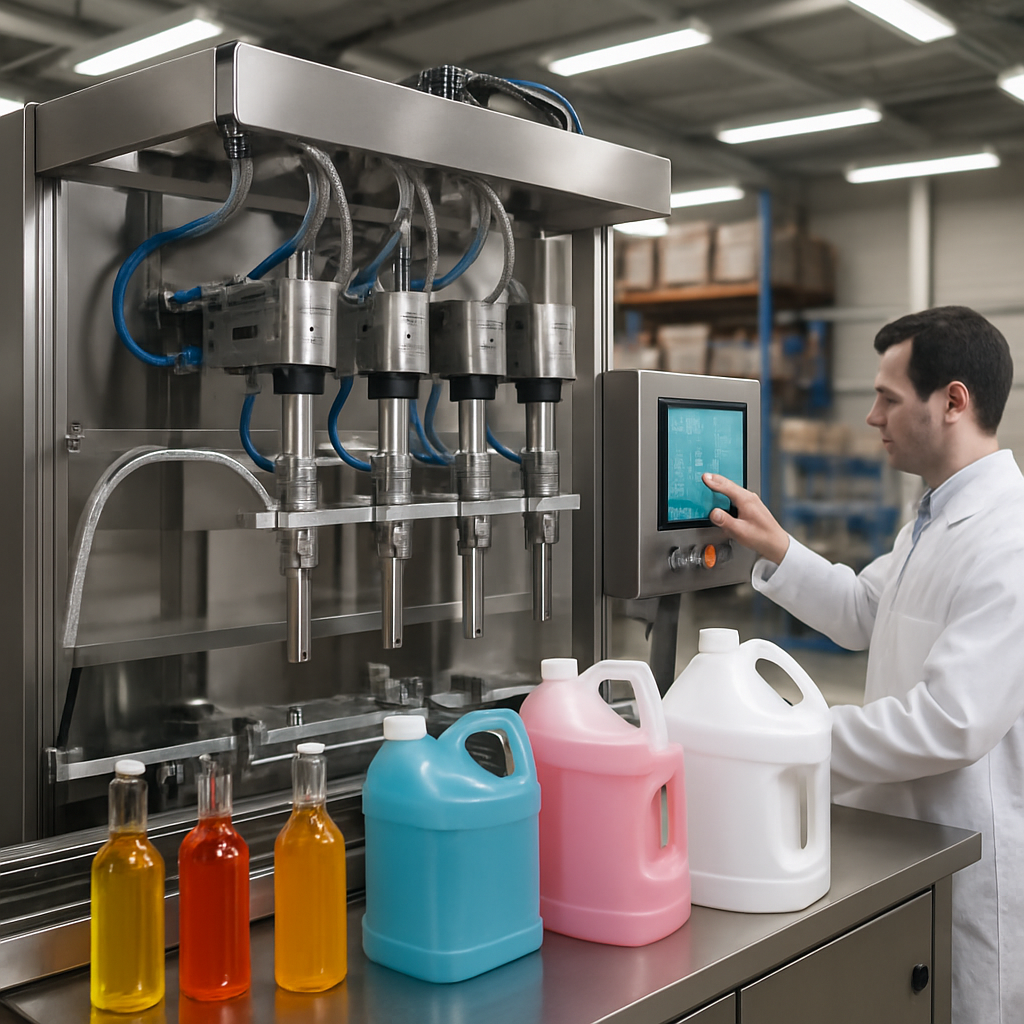
In today’s fast‑moving packaging world, generic filling machines may seem like a convenient shortcut—but they often come with hidden compromises. From handling unusual liquid viscosities to adapting to evolving packaging SKUs, a cookie‑cutter approach rarely delivers long‑term value. That’s where custom filling solutions shine. Designed to match your product, container, process and growth plan, these tailored systems can significantly outperform one‑size‑fits‑all machines in accuracy, efficiency, scalability and cost‑effectiveness.
At Apex Filling Systems, we’ve witnessed how brands across industries—from beverages to chemicals—gain real competitive advantage by choosing solutions built for their specific needs. In this blog, we’ll explore the key reasons custom filling systems outperform generic models, how to evaluate the fit for your line, and what to look for in a strategic partner.
1. Optimized for Your Product Characteristics
Every liquid product brings its own set of challenges:
-
Viscosity, from thin water‑like formulas to thick pastes
-
Foaming, particulates, and chemical compatibility
-
Container sizes, shapes and materials
-
Fill volume tolerances and regulatory demands
Generic machines are built for average cases—not the edge cases that often cause production headaches. Custom systems, however, start with a deep dive into these product specifics and engineer components accordingly—nozzle design, pump type, fill method, materials of construction and more. According to industry sources, “custom filling solutions… offer flexibility, speed and quality control that generic equipment or processes often can’t match.”
For example: a specialty oil in narrow‑neck glass bottles may require servo‑driven pumps, drip‑free nozzles and inert gas blanketing. A generic filler might struggle or require compromises like slower speed or frequent changeovers. A custom machine, by contrast, is built around that exact need.
2. Greater Efficiency and Reduced Waste
Tailored machines can deliver major efficiency gains. Some of the advantages include:
-
Faster changeovers thanks to modular components and quick‑swap parts
-
Improved fill accuracy and reduced overfill or giveaway
-
Minimized downtime thanks to better design for tasks your product requires
Studies show that custom filling solutions enhance efficiency by using advanced technologies like variable‑speed drives and smart controls, improving throughput and reducing labor costs.
In effect: by starting with your specific product, you avoid the compromises that lead to excess waste, slower speeds or frequent recalibrations.
3. Flexibility for Scaling and SKU Variation
Today’s packaging lines need to adapt to new flavors, formats, lighter packaging, smaller batches, and evolving regulations. One‑size‑fits‑all machines are often rigid; every time you introduce a new SKU or container type you face long changeover times or even new equipment. Custom machines, however, can be built with scalability in mind: modular heads, configurable conveyors, software recipes and easy upgrades.
As one industry article notes, custom solutions offer “increased flexibility … companies can adapt the machine to accommodate different types of products, packaging sizes, or production volumes without major disruptions.”
This future‑proofing means you’re not just buying a machine — you’re buying a machine that evolves with your business.
4. Compliance, Quality and Brand Integrity
When you’re operating in regulated industries (food & beverage, personal care, chemicals, pharmaceuticals), precision and traceability matter. Custom filling solutions allow you to incorporate features that generic systems may lack: sanitary finish on contact parts, CIP (clean‑in‑place) design, material certifications, advanced controls, data logging and integration with MES/ERP systems.
Customization helps ensure that your machine doesn’t just fill—it aligns with your quality program, audit readiness and brand promise. A standard machine may meet baseline requirements, but one built for your exact product and environment supports your long‑term reputation and regulatory compliance.
5. Better Total Cost of Ownership (TCO)
Although custom machines often carry a higher upfront investment, they can yield superior ROI over time. Why? Because they reduce waste, minimize downtime, enable faster changeovers, and avoid the costs of frequent retrofits or replacements. As one case study explains, “While upfront investment may be higher than off‑the‑shelf options, tailored solutions are designed for maximum efficiency and durability, reducing maintenance costs and downtime over time.”
When you evaluate TCO rather than just purchase price, customization can make much more sense.
6. How to Decide If You Need a Custom Solution
Ask yourself the following questions:
-
Do you fill more than one product type, or often switch container formats?
-
Is your product’s viscosity, chemical composition or flow behavior unusual or challenging?
-
Are changeovers, waste or downtime impacting your profitability?
-
Do you expect high growth, SKU expansion or regulatory changes in the near future?
-
Do standard machines force you into production compromises (slower speed, more waste, manual adjustments)?
If you answered yes to one or more of those, a custom filling solution could be the smarter path forward.
7. What to Look for in a Custom Filling Partner
Choosing a partner who understands your industry and product intimately is key. Look for:
-
Proven track record in your product category or viscosity range
-
A deep consultation process that includes product testing and pilot trials
-
Modular design philosophy (so you can upgrade, not replace)
-
Support for servicing, spare parts and changeover optimization
-
Transparent ROI modelling and clear communication
At Apex Filling Systems, we excel in partnering with brands to design machines that solve their specific challenges—not force them into generic workflows.
Final Thoughts
In a marketplace where speed, quality, flexibility and sustainability all compete for attention, one size rarely fits all. Custom filling solutions outperform standard machines because they align directly with your product attributes, process realities and growth roadmap. They cost slightly more up‑front, but over their lifecycle they deliver fewer compromises, more uptime and better brand consistency.
If you’re ready to move beyond standard equipment and invest in a system made for you, let’s connect — the right filling solution isn’t off‑the‑shelf, it’s built around you.
👉 Contact Apex Filling Systems today for a custom consult and see how tailored filling equipment can drive your operation forward.
Share this
- Help First (97)
- Apex Filling Systems (78)
- Filling Equipment (76)
- Informational (70)
- Automatic Filling Machine (59)
- Industry Insights (59)
- Packaging Equipment (47)
- About Apex (20)
- American Made Goods (20)
- Fillers (18)
- Automatic Capping (11)
- Apex Filling (10)
- Apex (7)
- Uncategorized (5)
- Apex Team (3)
- Apex Family (2)
- Absolute Truth (1)
- Apex Way (1)
- Petroleum (1)
- oil (1)
- August 2026 (1)
- July 2026 (5)
- June 2026 (4)
- May 2026 (5)
- April 2026 (4)
- March 2026 (4)
- February 2026 (1)
- January 2026 (2)
- December 2025 (4)
- November 2025 (4)
- October 2025 (5)
- September 2025 (3)
- June 2025 (3)
- May 2025 (6)
- April 2025 (10)
- March 2025 (10)
- February 2025 (12)
- January 2025 (14)
- December 2024 (1)
- November 2024 (4)
- October 2024 (4)
- September 2024 (2)
- August 2024 (1)
- July 2024 (4)
- October 2022 (1)
- September 2022 (1)
- June 2022 (1)
- October 2021 (2)
- June 2021 (1)
- May 2021 (1)
- April 2021 (2)
- March 2021 (2)
- February 2021 (1)
- January 2021 (2)
- November 2020 (1)
- October 2020 (1)
- September 2020 (2)
- August 2020 (1)
- July 2020 (1)
- June 2020 (1)
- May 2020 (1)
- April 2020 (2)
- March 2020 (2)
- February 2020 (2)
- January 2020 (3)
- December 2019 (2)
- November 2019 (6)
- October 2019 (4)
- September 2019 (3)
- August 2019 (6)
- July 2019 (2)
- April 2019 (1)
- February 2019 (1)
- January 2019 (7)
- December 2018 (6)
- November 2018 (5)
- October 2018 (2)
- September 2018 (2)
- August 2018 (1)
- July 2018 (3)
- May 2018 (2)
- April 2018 (1)
- March 2018 (2)
- February 2018 (2)
- January 2018 (2)