
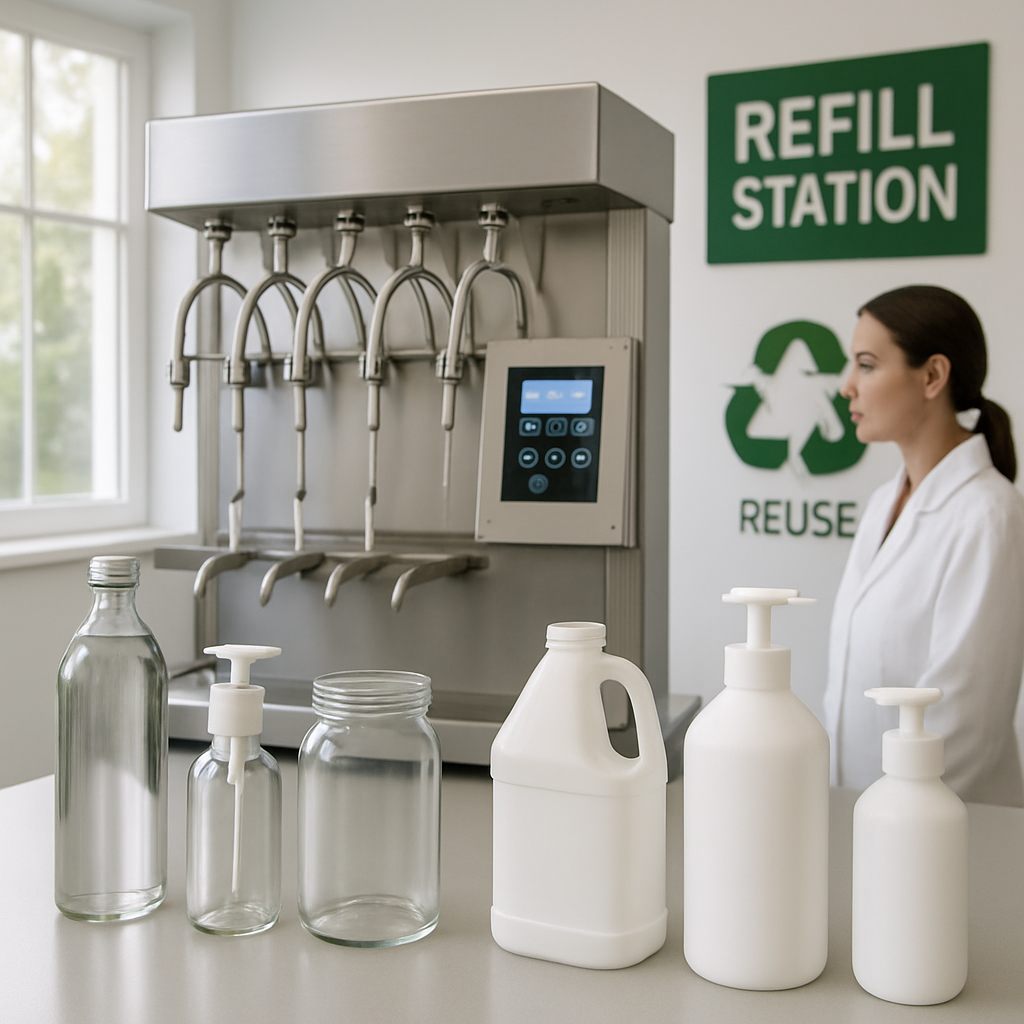
As sustainability goals reshape the packaging industry, refill and reuse packaging programs are becoming a top priority across food, beverage, health, beauty, and household product sectors. These systems help reduce single-use plastics and minimize environmental impact—but they also come with unique equipment demands. Selecting the right liquid filler is crucial for ensuring these eco-conscious initiatives are both efficient and economically viable.
Why Refill and Reuse Programs Require Specialized Solutions
Unlike conventional packaging lines, refill and reuse models often involve:
-
Varied container shapes and sizes
-
Durable, reusable packaging materials (such as glass or HDPE)
-
Frequent cleaning cycles
-
Manual or semi-automated workflows, especially in smaller operations
These differences place additional stress on filling systems, making precision, adjustability, and sanitation more critical than ever.
Key Filler Types and How They Fit Refill/Reuse Needs
Here’s a breakdown of popular filler technologies and how they align with refillable packaging goals:
1. Overflow Fillers
Best for: Visually uniform fills, especially with clear containers
Overflow fillers ensure consistent fill levels regardless of minor variations in bottle volume—ideal for glass containers where aesthetics matter. They are also effective at managing foamy products often found in cleaning or personal care lines.
Sustainability advantage: Reduces overfill waste and creates a clean, shelf-ready appearance without product loss.
2. Pump Fillers
Best for: Thick, viscous, or textured products
Pump fillers offer greater flexibility and control for handling challenging product consistencies, making them ideal for lotions, syrups, or soaps often dispensed from reusable packaging.
Sustainability advantage: Precise volumetric filling minimizes product waste while maintaining consistency.
3. Gravity Fillers
Best for: Low-viscosity, free-flowing liquids
A gravity filler is a budget-friendly and highly sanitary option for operations focused on water-based liquids, juices, or concentrates. Its simplicity makes it ideal for refill stations or manual fill applications.
Sustainability advantage: Fewer moving parts means less maintenance and a lower energy footprint.
4. Piston Fillers
Best for: Thick or chunky products
Known for unmatched accuracy in viscous product filling, piston fillers are suitable for applications like nut butters, gels, and cleaning concentrates. They support both semi- and fully-automated setups.
Sustainability advantage: Prevents overfill and reduces the need for secondary processing.
Features That Support Refill/Reuse Systems
When selecting equipment for reuse-friendly packaging, look for fillers that offer:
-
Tool-free changeovers – critical for operations handling multiple container sizes
-
Clean-in-place (CIP) or clean-out-of-place (COP) features – essential for sanitary reuse
-
Modular design – allows for easy upgrades as demand grows
-
Gentle product handling – avoids damage to reusable packaging
Tailored Solutions for a Sustainable Future
At Apex Filling Systems, we understand that sustainability doesn’t mean compromise. Our team works with manufacturers to engineer solutions that balance precision, speed, and adaptability—especially for operations transitioning to eco-conscious packaging formats.
Whether you're outfitting a refill station at retail or scaling up a zero-waste brand, choosing the right filling equipment is essential to your program's success. From overflow and piston fillers to custom hybrid systems, we’ll help you find the best fit.
Ready to support your sustainability goals with smarter equipment?
Contact Apex Filling Systems for a consultation or equipment quote today.