
Share this
Retrofitting vs. Replacing Aging Liquid Filling Equipment: Which Is Right for Your Operation?
by APEX Filling Systems on Jan 16, 2026
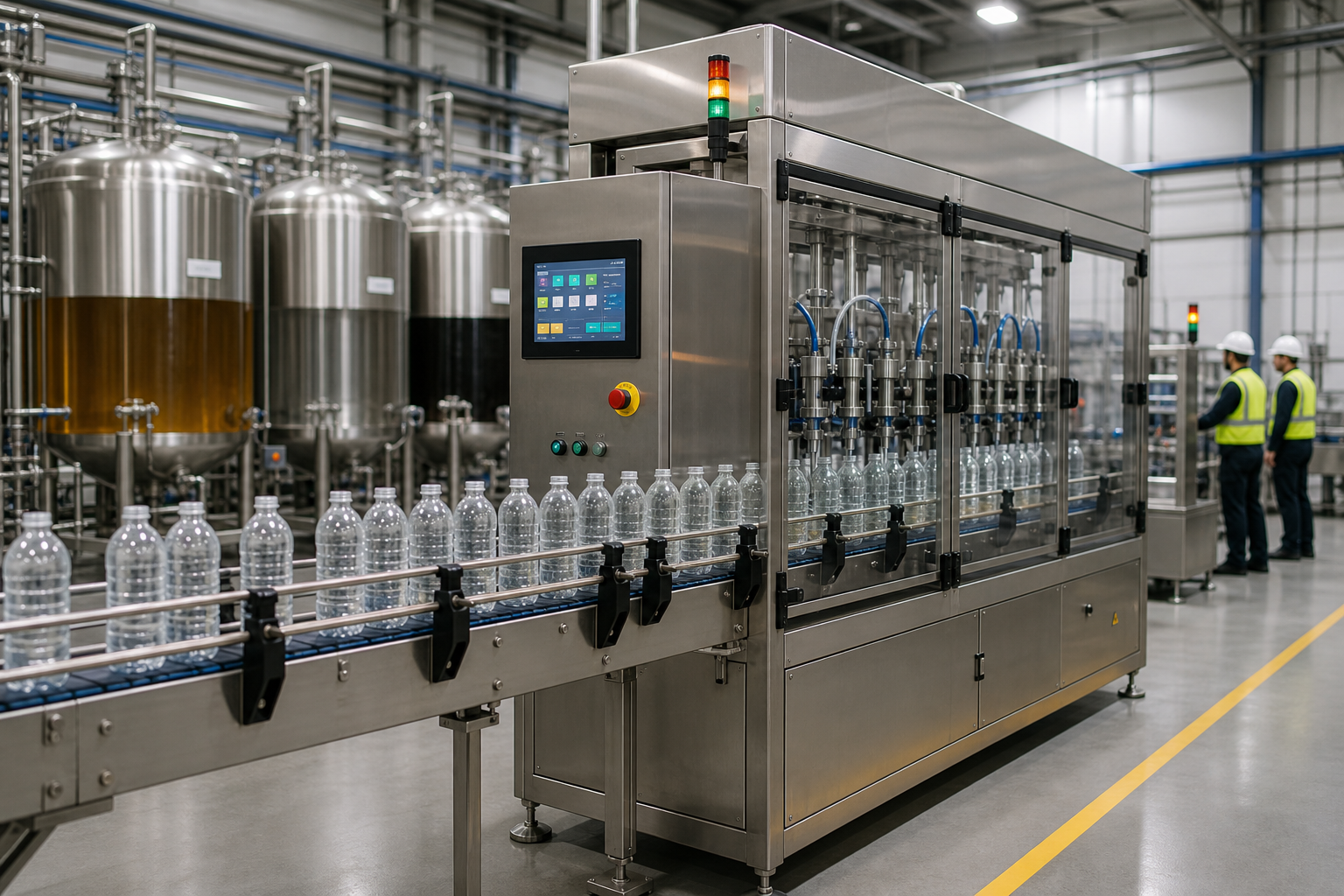
At Apex Filling Systems, We Help Manufacturers Maximize the Value of Their Packaging Equipment
At Apex Filling Systems, we help manufacturers across the food, beverage, chemical, personal care, DEF, distilled spirits, and co-packing industries evaluate whether upgrading existing equipment or investing in a new filling system is the best path forward. As production demands increase and technology evolves, many manufacturers reach a point where they must decide whether to extend the life of existing equipment or replace it entirely.
The right decision depends on your equipment's condition, production goals, maintenance costs, automation needs, and long-term growth plans—not simply its age.
Should You Retrofit or Replace Your Filling Equipment?
There is no one-size-fits-all answer. Retrofitting is often the best solution when the existing machine is mechanically sound but could benefit from updated controls, automation, or improved performance. Replacing equipment is typically the better investment when maintenance costs are increasing, production requirements have outgrown the machine, or the equipment can no longer support current safety, quality, or efficiency standards.
Evaluating the total cost of ownership—not just the purchase price—helps manufacturers make the most informed decision.
When Retrofitting Makes Sense
Many filling systems have durable mechanical foundations that can continue operating effectively with strategic upgrades.
Retrofitting may be appropriate when:
- The frame and mechanical components remain in good condition.
- Production speeds still meet demand.
- The equipment is reliable but outdated.
- Replacement parts remain readily available.
- Automation upgrades can significantly improve performance.
Rather than replacing the entire machine, manufacturers can modernize key systems while extending the equipment's service life.
Common Retrofit Upgrades
Modern retrofit projects often include:
Updated Controls and HMIs
Replacing outdated control systems with intuitive touchscreen interfaces can improve usability, simplify operator training, and provide better production visibility.
Servo-Driven Motion
Servo technology offers:
- Improved fill accuracy
- Greater repeatability
- Reduced product giveaway
- Faster changeovers
Automation Enhancements
Adding automation may include:
- Automatic container indexing
- Recipe management
- Vision inspection
- Integrated production monitoring
- Remote diagnostics
These upgrades can dramatically improve productivity without replacing the entire filling line.
Safety Improvements
Retrofitting also provides an opportunity to improve:
- Machine guarding
- Emergency stop systems
- Operator ergonomics
- Current safety standards
When Replacement Is the Better Investment
Sometimes replacing the equipment provides greater long-term value than continuing to invest in aging machinery.
Replacement should be considered when:
Maintenance Costs Continue to Increase
Frequent repairs often indicate that equipment is nearing the end of its practical service life.
Parts Are Difficult to Obtain
Older equipment may rely on obsolete components that become increasingly expensive or unavailable.
Production Has Outgrown the Equipment
Signs include:
- Inability to meet production demand
- Frequent bottlenecks
- Excessive overtime
- Limited scalability
Product Requirements Have Changed
Many manufacturers now package:
- More SKUs
- New container styles
- Different viscosities
- Sustainable packaging formats
Older equipment may not provide the flexibility needed for today's production environment.
Automation Is No Longer Optional
Modern manufacturing increasingly relies on:
- Smart factory integration
- Production dashboards
- Predictive maintenance
- Remote support
- Automated quality monitoring
If your equipment cannot support these capabilities, replacement may provide a stronger long-term return.
Compare Total Cost of Ownership
The purchase price represents only part of the investment.
Consider:
- Maintenance costs
- Downtime
- Product waste
- Energy consumption
- Operator labor
- Spare parts availability
- Production efficiency
- Future upgrade potential
A newer system with a higher purchase price may deliver significantly lower operating costs over its lifetime.
Think Beyond the Filling Machine
Whether retrofitting or replacing, evaluate the entire packaging line.
Consider how the filling system integrates with:
- Capping equipment
- Labeling systems
- Conveyors
- Inspection systems
- Accumulation tables
Optimizing the entire line often produces greater improvements than upgrading a single machine.
At Apex Filling Systems, we help customers evaluate complete packaging line performance—not just individual pieces of equipment.
Plan for Future Growth
One of the biggest mistakes manufacturers make is solving today's problem without considering tomorrow's opportunities.
Ask yourself:
- Will production volumes increase?
- Are new products planned?
- Will additional automation be required?
- Could new container formats be introduced?
- Are sustainability initiatives being considered?
Equipment should support future business objectives—not limit them.
Common Mistakes to Avoid
Replacing equipment solely because it's old
Well-maintained equipment may still have years of productive life with the right upgrades.
Continuing to repair equipment indefinitely
There comes a point where repair costs exceed the value of replacement.
Ignoring automation opportunities
Modern controls and automation often provide substantial productivity improvements.
Focusing only on purchase price
Evaluate lifecycle costs, not just initial investment.
Making decisions without production data
Downtime records, maintenance history, and OEE metrics provide valuable insight when determining the best course of action.
What Information Should You Gather Before Speaking with Apex?
To help evaluate whether retrofitting or replacement is the right solution, gather:
- Equipment manufacturer and model
- Year of manufacture
- Current production speed
- Products being packaged
- Container types
- Current maintenance challenges
- Downtime history
- Replacement part availability
- Desired automation level
- Production growth projections
- Current pain points
This information allows the Apex team to recommend the solution that best aligns with your operational and financial goals.
Frequently Asked Questions
How long should a liquid filling machine last?
With proper maintenance, many filling machines remain productive for decades. The decision to retrofit or replace depends more on performance, reliability, and business needs than on age alone.
Can older filling equipment be upgraded?
In many cases, yes. Controls, HMIs, servo systems, and automation features can often be added to mechanically sound equipment.
When is replacement more cost-effective?
Replacement becomes the better option when maintenance costs are escalating, production demands exceed equipment capabilities, or obsolete components limit reliability and support.
Is retrofitting less expensive than buying new equipment?
Often it is, but the long-term value depends on the condition of the existing equipment and the extent of the upgrades required.
Can Apex help determine whether retrofit or replacement is the best option?
Yes. Apex evaluates your current equipment, production requirements, future goals, and overall packaging line before recommending the most practical solution.
Ready to Evaluate Your Filling Equipment?
Not sure whether upgrading your existing equipment or investing in a new filling system is the right choice?
Use the Apex Equipment Fit Selector to answer a few questions about your products, containers, and production goals. An Apex team member can review your current operation and help determine the best path forward.
About Apex Filling Systems
Apex Filling Systems designs and manufactures liquid filling, capping, labeling, and conveying equipment for manufacturers across the food, beverage, chemical, personal care, DEF, and distilled spirits industries. Every packaging application is unique, and our team works closely with customers to recommend equipment that fits their products, production goals, and future growth plans.
Continue Exploring
Equipment Solutions
Helpful Tools
Related Articles
- What to Look for in a Liquid Filling Machine in 2026
- How to Future-Proof Your Filling Line Investment
- Maximizing OEE in Liquid Filling Operations: A Practical Guide
- Understanding Servo-Driven Filling Technology: Benefits for Modern Production
- How to Identify Bottlenecks in Your Liquid Packaging Line
Share this
- Help First (97)
- Apex Filling Systems (78)
- Filling Equipment (76)
- Informational (70)
- Automatic Filling Machine (59)
- Industry Insights (59)
- Packaging Equipment (47)
- About Apex (20)
- American Made Goods (20)
- Fillers (18)
- Automatic Capping (11)
- Apex Filling (10)
- Apex (7)
- Uncategorized (5)
- Apex Team (3)
- Apex Family (2)
- Absolute Truth (1)
- Apex Way (1)
- Petroleum (1)
- oil (1)
- August 2026 (1)
- July 2026 (5)
- June 2026 (4)
- May 2026 (5)
- April 2026 (4)
- March 2026 (4)
- February 2026 (1)
- January 2026 (2)
- December 2025 (4)
- November 2025 (4)
- October 2025 (5)
- September 2025 (3)
- June 2025 (3)
- May 2025 (6)
- April 2025 (10)
- March 2025 (10)
- February 2025 (12)
- January 2025 (14)
- December 2024 (1)
- November 2024 (4)
- October 2024 (4)
- September 2024 (2)
- August 2024 (1)
- July 2024 (4)
- October 2022 (1)
- September 2022 (1)
- June 2022 (1)
- October 2021 (2)
- June 2021 (1)
- May 2021 (1)
- April 2021 (2)
- March 2021 (2)
- February 2021 (1)
- January 2021 (2)
- November 2020 (1)
- October 2020 (1)
- September 2020 (2)
- August 2020 (1)
- July 2020 (1)
- June 2020 (1)
- May 2020 (1)
- April 2020 (2)
- March 2020 (2)
- February 2020 (2)
- January 2020 (3)
- December 2019 (2)
- November 2019 (6)
- October 2019 (4)
- September 2019 (3)
- August 2019 (6)
- July 2019 (2)
- April 2019 (1)
- February 2019 (1)
- January 2019 (7)
- December 2018 (6)
- November 2018 (5)
- October 2018 (2)
- September 2018 (2)
- August 2018 (1)
- July 2018 (3)
- May 2018 (2)
- April 2018 (1)
- March 2018 (2)
- February 2018 (2)
- January 2018 (2)