
Share this
How to Future-Proof Your Liquid Filling Line Investment
by APEX Filling Systems on Jun 05, 2026
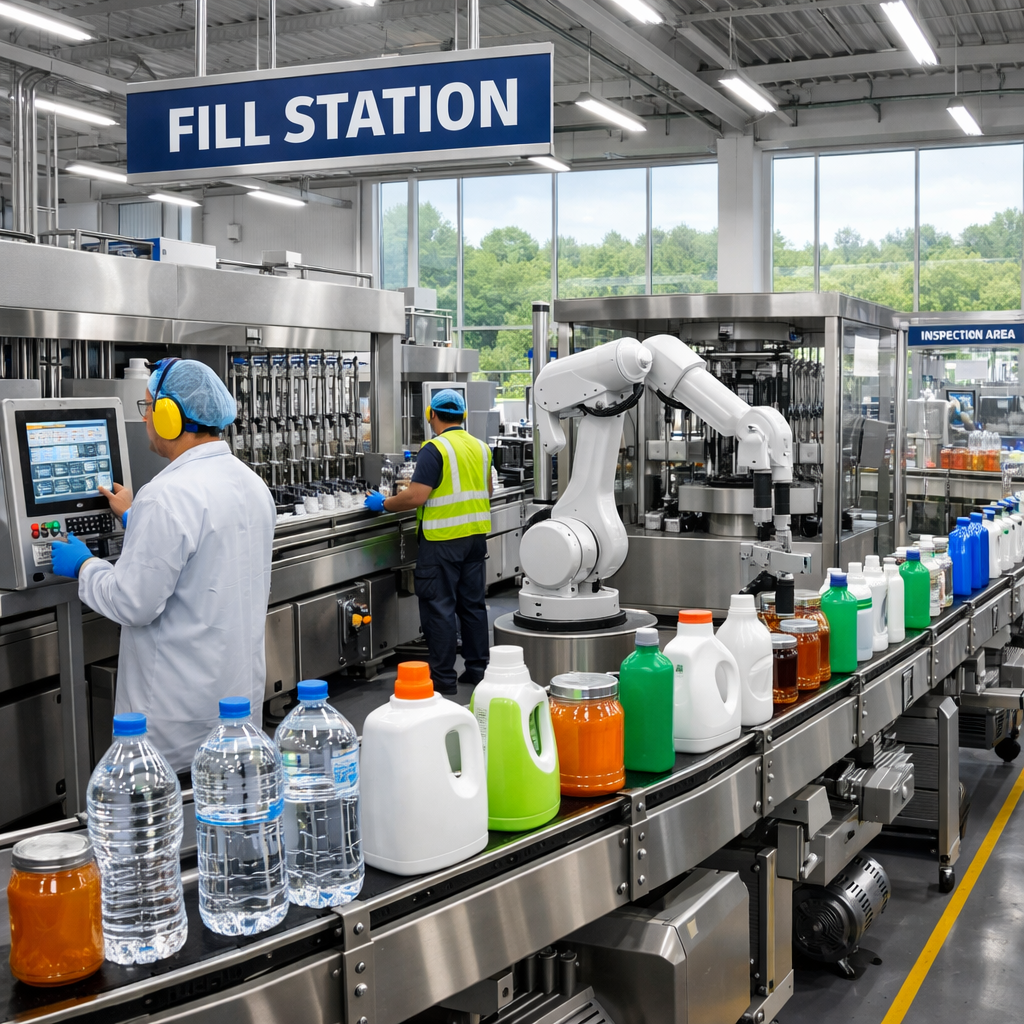
At Apex Filling Systems, We Help Manufacturers Invest with Confidence
At Apex Filling Systems, we help manufacturers across the food, beverage, chemical, personal care, DEF, distilled spirits, and co-packing industries invest in packaging equipment that supports both today's production requirements and tomorrow's growth. Purchasing a liquid filling system is a significant capital investment, and choosing equipment that can adapt to changing products, packaging, and production demands is essential for maximizing long-term value.
Future-proofing your filling line isn't about predicting the future perfectly—it's about selecting equipment with the flexibility, scalability, and technology needed to evolve alongside your business.
How Can You Future-Proof Your Filling Line Investment?
Future-proofing a filling line begins with selecting equipment that can accommodate changing production requirements without requiring complete replacement. Manufacturers should prioritize modular equipment, automation-ready controls, flexible filling technologies, quick changeovers, smart manufacturing capabilities, and equipment designed for expansion.
Planning beyond your current production needs helps reduce future capital expenditures while extending the useful life of your packaging system.
Think Beyond Today's Production Requirements
One of the most common purchasing mistakes is selecting equipment based solely on current demand.
Instead, consider where your operation may be in:
- Three years
- Five years
- Ten years
Ask questions such as:
- Will production volumes increase?
- Are new products planned?
- Will additional container sizes be introduced?
- Will automation become necessary?
- Could new markets require different packaging formats?
Equipment that can grow with your business often delivers the greatest long-term return.
Invest in Flexible Filling Technology
Markets change quickly.
A filling system should be capable of accommodating:
- Thin liquids
- Medium-viscosity products
- Thick products
- Multiple fill volumes
- Various container sizes
The more versatile the equipment, the easier it becomes to respond to changing customer demands and expanding product lines.
At Apex Filling Systems, filling technology recommendations are based on both current applications and anticipated future production goals.
Choose Equipment Designed for Expansion
Modern filling systems should be modular whenever possible.
Examples include:
- Additional filling heads
- Expanded conveyor systems
- Integrated capping equipment
- Automated labeling
- Vision inspection
- Robotic case packing
Rather than replacing an entire production line, modular systems allow manufacturers to expand incrementally as production grows.
Automation Should Be Part of the Plan
Even if your operation is not fully automated today, automation should remain part of your long-term strategy.
Modern equipment can often be configured to support future additions such as:
- Automatic container indexing
- Servo-driven filling
- Robotic material handling
- Production dashboards
- Remote diagnostics
- Predictive maintenance
Planning for automation today can reduce future integration costs.
Prioritize Fast Changeovers
Manufacturers continue to introduce:
- More SKUs
- Seasonal products
- Specialty formulations
- Limited production runs
Equipment designed for quick changeovers provides greater flexibility while minimizing downtime.
Look for:
- Recipe-based controls
- Tool-less adjustments
- Automatic fill parameter changes
- Quick container guide adjustments
Efficient changeovers improve Overall Equipment Effectiveness (OEE) while supporting production flexibility.
Build Smart Manufacturing Capabilities
Industry 4.0 is no longer reserved for large manufacturers.
Modern filling systems increasingly provide:
Real-Time Production Data
Monitor:
- Throughput
- Fill accuracy
- Downtime
- OEE
- Machine status
Predictive Maintenance
Connected equipment can identify developing issues before failures occur.
Benefits include:
- Reduced downtime
- Better maintenance planning
- Longer equipment life
Remote Support
Remote diagnostics help reduce service response times while minimizing production interruptions.
Think About the Entire Packaging Line
Future-proofing extends beyond the filling machine.
Consider how the system integrates with:
- Capping equipment
- Labeling machines
- Conveyors
- Inspection systems
- Accumulation tables
A fully integrated packaging line provides greater efficiency while simplifying future expansion.
Apex Filling Systems designs complete packaging solutions that grow alongside your operation.
Evaluate Total Cost of Ownership
Purchase price is only one part of the equation.
Manufacturers should also evaluate:
- Energy consumption
- Maintenance costs
- Spare parts availability
- Product giveaway
- Downtime
- Operator efficiency
- Upgrade potential
A machine with a higher initial investment may provide substantially greater value over its operational life.
Work with a Long-Term Equipment Partner
The equipment manufacturer you choose should remain a valuable resource long after installation.
Look for a partner that provides:
- Engineering expertise
- Operator training
- Technical support
- Preventive maintenance guidance
- Replacement parts
- Upgrade recommendations
Long-term support helps maximize equipment performance throughout its lifecycle.
Common Mistakes to Avoid
Buying only for today's production volume
Growth often arrives faster than expected.
Ignoring future automation
Automation readiness should be considered even if implementation occurs later.
Purchasing equipment with limited flexibility
Changing products and packaging formats require adaptable systems.
Overlooking complete line integration
Future expansion becomes much easier when equipment is designed to work together.
Choosing solely on purchase price
Long-term value depends on reliability, scalability, and operating costs.
What Information Should You Gather Before Speaking with Apex?
To help the Apex team recommend equipment that supports your long-term growth, gather:
- Product type
- Product viscosity
- Fill volume
- Container sizes
- Closure types
- Desired production speed
- Number of SKUs
- Current production challenges
- Desired automation level
- Future expansion plans
- Long-term business objectives
This information allows Apex to recommend equipment that aligns with both your current operation and future goals.
Frequently Asked Questions
What does it mean to future-proof a filling line?
Future-proofing means selecting equipment that can adapt to increased production, additional products, new packaging formats, automation upgrades, and changing business requirements without requiring complete replacement.
Should I purchase more capacity than I currently need?
Not necessarily, but equipment should allow for expansion as production grows. Modular systems often provide the greatest long-term flexibility.
Why is modular equipment important?
Modular equipment allows manufacturers to add capabilities such as additional filling heads, conveyors, capping systems, or automation without replacing the entire production line.
How does automation help future-proof equipment?
Automation improves efficiency, consistency, data collection, and scalability while helping manufacturers address labor shortages and increasing production demands.
Can Apex Filling Systems help design equipment for future growth?
Yes. Apex works with manufacturers to understand both current production needs and long-term business goals before recommending filling, capping, labeling, and conveying solutions.
Ready to Build a Filling Line That Grows with Your Business?
Not sure which equipment is right for your application?
Use the Apex Equipment Fit Selector to answer a few questions about your product, containers, and production goals. An Apex team member can review your information and help identify the best solution for your operation—both today and in the future.
About Apex Filling Systems
Apex Filling Systems designs and manufactures liquid filling, capping, labeling, and conveying equipment for manufacturers across the food, beverage, chemical, personal care, DEF, and distilled spirits industries. Every packaging application is unique, and our team works closely with customers to recommend equipment that fits their products, production goals, and future growth plans.
Continue Exploring
Equipment Solutions
Helpful Tools
Related Articles
- What to Look for in a Liquid Filling Machine in 2026
- Retrofitting vs. Replacing Aging Liquid Filling Equipment: Which Is Right for Your Operation?
- Maximizing OEE in Liquid Filling Operations: A Practical Guide
- Understanding Servo-Driven Filling Technology: Benefits for Modern Production
- Smart Factories in 2026: What Your Filling Line Needs to Compete
Share this
- Help First (97)
- Apex Filling Systems (78)
- Filling Equipment (76)
- Informational (70)
- Automatic Filling Machine (59)
- Industry Insights (59)
- Packaging Equipment (47)
- About Apex (20)
- American Made Goods (20)
- Fillers (18)
- Automatic Capping (11)
- Apex Filling (10)
- Apex (7)
- Uncategorized (5)
- Apex Team (3)
- Apex Family (2)
- Absolute Truth (1)
- Apex Way (1)
- Petroleum (1)
- oil (1)
- August 2026 (1)
- July 2026 (5)
- June 2026 (4)
- May 2026 (5)
- April 2026 (4)
- March 2026 (4)
- February 2026 (1)
- January 2026 (2)
- December 2025 (4)
- November 2025 (4)
- October 2025 (5)
- September 2025 (3)
- June 2025 (3)
- May 2025 (6)
- April 2025 (10)
- March 2025 (10)
- February 2025 (12)
- January 2025 (14)
- December 2024 (1)
- November 2024 (4)
- October 2024 (4)
- September 2024 (2)
- August 2024 (1)
- July 2024 (4)
- October 2022 (1)
- September 2022 (1)
- June 2022 (1)
- October 2021 (2)
- June 2021 (1)
- May 2021 (1)
- April 2021 (2)
- March 2021 (2)
- February 2021 (1)
- January 2021 (2)
- November 2020 (1)
- October 2020 (1)
- September 2020 (2)
- August 2020 (1)
- July 2020 (1)
- June 2020 (1)
- May 2020 (1)
- April 2020 (2)
- March 2020 (2)
- February 2020 (2)
- January 2020 (3)
- December 2019 (2)
- November 2019 (6)
- October 2019 (4)
- September 2019 (3)
- August 2019 (6)
- July 2019 (2)
- April 2019 (1)
- February 2019 (1)
- January 2019 (7)
- December 2018 (6)
- November 2018 (5)
- October 2018 (2)
- September 2018 (2)
- August 2018 (1)
- July 2018 (3)
- May 2018 (2)
- April 2018 (1)
- March 2018 (2)
- February 2018 (2)
- January 2018 (2)