
Share this
Why Stainless Steel Matters for DEF Packaging
by APEX Filling Systems on Jul 10, 2026
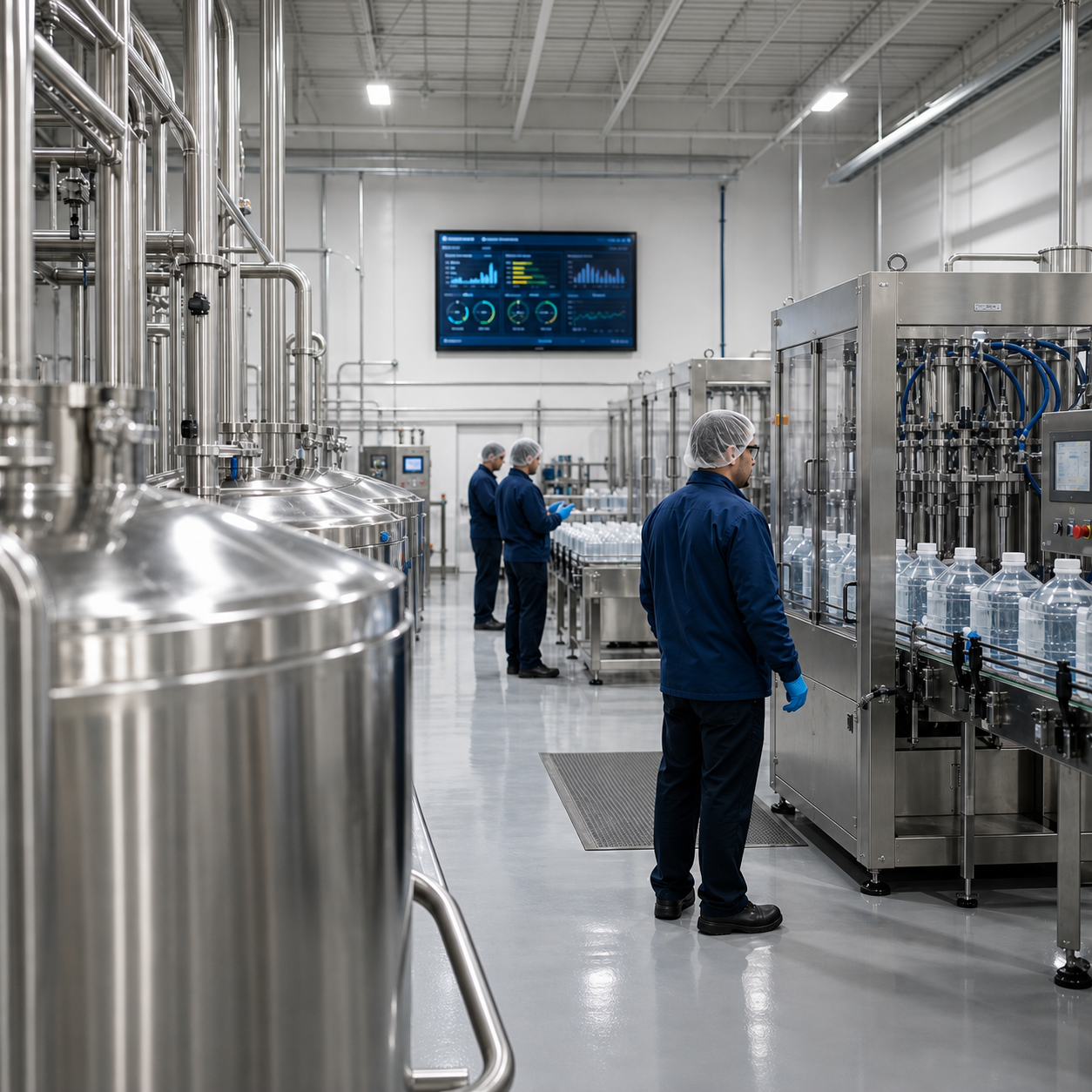
At Apex Filling Systems, We Help Manufacturers Protect Product Purity
At Apex Filling Systems, we help manufacturers package Diesel Exhaust Fluid (DEF), chemicals, lubricants, and other industrial liquids while maintaining product quality from the storage tank to the finished package. When selecting equipment for DEF, choosing compatible product-contact materials is one of the most important decisions you'll make.
Although DEF is a relatively simple solution of high-purity urea and deionized water, it is extremely sensitive to contamination. The wrong material inside a filling system can compromise product quality, damage customer confidence, and potentially affect SCR system performance. That's why stainless steel has become the industry standard for DEF packaging equipment.
Why Is Stainless Steel Used for DEF Packaging?
Stainless steel is widely used throughout DEF filling systems because it is durable, corrosion-resistant, easy to clean, and compatible with Diesel Exhaust Fluid. Properly designed stainless steel equipment helps maintain DEF purity, reduces the risk of contamination, and supports compliance with ISO 22241, the international standard governing DEF quality.
From storage tanks and transfer piping to filling nozzles and manifolds, stainless steel provides a clean, reliable product path that protects both the manufacturer and the end user.
Understanding Why DEF Purity Matters
Diesel Exhaust Fluid consists of:
- 32.5% automotive-grade urea
- 67.5% deionized water
Because DEF is manufactured to extremely tight specifications, even trace contaminants can affect product quality.
Potential contamination sources include:
- Certain metals
- Dust and dirt
- Oils and lubricants
- Mineral deposits
- Chemical residue
- Improper cleaning practices
Protecting DEF begins long before filling—it starts with selecting compatible equipment materials.
What Is ISO 22241?
ISO 22241 is the internationally recognized standard for Diesel Exhaust Fluid.
It establishes requirements for:
Product quality
Ensuring the correct concentration and purity of DEF.
Storage and handling
Protecting the product throughout manufacturing, transportation, and packaging.
Material compatibility
Using equipment materials that will not introduce contaminants into the product.
Following ISO 22241 helps manufacturers consistently produce DEF that meets customer expectations and protects SCR systems.
Why Stainless Steel Is the Preferred Material
1. Superior Corrosion Resistance
While DEF itself is not highly corrosive, prolonged exposure can affect incompatible materials.
High-quality stainless steel resists:
- Corrosion
- Oxidation
- Surface degradation
This helps maintain both equipment reliability and product purity throughout years of production.
2. Helps Maintain DEF Purity
Perhaps the greatest advantage of stainless steel is its compatibility with DEF.
Its smooth, non-reactive surface minimizes opportunities for contamination while helping preserve the fluid's chemical integrity.
At Apex Filling Systems, product-contact components are selected with compatibility and long-term reliability in mind, especially for sensitive applications like DEF.
3. Easy to Clean
Maintaining cleanliness is essential for every DEF packaging operation.
Stainless steel provides:
- Smooth surfaces
- Easy washdown capability
- Minimal residue buildup
- Simplified sanitation procedures
Routine cleaning becomes faster and more effective, reducing the risk of cross-contamination.
4. Long Equipment Life
Packaging equipment is a long-term investment.
Stainless steel offers:
- Excellent durability
- High wear resistance
- Reduced maintenance
- Long service life
While the upfront investment may be higher than alternative materials, stainless steel often delivers a lower total cost of ownership over the life of the equipment.
304 vs. 316 Stainless Steel
DEF filling systems commonly use either 304 or 316 stainless steel.
304 Stainless Steel
Frequently used for:
- Filling machines
- Product manifolds
- Conveyor frames
- Structural components
It provides excellent corrosion resistance for most DEF packaging applications.
316 Stainless Steel
Contains molybdenum, providing additional corrosion resistance in demanding production environments or applications involving aggressive cleaning procedures.
The appropriate grade depends on your specific application, operating environment, and sanitation requirements.
Stainless Steel Throughout the Entire Packaging Line
Maintaining product purity requires more than stainless steel filling nozzles.
Manufacturers should consider compatible materials throughout the entire product path, including:
Storage tanks
Protect product quality before filling begins.
Transfer piping
Prevent contamination during product movement.
Pumps
Maintain clean, consistent product flow.
Filling manifolds
Deliver accurate, repeatable fills.
Filling nozzles
Ensure precise dispensing while minimizing contamination risks.
Why Dedicated DEF Equipment Is Recommended
One of the most common mistakes manufacturers make is attempting to package DEF using equipment previously used for other products.
Even stainless steel equipment can become contaminated if residue from incompatible products remains inside the system.
Dedicated DEF packaging equipment helps eliminate contamination from:
- Chemicals
- Lubricants
- Cleaning products
- Food ingredients
- Personal care products
For manufacturers producing multiple products, dedicated equipment significantly reduces quality risks.
Common Mistakes to Avoid
When designing a DEF packaging line, avoid these common mistakes:
Using incompatible product-contact materials
Even small amounts of contamination can compromise DEF quality.
Sharing product pathways
Dedicated transfer systems provide better protection.
Overlooking routine cleaning
Proper sanitation helps maintain compliance and product integrity.
Ignoring preventive maintenance
Inspect product-contact components regularly for wear or damage.
Choosing equipment based solely on purchase price
Long-term reliability and compatibility often provide far greater value.
What Information Should You Gather Before Speaking with Apex?
To help the Apex team recommend the right DEF packaging solution, gather the following information:
- Container sizes and materials
- Fill volume requirements
- Desired production speed
- Closure style
- Storage tank configuration
- Available floor space
- Current contamination concerns
- Desired level of automation
- Future expansion plans
This information allows us to recommend equipment that supports both your current production requirements and long-term growth.
Frequently Asked Questions
Why is stainless steel recommended for DEF packaging?
Stainless steel is corrosion-resistant, easy to clean, and compatible with DEF, helping manufacturers maintain product purity and reduce contamination risks.
Does DEF require stainless steel filling equipment?
Many DEF packaging systems use 304 or 316 stainless steel for product-contact components because these materials help support product quality and ISO 22241 compliance.
Can other materials be used with DEF?
Yes. Certain plastics such as HDPE and polypropylene are also compatible with DEF. The most appropriate materials depend on the specific application and component.
Can I use my existing filling line for DEF?
Possibly, but the equipment should be evaluated carefully for material compatibility and contamination risks. Many manufacturers choose dedicated DEF filling lines to protect product purity.
How can Apex Filling Systems help with DEF packaging?
Apex works with manufacturers to evaluate their product, production goals, container types, and automation requirements before recommending a filling, capping, labeling, and conveying solution designed specifically for DEF applications.
Ready to Build a Reliable DEF Packaging Line?
Not sure which equipment is right for your application?
Use the Apex Equipment Fit Selector to answer a few questions about your product, containers, and production goals. An Apex team member can review your information and help identify the best solution for your operation.
About Apex Filling Systems
Apex Filling Systems designs and manufactures liquid filling, capping, labeling, and conveying equipment for manufacturers across the food, beverage, chemical, personal care, DEF, and distilled spirits industries. Every packaging application is unique, and our team works closely with customers to recommend equipment that fits their products, production goals, and future growth plans.
Continue Exploring
Equipment
Helpful Tools
Related Articles
Share this
- Help First (97)
- Apex Filling Systems (78)
- Filling Equipment (76)
- Informational (70)
- Automatic Filling Machine (59)
- Industry Insights (59)
- Packaging Equipment (47)
- About Apex (20)
- American Made Goods (20)
- Fillers (18)
- Automatic Capping (11)
- Apex Filling (10)
- Apex (7)
- Uncategorized (5)
- Apex Team (3)
- Apex Family (2)
- Absolute Truth (1)
- Apex Way (1)
- Petroleum (1)
- oil (1)
- August 2026 (1)
- July 2026 (5)
- June 2026 (4)
- May 2026 (5)
- April 2026 (4)
- March 2026 (4)
- February 2026 (1)
- January 2026 (2)
- December 2025 (4)
- November 2025 (4)
- October 2025 (5)
- September 2025 (3)
- June 2025 (3)
- May 2025 (6)
- April 2025 (10)
- March 2025 (10)
- February 2025 (12)
- January 2025 (14)
- December 2024 (1)
- November 2024 (4)
- October 2024 (4)
- September 2024 (2)
- August 2024 (1)
- July 2024 (4)
- October 2022 (1)
- September 2022 (1)
- June 2022 (1)
- October 2021 (2)
- June 2021 (1)
- May 2021 (1)
- April 2021 (2)
- March 2021 (2)
- February 2021 (1)
- January 2021 (2)
- November 2020 (1)
- October 2020 (1)
- September 2020 (2)
- August 2020 (1)
- July 2020 (1)
- June 2020 (1)
- May 2020 (1)
- April 2020 (2)
- March 2020 (2)
- February 2020 (2)
- January 2020 (3)
- December 2019 (2)
- November 2019 (6)
- October 2019 (4)
- September 2019 (3)
- August 2019 (6)
- July 2019 (2)
- April 2019 (1)
- February 2019 (1)
- January 2019 (7)
- December 2018 (6)
- November 2018 (5)
- October 2018 (2)
- September 2018 (2)
- August 2018 (1)
- July 2018 (3)
- May 2018 (2)
- April 2018 (1)
- March 2018 (2)
- February 2018 (2)
- January 2018 (2)