
Share this
Can You Use Your Existing Filling Equipment for Diesel Exhaust Fluid (DEF)?
by APEX Filling Systems on Aug 07, 2026
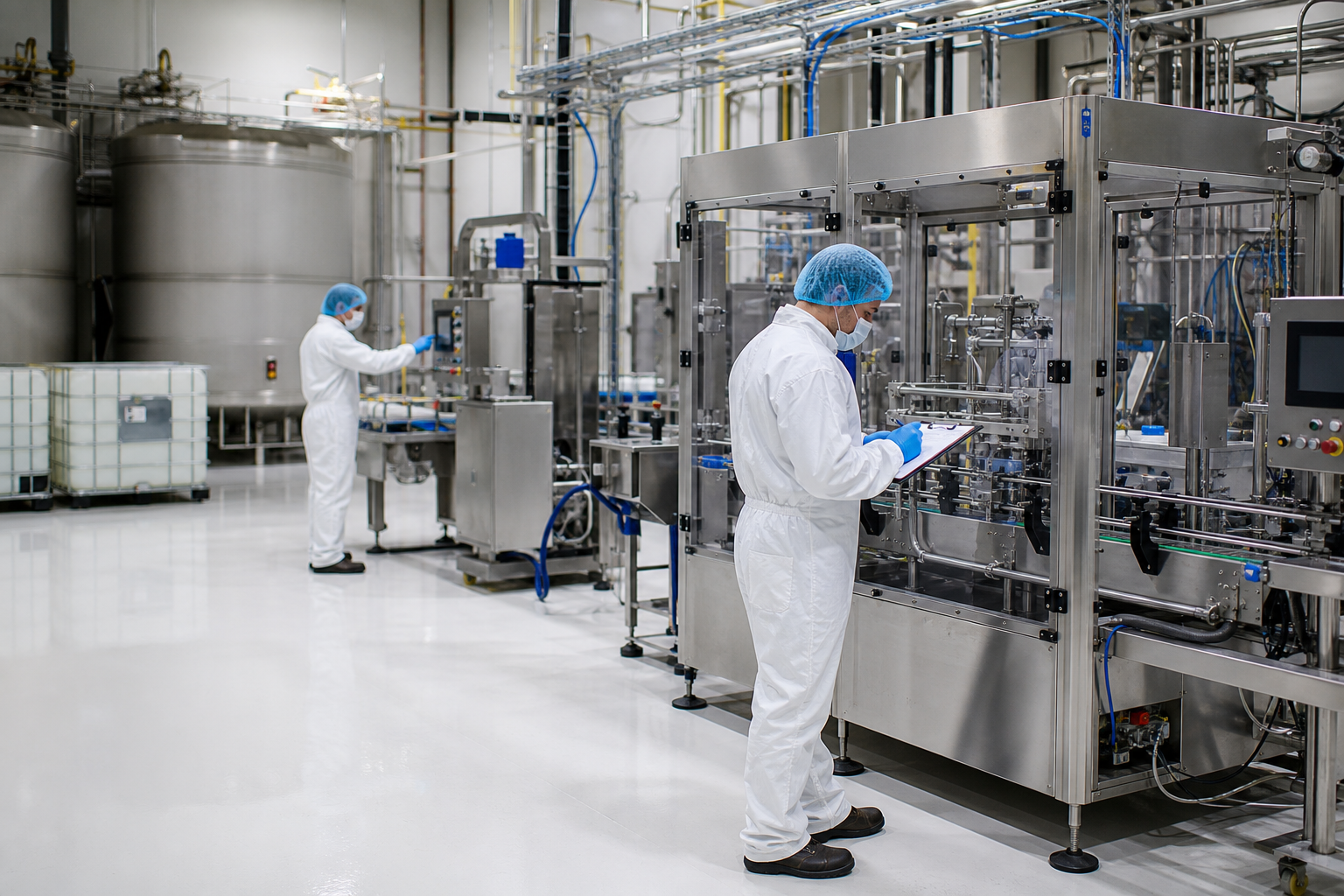
At Apex Filling Systems, We Help Manufacturers Evaluate Whether Existing Equipment Can Be Used for DEF Packaging
At Apex Filling Systems, we help manufacturers package Diesel Exhaust Fluid (DEF), chemicals, automotive fluids, and other industrial liquids with equipment designed for long-term reliability and product purity. One of the most common questions we receive from companies looking to enter the DEF market is whether their existing filling equipment can be used—or modified—to package DEF.
The answer depends on far more than the age of the machine. Material compatibility, previous product history, filling technology, equipment condition, and contamination risk all play important roles in determining whether an existing filling line can successfully package DEF.
Can You Use Your Existing Filling Equipment for DEF?
In some cases, yes. Existing filling equipment can often be modified or repurposed for DEF if the machine uses compatible product-contact materials, has not been exposed to incompatible products that could compromise purity, and can consistently meet production requirements. However, some equipment may require significant upgrades—or complete replacement—to safely and reliably package DEF.
The best approach is a thorough evaluation of both the equipment and the production process before introducing DEF into the line.
Why DEF Is Different from Other Industrial Liquids
Diesel Exhaust Fluid is composed of:
- 32.5% high-purity automotive-grade urea
- 67.5% deionized water
Although simple in composition, DEF is highly sensitive to contamination. Even trace amounts of incompatible materials or residual chemicals can affect product quality and potentially impact the performance of Selective Catalytic Reduction (SCR) systems.
Because of these purity requirements, not every filling system is automatically suitable for DEF applications.
Start by Evaluating Product-Contact Materials
The first question is not "How old is the equipment?"
It's:
"What materials come into contact with the product?"
Common DEF-compatible materials include:
- 304 stainless steel
- 316 stainless steel
- High-density polyethylene (HDPE)
- Polypropylene (PP)
- DEF-compatible seals and elastomers
If product-contact components contain incompatible materials, they may need to be replaced before the equipment can safely package DEF.
At Apex Filling Systems, evaluating material compatibility is one of the first steps when assessing whether an existing filling line can be converted for DEF production.
Consider What the Equipment Previously Filled
Previous product history is just as important as material compatibility.
Questions to ask include:
- Has the equipment packaged petroleum products?
- Has it filled oils or lubricants?
- Were corrosive chemicals previously run through the system?
- Has the equipment ever handled products that could leave difficult-to-remove residues?
Even after cleaning, certain residues may increase the risk of contamination.
In some situations, converting existing equipment may not be practical if product purity cannot be confidently maintained.
Can the Filling Technology Support DEF?
Different filling technologies may be appropriate for DEF applications, depending on production goals and container sizes.
Evaluate whether your existing equipment provides:
- Consistent fill accuracy
- Reliable repeatability
- Flexible fill volume adjustments
- Smooth product flow
- Minimal product waste
If production goals have changed since the equipment was originally installed, upgrading or replacing the filling technology may provide greater long-term value.
Evaluate the Condition of the Equipment
A well-maintained filling machine may continue providing years of reliable service.
Inspect the equipment for:
- Worn seals
- Corrosion
- Product residue
- Damaged hoses
- Aging pumps
- Obsolete controls
- Component availability
If extensive repairs or upgrades are required, replacement may become the more economical option.
Is Retrofitting an Option?
Many manufacturers assume they must purchase an entirely new filling line to package DEF.
In reality, some systems can be successfully upgraded.
Potential retrofit opportunities include:
- Replacing product-contact components
- Installing compatible seals and gaskets
- Updating control systems
- Improving fill accuracy
- Adding automation
- Integrating new capping or labeling equipment
Whether retrofitting is practical depends on the existing machine's mechanical condition and long-term production goals.
Think Beyond the Filling Machine
Successful DEF packaging depends on more than the filler itself.
Evaluate the complete production line, including:
- Storage tanks
- Transfer pumps
- Product piping
- Hoses
- Capping equipment
- Labeling systems
- Conveyors
- Packaging areas
A contamination-resistant production line requires every product-contact component—not just the filling machine—to be compatible with DEF.
Consider Your Future Production Plans
Many companies begin DEF packaging with relatively modest production volumes.
However, future growth may include:
- Larger container sizes
- Additional SKUs
- Higher production speeds
- Contract packaging
- Increased automation
If your current equipment already struggles to meet today's production requirements, converting it for DEF may only delay a future equipment investment.
Planning for long-term scalability often delivers greater return on investment.
Evaluate the Total Cost of Conversion
Using existing equipment may appear less expensive initially, but manufacturers should compare:
- Retrofit costs
- Replacement part costs
- Downtime during modifications
- Cleaning and validation requirements
- Expected equipment life
- Future upgrade potential
- Long-term maintenance expenses
Sometimes a retrofit provides excellent value.
Other times, purchasing equipment specifically designed for DEF applications is the more cost-effective long-term solution.
At Apex Filling Systems, we help manufacturers evaluate both options objectively so they can make informed investment decisions.
Common Mistakes to Avoid
Assuming stainless steel alone makes equipment DEF-compatible
Material compatibility is important, but previous product history, seals, hoses, controls, and the overall system must also be evaluated.
Underestimating contamination risks
Residual oils, chemicals, or incompatible cleaning agents can compromise DEF purity.
Focusing only on the filling machine
The entire production line—including storage, transfer, capping, and conveying—should be assessed.
Ignoring future growth
Converting existing equipment should support your long-term production goals, not just your immediate needs.
Choosing based only on upfront cost
Evaluate the total cost of ownership, including maintenance, upgrades, downtime, and future scalability.
What Information Should You Gather Before Speaking with Apex?
If you're considering using existing equipment for DEF packaging, gather the following information:
- Equipment manufacturer and model
- Year of manufacture
- Products previously packaged
- Product-contact materials
- Current filling technology
- Container sizes
- Fill volumes
- Desired production speed
- Existing automation capabilities
- Current maintenance history
- Future production goals
Providing this information allows the Apex team to determine whether retrofitting, upgrading, or replacing equipment is the most practical solution.
Frequently Asked Questions
Can any filling machine package DEF?
No. The equipment must use compatible product-contact materials, minimize contamination risks, and provide the fill accuracy and reliability required for DEF applications.
Is stainless steel enough to make equipment DEF-compatible?
Not necessarily. While stainless steel is commonly used for DEF applications, manufacturers must also evaluate seals, hoses, pumps, previous product history, and the complete product pathway.
Can older filling equipment be converted for DEF?
In many cases, yes. Mechanically sound equipment may be upgraded with compatible materials, improved controls, and automation enhancements. Whether conversion is practical depends on the equipment's condition and intended use.
How do I know if retrofitting or replacement is the better option?
A thorough equipment assessment should consider material compatibility, contamination risk, maintenance history, production goals, and long-term operating costs before making a decision.
Can Apex Filling Systems evaluate my existing equipment?
Yes. Apex works with manufacturers to evaluate existing filling equipment and determine whether retrofitting, upgrading, or replacing the system is the best approach for DEF packaging.
Ready to Evaluate Your Existing Filling Equipment?
Not sure whether your current equipment can package DEF?
Use the Apex Equipment Fit Selector to answer a few questions about your existing equipment, product, containers, and production goals. An Apex team member can help determine whether modifying your current line or investing in new equipment is the best path forward.
About Apex Filling Systems
Apex Filling Systems designs and manufactures liquid filling, capping, labeling, and conveying equipment for manufacturers across the food, beverage, chemical, personal care, DEF, and distilled spirits industries. Every packaging application is unique, and our team works closely with customers to recommend equipment that fits their products, production goals, and future growth plans.
Continue Exploring
Equipment Solutions
Helpful Tools
Related Articles
- Everything Manufacturers Need to Know About Filling Diesel Exhaust Fluid (DEF)
- How to Choose the Right Filling Machine for Diesel Exhaust Fluid (DEF)
- Why Stainless Steel Matters for DEF Packaging
- Retrofitting vs. Replacing Aging Liquid Filling Equipment: Which Is Right for Your Operation?
- Filling Equipment Considerations for Chemical Manufacturers in 2026
Share this
- Help First (97)
- Apex Filling Systems (78)
- Filling Equipment (76)
- Informational (70)
- Automatic Filling Machine (59)
- Industry Insights (59)
- Packaging Equipment (47)
- About Apex (20)
- American Made Goods (20)
- Fillers (18)
- Automatic Capping (11)
- Apex Filling (10)
- Apex (7)
- Uncategorized (5)
- Apex Team (3)
- Apex Family (2)
- Absolute Truth (1)
- Apex Way (1)
- Petroleum (1)
- oil (1)
- August 2026 (1)
- July 2026 (5)
- June 2026 (4)
- May 2026 (5)
- April 2026 (4)
- March 2026 (4)
- February 2026 (1)
- January 2026 (2)
- December 2025 (4)
- November 2025 (4)
- October 2025 (5)
- September 2025 (3)
- June 2025 (3)
- May 2025 (6)
- April 2025 (10)
- March 2025 (10)
- February 2025 (12)
- January 2025 (14)
- December 2024 (1)
- November 2024 (4)
- October 2024 (4)
- September 2024 (2)
- August 2024 (1)
- July 2024 (4)
- October 2022 (1)
- September 2022 (1)
- June 2022 (1)
- October 2021 (2)
- June 2021 (1)
- May 2021 (1)
- April 2021 (2)
- March 2021 (2)
- February 2021 (1)
- January 2021 (2)
- November 2020 (1)
- October 2020 (1)
- September 2020 (2)
- August 2020 (1)
- July 2020 (1)
- June 2020 (1)
- May 2020 (1)
- April 2020 (2)
- March 2020 (2)
- February 2020 (2)
- January 2020 (3)
- December 2019 (2)
- November 2019 (6)
- October 2019 (4)
- September 2019 (3)
- August 2019 (6)
- July 2019 (2)
- April 2019 (1)
- February 2019 (1)
- January 2019 (7)
- December 2018 (6)
- November 2018 (5)
- October 2018 (2)
- September 2018 (2)
- August 2018 (1)
- July 2018 (3)
- May 2018 (2)
- April 2018 (1)
- March 2018 (2)
- February 2018 (2)
- January 2018 (2)