
Share this
Preventing DEF Contamination During Filling
by APEX Filling Systems on Jul 24, 2026
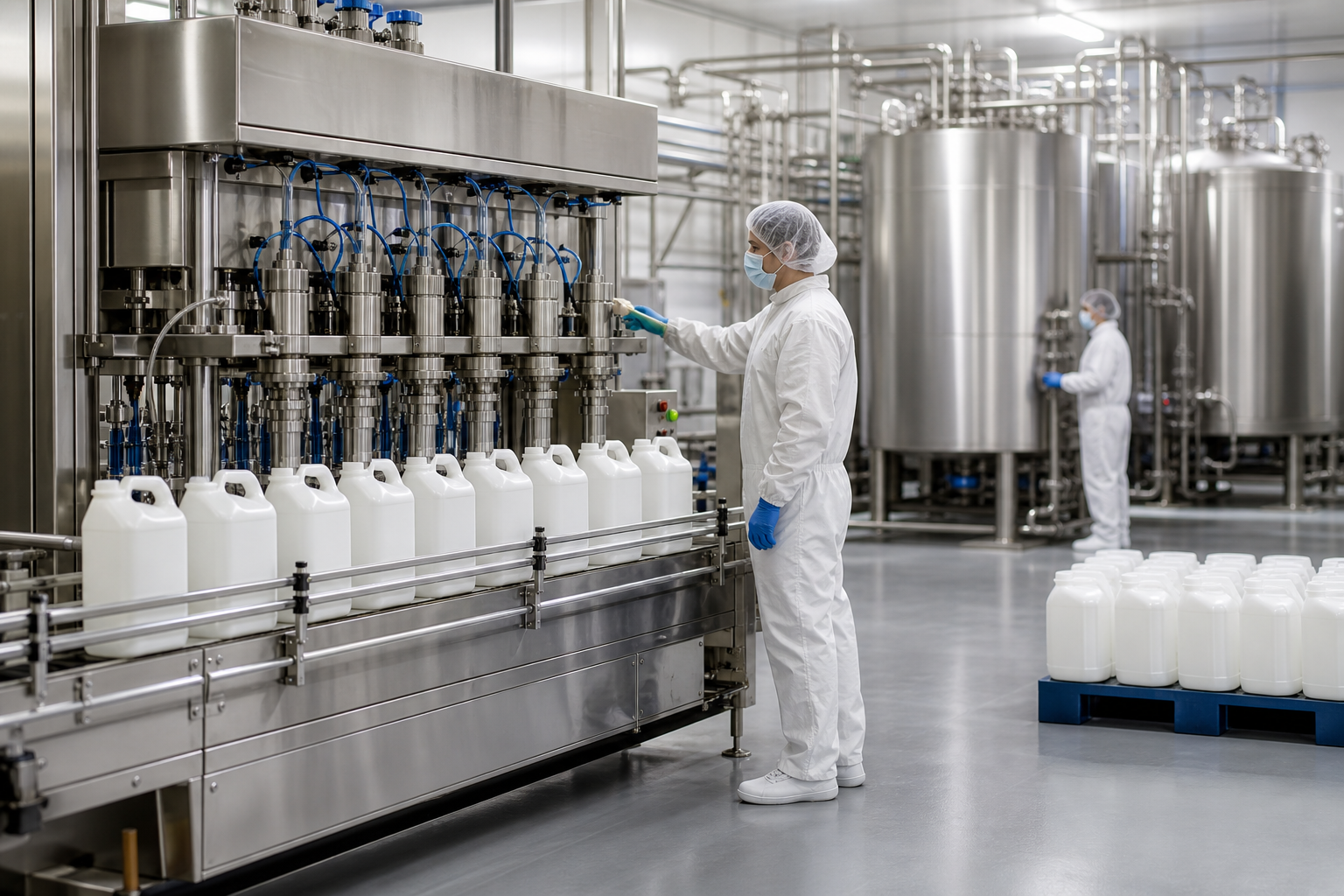
At Apex Filling Systems, We Help Manufacturers Protect DEF Quality from Start to Finish
At Apex Filling Systems, we help manufacturers package Diesel Exhaust Fluid (DEF), automotive fluids, chemicals, and other industrial liquids while maintaining product purity throughout the packaging process. Because DEF is highly sensitive to contamination, preventing impurities during filling is one of the most important factors in delivering a high-quality product that performs as intended in Selective Catalytic Reduction (SCR) systems.
Preventing contamination requires more than selecting the right filling machine. It involves proper equipment design, compatible materials, dedicated handling procedures, employee training, and quality control throughout the entire production process.
How Can Manufacturers Prevent DEF Contamination During Filling?
Manufacturers can prevent DEF contamination by using compatible product-contact materials, dedicated filling equipment, proper cleaning procedures, sealed storage systems, and trained operators who follow ISO 22241 best practices. Maintaining a contamination-free production environment protects DEF purity, reduces product rejects, and helps ensure reliable performance in customers' diesel emissions systems.
A well-designed packaging line minimizes contamination risks before, during, and after the filling process.
Why DEF Is Especially Sensitive to Contamination
Diesel Exhaust Fluid consists of only two ingredients:
- 32.5% high-purity automotive-grade urea
- 67.5% deionized water
Although its composition is simple, DEF must meet strict purity standards. Even small amounts of contamination can affect product quality and potentially interfere with the performance of modern SCR emissions systems.
Unlike many industrial liquids, DEF offers very little margin for contamination.
Understand ISO 22241 Requirements
ISO 22241 establishes internationally recognized standards for:
- DEF purity
- Storage
- Handling
- Transportation
- Packaging
- Material compatibility
These standards are designed to help manufacturers maintain product quality throughout the supply chain.
Following ISO 22241 best practices reduces contamination risks while helping manufacturers produce consistent, high-quality DEF.
Use Compatible Product-Contact Materials
One of the most effective ways to prevent contamination is selecting compatible materials throughout the product pathway.
Commonly recommended materials include:
- 304 stainless steel
- 316 stainless steel
- High-density polyethylene (HDPE)
- Polypropylene (PP)
- DEF-compatible seals and elastomers
These materials help maintain product purity while providing long-term durability.
At Apex Filling Systems, every product-contact component is carefully evaluated for compatibility when designing DEF packaging solutions.
Dedicate Equipment to DEF Whenever Possible
Cross-contamination is one of the most common causes of DEF quality problems.
Whenever practical, manufacturers should dedicate the following equipment exclusively to DEF:
- Storage tanks
- Transfer pumps
- Hoses
- Product piping
- Filling machines
- Nozzles
- Manifolds
Using equipment that previously handled other chemicals, oils, or lubricants increases the risk of introducing contaminants into the product.
Dedicated production systems provide the greatest level of protection.
Maintain a Clean Production Environment
Environmental contamination can occur more easily than many manufacturers realize.
Potential sources include:
- Dust
- Dirt
- Metal particles
- Oils
- Grease
- Cleaning chemical residue
- Open containers
Good housekeeping practices help minimize these risks.
Recommended practices include:
- Keeping containers covered whenever possible
- Maintaining clean filling areas
- Using filtered air where appropriate
- Minimizing unnecessary exposure during production
Clean production environments contribute directly to consistent DEF quality.
Follow Proper Cleaning Procedures
Cleaning procedures are especially important when packaging DEF.
Manufacturers should establish documented procedures for:
- Equipment cleaning
- Product changeovers
- Maintenance activities
- Hose replacement
- Tank cleaning
- Nozzle inspection
Improper cleaning chemicals or inadequate rinsing procedures can introduce contaminants just as easily as poor equipment selection.
Routine cleaning should always be performed using methods and materials compatible with DEF applications.
Prevent Operator-Introduced Contamination
Operators play a significant role in protecting product quality.
Training should emphasize:
- Proper handling procedures
- Approved cleaning methods
- Avoiding contact with incompatible materials
- Maintaining clean workspaces
- Recognizing contamination risks
- Reporting equipment concerns immediately
Consistent operator training reduces human error while improving overall quality assurance.
Inspect Equipment Regularly
Routine inspections help identify potential contamination risks before they affect production.
Inspect:
- Filling nozzles
- Product hoses
- Pumps
- Seals
- Gaskets
- Storage tanks
- Product filters
Look for:
- Wear
- Corrosion
- Residue buildup
- Damaged seals
- Loose fittings
Preventive maintenance helps maintain both equipment performance and DEF purity.
Minimize Product Exposure During Filling
Reducing unnecessary product exposure helps maintain cleanliness throughout production.
Consider:
- Closed transfer systems
- Sealed storage tanks
- Proper ventilation
- Controlled product flow
- Minimal manual handling
Modern filling systems are designed to reduce opportunities for contamination while improving production efficiency.
Monitor Quality Throughout Production
Quality control should continue throughout the filling process—not just after packaging is complete.
Manufacturers should monitor:
- Fill accuracy
- Equipment cleanliness
- Production conditions
- Batch traceability
- Operator compliance
- Maintenance records
Consistent monitoring helps identify small issues before they become larger production problems.
Integrate the Entire Packaging Line
Contamination risks don't stop at the filler.
A complete DEF packaging line should include properly integrated:
- Filling equipment
- Capping systems
- Labeling equipment
- Conveyors
- Inspection systems
Proper integration minimizes manual handling while maintaining product integrity throughout the packaging process.
Apex Filling Systems designs complete packaging lines that help manufacturers protect product quality from the storage tank to the finished package.
Common Mistakes to Avoid
Using equipment previously filled with other products
Residual chemicals or lubricants can contaminate DEF.
Selecting incompatible product-contact materials
Improper material selection increases contamination risks and may reduce equipment life.
Leaving containers uncovered
Open containers increase exposure to airborne contaminants.
Overlooking routine inspections
Small equipment issues can quickly become quality problems.
Inconsistent operator training
Well-documented procedures and ongoing training help maintain consistent production standards.
What Information Should You Gather Before Speaking with Apex?
If you're planning a new DEF packaging line or upgrading an existing operation, gather the following information:
- Current production volume
- Container sizes and materials
- Fill volumes
- Existing filling equipment
- Current cleaning procedures
- Product transfer methods
- Current contamination concerns
- Desired automation level
- Production growth plans
- Existing quality control procedures
Providing this information allows the Apex team to recommend equipment and line configurations designed to help protect DEF purity while supporting efficient production.
Frequently Asked Questions
What is the most common cause of DEF contamination?
Cross-contamination from incompatible materials, improperly cleaned equipment, or equipment previously used for other products is one of the most common causes of DEF contamination.
Does DEF require dedicated filling equipment?
While not required in every situation, dedicated equipment is generally recommended because it significantly reduces the risk of cross-contamination and helps maintain product purity.
Why is stainless steel commonly used for DEF packaging?
304 and 316 stainless steel provide excellent compatibility with DEF while offering durability, corrosion resistance, and ease of cleaning.
Can contamination occur after the filling process?
Yes. Improper capping, handling, storage, or transportation can also introduce contaminants, making quality control important throughout the entire packaging process.
Can Apex Filling Systems help design contamination-resistant DEF packaging lines?
Yes. Apex designs integrated filling, capping, labeling, and conveying systems that prioritize product purity, material compatibility, production efficiency, and long-term reliability for DEF applications.
Ready to Build a DEF Packaging Line That Protects Product Quality?
Not sure how to configure your equipment for DEF applications?
Use the Apex Equipment Fit Selector to answer a few questions about your product, containers, and production goals. An Apex team member can review your information and recommend a filling, capping, labeling, and conveying solution designed to help maintain DEF purity from start to finish.
About Apex Filling Systems
Apex Filling Systems designs and manufactures liquid filling, capping, labeling, and conveying equipment for manufacturers across the food, beverage, chemical, personal care, DEF, and distilled spirits industries. Every packaging application is unique, and our team works closely with customers to recommend equipment that fits their products, production goals, and future growth plans.
Continue Exploring
Equipment Solutions
Helpful Tools
Related Articles
- Everything Manufacturers Need to Know About Filling Diesel Exhaust Fluid (DEF)
- How to Choose the Right Filling Machine for Diesel Exhaust Fluid (DEF)
- Why Stainless Steel Matters for DEF Packaging
- Filling Equipment Considerations for Chemical Manufacturers in 2026
- What to Look for in a Liquid Filling Machine in 2026
Share this
- Help First (97)
- Apex Filling Systems (78)
- Filling Equipment (76)
- Informational (70)
- Automatic Filling Machine (59)
- Industry Insights (59)
- Packaging Equipment (47)
- About Apex (20)
- American Made Goods (20)
- Fillers (18)
- Automatic Capping (11)
- Apex Filling (10)
- Apex (7)
- Uncategorized (5)
- Apex Team (3)
- Apex Family (2)
- Absolute Truth (1)
- Apex Way (1)
- Petroleum (1)
- oil (1)
- August 2026 (1)
- July 2026 (5)
- June 2026 (4)
- May 2026 (5)
- April 2026 (4)
- March 2026 (4)
- February 2026 (1)
- January 2026 (2)
- December 2025 (4)
- November 2025 (4)
- October 2025 (5)
- September 2025 (3)
- June 2025 (3)
- May 2025 (6)
- April 2025 (10)
- March 2025 (10)
- February 2025 (12)
- January 2025 (14)
- December 2024 (1)
- November 2024 (4)
- October 2024 (4)
- September 2024 (2)
- August 2024 (1)
- July 2024 (4)
- October 2022 (1)
- September 2022 (1)
- June 2022 (1)
- October 2021 (2)
- June 2021 (1)
- May 2021 (1)
- April 2021 (2)
- March 2021 (2)
- February 2021 (1)
- January 2021 (2)
- November 2020 (1)
- October 2020 (1)
- September 2020 (2)
- August 2020 (1)
- July 2020 (1)
- June 2020 (1)
- May 2020 (1)
- April 2020 (2)
- March 2020 (2)
- February 2020 (2)
- January 2020 (3)
- December 2019 (2)
- November 2019 (6)
- October 2019 (4)
- September 2019 (3)
- August 2019 (6)
- July 2019 (2)
- April 2019 (1)
- February 2019 (1)
- January 2019 (7)
- December 2018 (6)
- November 2018 (5)
- October 2018 (2)
- September 2018 (2)
- August 2018 (1)
- July 2018 (3)
- May 2018 (2)
- April 2018 (1)
- March 2018 (2)
- February 2018 (2)
- January 2018 (2)